
Table of Contents
ToggleYour Complete Financial Guide for Newcomers to the USA
Bank accounts, credit building, housing & savings — everything you need to start strong in the USA.
Best banks for newcomers with no U.S. credit history.
View guides →Go from zero to a 700+ credit score in the USA.
View guides →Rent an apartment without U.S. credit history.
View guides →High-yield savings accounts for immigrants in the USA.
View guides →Moving to the USA comes with a steep financial learning curve. This guide covers the essentials: opening a bank account, building credit without a Social Security Number, filing taxes as a newcomer, and sending money home — all explained in plain English.
Latest USA Guides
Best Way to Send Money to Mexico from the USA (2026): Wise vs Remitly vs XE
Best Way to Send Money to Mexico from the USA...
Read the guide →Renters Insurance for Immigrants and Visa Holders in the USA (2026)

How Much Does Renters Insurance Actually Cost? Renters insurance for...
Read the guide →Payday Loans vs. Credit Builder Loans for Immigrants: Which Is Right For You?
Best Payday Loans Vs Credit Builder Loans: Complete Guide for...
Read the guide →How to Build U.S. Credit With an ITIN: A Step-by-Step Guide (2026)

How to Build US Credit With ITIN: Complete Guide for...
Read the guide →First 90 Days in the USA
Your first three months in the United States set the foundation for your financial future. This newcomer checklist USA breaks the first 90 days into clear, week-by-week and month-by-month priorities — from getting your SSN or ITIN and opening a bank account to building credit, understanding health insurance, and filing your first taxes. Follow this new immigrant USA guide in order and you will avoid the most common settlement mistakes.
Get the Essentials in Place
- Apply for your SSN (Social Security Number) if you are eligible to work — it is free.
- Understand ITIN requirements if you are not eligible for an SSN but need to bank and file taxes.
- Open a bank account — many banks accept a passport and ITIN, no SSN required.
- Get a U.S. phone number with an affordable prepaid or postpaid plan.
- Set up online and mobile banking so you can pay bills and track spending.
Find Your Footing
- Secure housing — arrange short-term then long-term rental accommodation.
- Understand healthcare options — employer plans, the ACA Marketplace, and Medicaid eligibility.
- Create a realistic budget based on U.S. living costs in your city.
- Build an emergency fund covering three to six months of expenses.
Grow Your Stability
- Begin building credit with a secured or newcomer-friendly credit card.
- Establish payment history by setting up automatic, on-time bill payments.
- Explore employment opportunities and have your credentials assessed.
- Register for local services — library, transit, and community programs.
Secure Your Future
- Understand U.S. taxes and your federal and state filing obligations.
- Optimize your banking — switch to fee-free accounts and high-yield savings.
- Create a long-term financial plan with 401(k) and IRA basics.
- Review your credit report from Equifax, Experian, and TransUnion for accuracy.
Practical Tips
- Open your account through a bank's newcomer or ITIN-friendly program to skip the SSN requirement.
- Keep digital and paper copies of your passport, visa, and proof of address — you will need them repeatedly.
- Apply for a secured credit card in week one; it is the fastest way to start a U.S. credit file.
- Start your budget before spending patterns set in, and automate every recurring bill.
Common Mistakes to Avoid
- Waiting months to apply for credit — the sooner you start, the sooner your score grows.
- Going uninsured by misunderstanding ACA enrollment windows and employer plan deadlines.
- Signing a long lease before understanding the true cost of living in your city.
- Carrying a high credit card balance, which hurts your new credit utilization ratio.
The USA Newcomer Roadmap
Every successful settlement follows the same financial path. This moving to America checklist shows the exact order to tackle each milestone — so you always know what comes next on your journey from arrival to long-term financial success in the United States.
Arrival
Land in the USA and gather your key documents.
SSN / ITIN
Apply for your Social Security Number, or an ITIN if you are not eligible.
Bank Account
Open a fee-free or ITIN-friendly checking account.
Credit Building
Get your first secured card and start building history.
Housing
Rent an apartment, even without U.S. credit.
Healthcare
Choose employer, ACA Marketplace, or Medicaid coverage.
Employment
Find work and get your credentials recognized.
Taxes
Understand and file your federal and state tax return.
Long-Term Financial Success
Grow savings with a 401(k), IRA, and investing.
Skip the Guesswork on Building Credit
Your credit score is the single biggest hurdle newcomers face. Our step-by-step guide shows you the fastest path to a strong U.S. credit profile from scratch — even with no SSN.
Get the Credit-Building eBook →Newcomers to the USA Resource Center
Explore our complete library of guides for new immigrant resources USA. Each topic links to in-depth, regularly updated advice covering every part of your financial settlement journey in America.
Banking
Best newcomer & ITIN-friendly accounts.
Explore → 💳Credit Score
Go from zero to 700+ in the USA.
Explore → 🏠Housing
Rent without U.S. credit history.
Explore → 🏥Healthcare
How U.S. health insurance works.
Explore → 🧾Taxes
Filing your first U.S. tax return.
Explore → 💵Cost of Living
Real monthly costs by city.
Explore → 💼Jobs
Finding work as a newcomer.
Explore → 📱Phone Plans
Affordable plans for newcomers.
Explore → 🚗Car Insurance
Insuring a car as a newcomer.
Explore → 📖Driver License
Getting licensed in your state.
Explore → 🛏First Apartment
Everything for your first rental.
Explore → 📅First 90 Days
Your week-by-week checklist.
Explore →Best Banks for Newcomers in the USA
Most major U.S. banks let newcomers open an account with a passport and proof of address — and several accept an ITIN in place of an SSN. Here is how the leading options compare for new immigrants in 2026.
| Bank | Monthly Fee | Minimum Deposit | Online Banking | Newcomer Friendly | Credit Card Options |
|---|---|---|---|---|---|
| Chase | $12 (waivable) | $0 | Full app & web | Yes — ITIN accepted | Secured & starter cards |
| Bank of America | $12 (waivable) | $100 | Full app & web | Yes — ITIN accepted | Secured card available |
| Capital One | $0 | $0 | Full app & web | Yes — newcomer friendly | Strong for thin credit |
| Wells Fargo | $10 (waivable) | $25 | Full app & web | Yes — ITIN accepted | Secured card available |
| TD Bank | $15 (waivable) | $0 | Full app & web | Yes — ITIN accepted | Secured card available |
Fees and promotional offers vary and change frequently — always confirm current terms directly with each bank.
Best Money Transfer Services for Newcomers
Sending money to or from the USA? These services consistently offer the strongest combination of low fees and fair exchange rates for newcomers supporting family abroad.
| Service | Fees | Speed | Exchange Rate Quality | Best Use Case |
|---|---|---|---|---|
| Wise | Low, transparent | Minutes – 1 day | Mid-market rate | Everyday transfers & multi-currency |
| Remitly | Low (free promos) | Minutes – 1 day | Competitive | Family remittances |
| OFX | No transfer fee | 1 – 2 days | Strong on large amounts | Large one-off transfers |
| Xe | No transfer fee | 1 – 2 days | Competitive | Rate tracking & large transfers |
Fees and exchange rates fluctuate — compare live quotes before sending money.

Helping newcomers navigate banking, credit, money transfers, housing and personal finance in the USA and Canada. All guides are based on personal research, hands-on experience, and publicly available financial data.
Talal Eddaouahiri — Founder of MoneyAbroadGuide
Talal Eddaouahiri is the founder of MoneyAbroadGuide.com. A Moroccan immigrant who settled in the United States in 2015, he has worked in retail banking, customer relations, and financial services, and has personally navigated the financial systems of the USA, Canada, Spain, and Morocco.
He created MoneyAbroadGuide to help newcomers, immigrants, and international students navigate banking, credit building, money transfers, taxes, and personal finance in the USA and Canada.
Published Work
How We Research Our Guides
Recommending a financial product or strategy to a newcomer is a responsibility we take seriously. Every guide on MoneyAbroadGuide follows a structured research and verification process designed to keep our advice accurate, current, and genuinely useful.
Research Process
We map each topic against the real questions newcomers ask, then research it from the ground up using primary sources.
Fact Verification
Every figure, fee, and requirement is checked against the official source before it is published.
Official Sources
For SSN, ITIN, taxes, healthcare, and immigration details we rely on IRS, SSA, USCIS, and other federal and state sources.
Financial Institution Verification
Bank fees and newcomer programs are confirmed directly against each institution's published terms.
Annual Updates
Guides are reviewed and refreshed at least once a year — this page reflects 2026 data.
Editorial Independence
Our recommendations are never for sale. Affiliate partnerships never influence what we recommend or how we rank it.
Frequently Asked Questions
Answers to the most common questions from newcomers to the USA
How can I open a bank account in the USA as a newcomer with no credit history? +
Most major U.S. banks — including Chase, Bank of America, Wells Fargo, and Capital One — let newcomers open a checking account with no U.S. credit history. You typically need a valid passport or government-issued ID, proof of a U.S. address, and either a Social Security Number or an ITIN. Several banks accept an ITIN in place of an SSN, and some let you start the application before you arrive. Digital banks such as Chime and SoFi offer fee-free accounts with fast online setup. Bring your immigration documents (visa or permit) and a small opening deposit, and you can usually be banking within your first week in the country.
How do I build a credit score in the USA from scratch? +
Newcomers start with no U.S. credit file, so the goal is to create positive history fast. The most reliable path is a secured credit card, where a refundable deposit becomes your credit limit. Use it for small recurring purchases, then pay the balance in full and on time every month. Keep your utilization below 30 percent, and never miss a due date — payment history is the biggest factor in your score. Becoming an authorized user on a trusted person's card, or using a credit-builder loan, can also help. Within six to twelve months of on-time payments you can typically reach a solid score and qualify for an unsecured card.
What is the difference between an SSN and an ITIN? +
A Social Security Number (SSN) is issued by the Social Security Administration to citizens, permanent residents, and people authorized to work in the U.S. It is used for employment, taxes, banking, and credit. An ITIN (Individual Taxpayer Identification Number) is issued by the IRS to people who must file taxes but are not eligible for an SSN. An ITIN lets you file a tax return, open many bank accounts, and even build credit with certain issuers, but it does not authorize work or provide Social Security benefits. If you are eligible for an SSN, always get it first; use an ITIN only when an SSN is not available to you.
Can I open a U.S. bank account without an SSN? +
Yes. Many U.S. banks open accounts for newcomers using an ITIN instead of a Social Security Number, and some accept just a passport plus proof of U.S. address. Chase, Bank of America, Wells Fargo, and TD Bank all have processes for ITIN holders, and several fintech apps cater specifically to new immigrants. You will generally need two forms of identification (one usually a passport), a U.S. address, and your immigration documents. Opening an account is an important early step because it lets you receive a salary, pay bills, and start a banking relationship that supports future credit applications. Confirm each bank's exact ITIN policy before visiting a branch.
How do I get a Social Security Number as a newcomer? +
If you are authorized to work in the U.S., apply for an SSN through the Social Security Administration (SSA) by completing Form SS-5 and presenting original documents that prove your identity, immigration status, and work authorization — typically your passport, visa, and I-94 record. Many immigrants can request an SSN as part of their visa or green-card application before arrival, in which case the card is mailed to them. Otherwise, visit a local SSA office in person. There is no fee. Your SSN is sensitive: memorize it, store the card securely, and only share it with employers, banks, and government agencies that genuinely require it.
How can I rent an apartment in the USA without U.S. credit history? +
Renting without a U.S. credit file is common for newcomers, and landlords have several alternatives. Offer proof of income such as a job offer letter or recent pay stubs, and be ready to show bank statements demonstrating savings. Many landlords accept a larger security deposit, a few months' rent paid upfront, or a co-signer or guarantor with established U.S. credit. A letter of reference from a previous landlord abroad can also help. Some property managers use newcomer-friendly screening services that look at international history or income rather than a U.S. score. Apply with a complete, organized document package, and you will stand out even without a credit report.
What is the average cost of living in the USA for a newcomer? +
Costs vary widely by city. A single newcomer in a mid-sized U.S. city might budget roughly $2,500–$3,500 per month covering rent, utilities, groceries, transport, phone, and health insurance, while expensive metros like New York or San Francisco can run far higher. Rent is usually the largest expense, followed by health insurance if you are not covered by an employer. Build a realistic budget in your first week, set aside an emergency fund of three to six months of expenses, and track spending with a banking app. Researching your specific city's rents and transit costs before signing a lease helps you avoid overcommitting early on.
What are the best high-yield savings accounts for newcomers in the USA? +
High-yield savings accounts (HYSAs) pay far more interest than standard accounts and are ideal for parking your emergency fund. Online banks and fintechs typically offer the strongest rates because they have low overhead. Look for an account with no monthly fee, no minimum balance, FDIC insurance, and easy transfers to your checking account. Many HYSAs can be opened with an ITIN or SSN and a U.S. address. Avoid accounts that lock your money up or charge withdrawal penalties unless you specifically want a CD. Keep day-to-day money in checking and your savings in a HYSA so your cash grows safely while staying accessible.
What is the best bank for newcomers to the USA? +
There is no single best bank — it depends on your needs. Chase has the largest branch and ATM network and accepts ITINs, making it convenient nationwide. Capital One offers fee-free accounts and is friendly to thin credit files. Bank of America and Wells Fargo both have newcomer and ITIN processes plus secured cards to start building credit. Digital options like Chime and SoFi offer no-fee accounts and quick online signup. Choose based on whether you value branch access, low fees, a path to a credit card, or app quality. Many newcomers open one traditional bank account and one fintech account to get the best of both.
How much money should I bring to the USA? +
Bring enough to cover your first two to three months before income stabilizes. That usually means initial rent plus a security deposit (often first and last month), furniture and household basics, health insurance, transportation, food, and a buffer for unexpected costs. Many newcomers find $5,000–$10,000 a sensible starting cushion for a single person, more for families or expensive cities. Keep funds accessible through international transfer services like Wise rather than carrying large amounts of cash. Once you arrive, open a bank account quickly, set up a budget, and start an emergency fund so you are not relying solely on the money you brought.
How does health insurance work for newcomers in the USA? +
The U.S. has no universal public healthcare, so coverage matters from day one. Most working newcomers get insurance through an employer, which usually shares the premium cost. If you are not covered at work, you can buy a plan on the ACA Health Insurance Marketplace, where income-based subsidies may lower your premium. Lower-income residents may qualify for Medicaid, and those 65 and older for Medicare. Short-term plans exist but offer limited protection. Enroll during your special enrollment period after arriving, since gaps in coverage leave you exposed to very high medical bills. Always check whether a doctor or hospital is in your plan's network before receiving care.
What taxes do new immigrants pay in the USA? +
Most residents pay federal income tax, and many also pay state and sometimes local income tax — though a few states have no income tax. Social Security and Medicare (FICA) taxes are withheld from wages. Sales tax applies to many purchases at the state and local level. Whether you are taxed as a resident or non-resident depends on your visa and the substantial-presence test. You file an annual federal return with the IRS, typically by mid-April, using your SSN or ITIN. Keep records of income and any foreign accounts, since reporting requirements can apply. If your situation is complex, a tax professional familiar with immigrant filings is worth the cost.
How long does it take to build a credit score in the USA? +
You generally need about six months of activity before the credit bureaus can generate a FICO score. With a secured card used responsibly — small purchases, paid in full and on time — many newcomers reach a fair-to-good score within six to twelve months. Reaching 700 or above usually takes a year or more of consistent on-time payments, low utilization, and a gradually lengthening credit history. The keys are never missing a payment, keeping balances low relative to your limit, and not opening too many accounts at once. Patience and consistency matter more than any single trick; credit is built steadily over time.
What documents do I need to settle in the USA? +
Keep both digital and physical copies of your key documents. Essentials include your passport, visa, and I-94 arrival record, your green card or work-authorization document if you have one, and your SSN or ITIN once issued. You will also want birth certificates, marriage certificates, academic transcripts and diplomas, professional licenses, vaccination records, and an international driving permit or home-country license. For banking and renting, proof of a U.S. address (a lease or utility bill) is frequently requested. Store originals securely and carry copies, since you will be asked for identification and proof of status repeatedly during your first months.
Do I need a credit card immediately as a newcomer? +
You do not need one the day you land, but getting a secured credit card early is one of the smartest moves you can make. Because the U.S. relies heavily on credit scores for renting, borrowing, and sometimes employment, the sooner you start building history, the better. A secured card requires a refundable deposit and is easy to get with no prior credit. Use it for a few small monthly expenses, pay it off in full, and you will begin establishing a positive record within weeks. Aim to apply within your first month so your credit history has time to mature before you need it.
What is a newcomer banking package? +
A newcomer banking package is a bundle some U.S. banks offer to recent immigrants to ease the transition. It often combines a checking account with reduced or waived monthly fees for an introductory period, a path to a credit card without prior U.S. history (frequently a secured card), and sometimes a savings account or money-transfer perks. These packages typically accept an ITIN or just a passport plus proof of address, removing the usual SSN hurdle. They are designed to get you transacting quickly while starting your credit journey. Compare the fee structure, the credit-building options, and branch or ATM access before choosing, and confirm the current terms directly with the bank.
How do I transfer money to and from the USA cheaply? +
Avoid traditional bank wires for routine transfers — they often carry high fees and poor exchange rates. Specialist services give newcomers much better value. Wise uses the mid-market rate with low, transparent fees and is excellent for everyday and multi-currency transfers. Remitly is strong for family remittances and frequently runs fee-free promotions. OFX and Xe charge no transfer fee and are competitive on larger amounts. Always compare a live quote across two or three providers before sending, since the cheapest option varies by destination and amount. Set up your account and verify your identity early so funds are ready to move when you need them.
What is a 401(k) and an IRA? +
These are the two main tax-advantaged retirement accounts in the U.S. A 401(k) is offered through an employer; you contribute pre-tax (or Roth after-tax) dollars from your paycheck, and many employers match part of your contribution — effectively free money you should capture. An IRA (Individual Retirement Account) is one you open yourself, in either Traditional (tax-deferred) or Roth (tax-free growth) form, subject to annual limits. Both let your investments grow with tax benefits to fund retirement. As a newcomer, start by contributing enough to your 401(k) to get the full employer match, then consider an IRA. Even small, consistent contributions compound significantly over time.
How do I find a job as a newcomer in the USA? +
Combine online and personal approaches. Use job boards like LinkedIn, Indeed, and industry-specific sites, and tailor your résumé to U.S. formatting — one to two pages, achievement-focused, no photo. Networking is powerful in the U.S.; attend events, join professional associations, and reach out to alumni or community groups. Make sure you have valid work authorization for your visa category, and obtain an SSN once eligible. Have foreign credentials evaluated where employers expect it, and consider starting roles to gain U.S. experience and references. Persistence, a strong network, and a polished application package make the biggest difference in landing your first U.S. job.
Do I need U.S. work experience to get hired? +
It helps, but it is not mandatory. Many employers value relevant skills and international experience, especially in fields with talent shortages. That said, some hiring managers feel more comfortable with candidates who have U.S. references and familiarity with local workplace norms. You can bridge the gap by networking, securing strong references, taking a starter or contract role to build a local track record, and clearly translating your past achievements into results U.S. employers recognize. Highlight transferable skills, certifications, and any global experience as strengths. Once you have even a few months of U.S. experience and references, subsequent job searches typically become much easier.
How do I get a U.S. driver's license? +
Licensing is handled by each state's DMV (Department of Motor Vehicles), so requirements vary. Generally you provide proof of identity and immigration status, proof of state residency, and your SSN or proof of ineligibility. Many states let you exchange a foreign license or require a written knowledge test, a vision test, and a road test. Some states honor an international driving permit for a limited time after arrival. Bring your passport, visa, proof of address, and home-country license. Study your state's driver handbook before the knowledge test. Getting licensed early is worth it, since a state ID or license is widely used for everyday identification.
How does car insurance work for newcomers in the USA? +
Auto insurance is mandatory in nearly every state, and you must have at least the state-required liability coverage to drive legally. Premiums depend on your driving record, location, vehicle, and credit-based insurance score, so newcomers without a U.S. history sometimes pay more initially. To lower costs, ask whether your insurer recognizes your overseas driving record or no-claims history, compare quotes across several companies, choose a higher deductible, and bundle with renters insurance. Rates typically fall as you build a clean U.S. driving and credit record. Always confirm your policy meets your state's minimum limits, and consider higher coverage to protect your assets.
What phone plan should newcomers get in the USA? +
Start with a prepaid plan, which needs no SSN or credit check and gives you a U.S. number immediately. Carriers like T-Mobile, Verizon, and AT&T have prepaid options, and budget brands such as Mint Mobile, Visible, and Metro by T-Mobile offer low-cost unlimited data. Once you have an SSN and some credit, you can switch to a postpaid plan with device financing if you want a new phone. Bring an unlocked phone from home to avoid buying a new one. Compare coverage in your specific area, since network quality varies by region. A U.S. number is essential for banking, jobs, and verification, so set it up in week one.
Is my foreign education recognized in the USA? +
It often is, but recognition depends on your field and the institution. For many jobs, employers simply ask for a credential evaluation from an approved agency that maps your foreign degree to its U.S. equivalent. Regulated professions — such as medicine, law, nursing, engineering, and accounting — usually require additional licensing exams or board certification before you can practice. Academic programs may ask for transcript evaluations for admission. Gather official transcripts and diplomas, get certified translations if needed, and budget time and fees for evaluations or exams. Researching your specific profession's requirements early helps you plan the steps to convert your qualifications into U.S.-recognized credentials.
What free settlement services are available to newcomers in the USA? +
A range of nonprofit and government-supported programs help new immigrants settle. Refugee and immigrant resettlement agencies, community organizations, and local libraries offer free services such as English classes (ESL), job-search assistance, résumé help, and orientation to U.S. systems. Many cities have immigrant affairs offices that connect newcomers to housing, healthcare enrollment, and legal aid. Public libraries provide free internet, computers, and language resources. Some employers and universities also run newcomer support programs. These services are typically free and confidential. Ask at your local library or community center, search for immigrant-serving nonprofits in your area, and tap these resources early to ease your transition.
What is the difference between a checking and a savings account? +
A checking account is for everyday money movement — receiving your paycheck, paying bills, using a debit card, and making frequent transactions. It usually pays little or no interest. A savings account is designed to hold money you do not need day-to-day; it pays interest (especially a high-yield savings account) but may limit certain withdrawals. A common newcomer setup is one checking account for spending and one savings account, ideally high-yield, for your emergency fund and goals. Keep enough in checking to cover monthly bills, and move the rest to savings so it earns interest. Most banks let you open both and transfer instantly between them.
Should I keep my bank account in my home country? +
In many cases, yes — at least for a while. Keeping a home-country account can be useful for managing remaining bills, receiving income or pensions, supporting family, and providing financial history if you return. However, watch for monthly fees, currency risk, and tax-reporting obligations, since the U.S. may require you to report certain foreign accounts. Use a low-cost transfer service like Wise to move money between countries rather than expensive bank wires. Over time, as your U.S. finances mature, you may consolidate. Review the costs and reporting rules annually, and close any account that charges fees without giving you real benefit.
How do I check my credit report and which bureaus matter in the USA? +
The U.S. has three major credit bureaus: Equifax, Experian, and TransUnion. Lenders may pull from any or all of them, and your scores can differ slightly between them. You are entitled to free reports from each bureau, which you should review regularly for errors, fraud, or outdated information that could drag down your score. Dispute any inaccuracies directly with the bureau. Many banks and card issuers also show your FICO or VantageScore for free in their apps. Monitoring your reports helps you catch identity theft early and confirm that your on-time payments are being recorded — essential for newcomers building credit from scratch.
When can I apply for a green card or U.S. citizenship? +
It depends on your immigration pathway. Some people enter as permanent residents (green-card holders) immediately, while others adjust status later through employment, family, asylum, or other categories. Once you are a lawful permanent resident, you can generally apply for naturalization after five years (or three years if married to a U.S. citizen), provided you meet residency, good-character, and civics requirements. Timelines, eligibility, and processing vary significantly, and immigration law is complex and changes over time. Keep your status documents current, track your residency dates, and consult a qualified immigration attorney or accredited representative for advice specific to your situation.
Can I build credit in the USA with only an ITIN? +
Yes, though your options are narrower than with an SSN. Some banks and credit-card issuers accept an ITIN to open a secured credit card, which is the most reliable way to start a credit file. Credit-builder loans and being added as an authorized user on someone else's card can also help. Once you have active accounts reporting to the bureaus, a credit history begins to form under your ITIN. If you later obtain an SSN, you can link your existing history to it. Pay every bill on time and keep balances low — the fundamentals of credit building are the same whether you use an SSN or an ITIN.
Ready to Build Your U.S. Credit Faster?
You have the answers — now put them into action. Our step-by-step credit-building guide turns months of trial and error into a clear, proven plan for newcomers, even with no SSN.
Get the eBook →
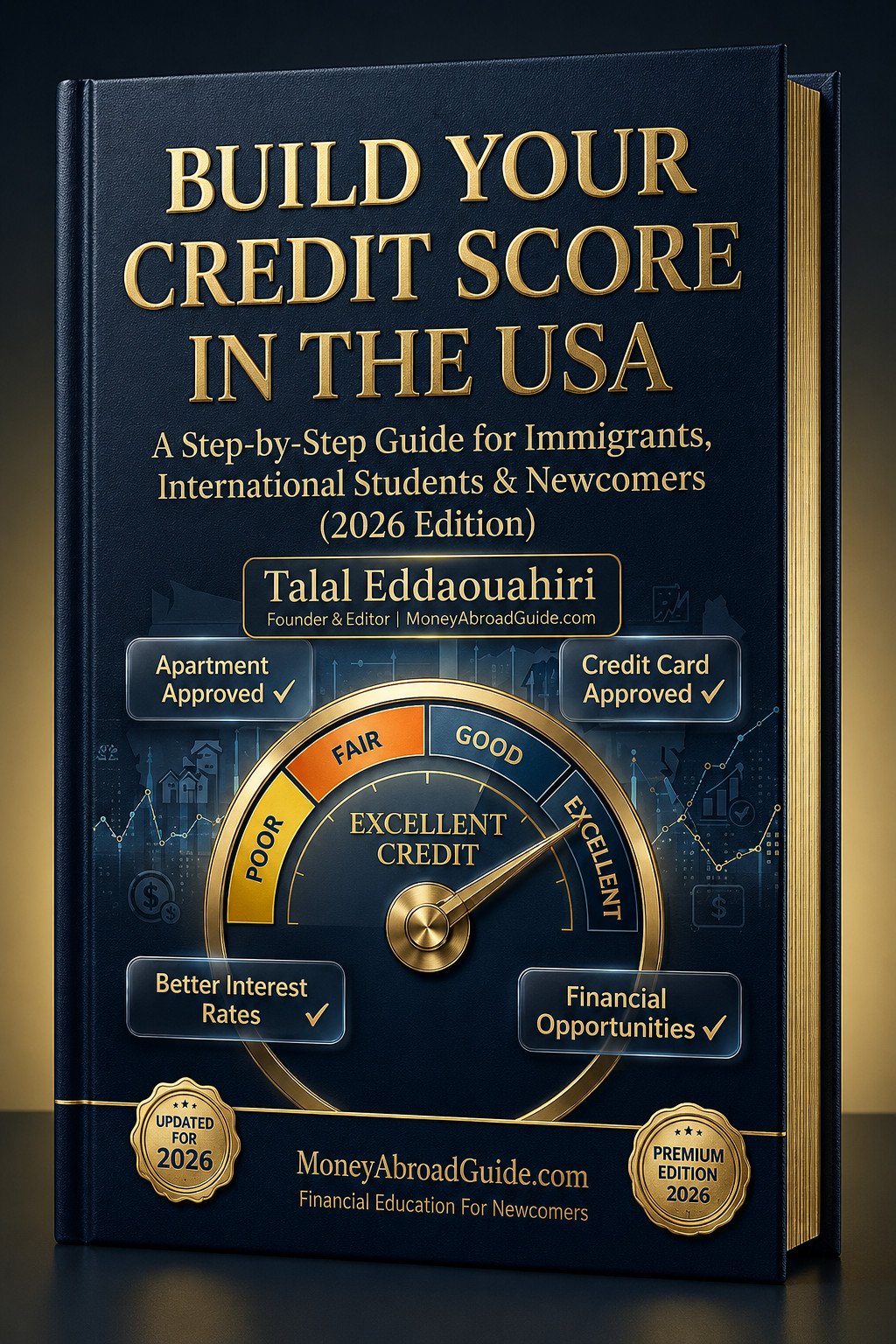
Build Your Credit Score in the USA
The complete step-by-step guide for newcomers and immigrants who want to build a strong U.S. credit profile from scratch — even with no Social Security Number. Available for $19.99.
- ✓ How to get your first U.S. credit card with no history
- ✓ The fastest path to a 700+ credit score
- ✓ Credit bureaus explained: Equifax, Experian, TransUnion
- ✓ Common mistakes that destroy immigrant credit scores
One-time purchase · Instant access · $19.99
Start Your American Journey With Confidence
Building credit from zero is the hardest part of settling in — and the most rewarding once you crack it. Our complete guide gives newcomers the exact roadmap to a strong U.S. credit profile.
- Get your first card with no history
- The fastest path to 700+
- Avoid the mistakes that hurt newcomers
- Step-by-step, beginner-friendly
Enter your details for instant free access
Your Complete USA Newcomer Toolkit
Download our 3 professional PDF guides — 100% free
Newcomer USA Checklist
SSN, bank account, credit card, driver license, health insurance, first apartment and credit building.
First 30 Days in America
Day-by-day action plan for your first month. Priority tasks and tips from real newcomers.
Credit Score Starter Checklist
From zero credit history to a solid FICO score. Best first cards and credit-builder loans.
Are You Ready for Life in the USA?
10 quick questions — get your personalized readiness score
USA Financial Calculators
Plan your finances as a newcomer to the USA