
Table of Contents
ToggleYour Complete Financial Guide for Newcomers to Canada
Bank accounts, credit building, housing & savings — everything you need to start strong in Canada.

Browse by Topic
Latest Canada Guides
4 guidesThis newcomers to Canada financial guide covers everything new immigrants need — banking, credit, money transfers, taxes, and provincial tips. Newcomers to Canada can open a bank account on arrival day at RBC, TD, Scotiabank, BMO, or CIBC — all offer free newcomer packages for 12 months. This newcomers to Canada financial guide explains credit building: get a secured card, pay on time, and reach your first Equifax or TransUnion score within 6 months. The newcomers to Canada financial guide is backed by FCAC, CRA, CDIC, and Equifax Canada official sources. Updated for 2026.

Newcomers to Canada
How to Get a Driver’s License in Canada as a Newcomer (2026 Guide)
How to Get a Driver’s License in Canada as a...
Read the guide →How to Send Money From Canada at the Lowest Cost: A Newcomer’s Guide (2026)

Best Cheapest Ways To Send Money To/From Canada: Complete Guide...
Read the guide →Getting a Mortgage as a Newcomer in Canada: CMHC, Rates & Lenders (2026)

Best Mortgage For Newcomers To Canada: Complete Guide for Canada...
Read the guide →Best Credit Cards For Newcomers In Canada: Complete Guide for Canada Immigrants (2026)

Best Credit Cards For Newcomers In Canada: Complete Guide for...
Read the guide →Best High-Interest Savings Accounts For International Students In Canada: Complete Guide for Canada – International Students Immigrants (2026)
Quick Answer: International students in Canada can open a high-interest...
Read the guide →Best Money Transfer Apps for Immigrants (2026 Guide)

Compare the best money transfer apps for immigrants in the...
Read the guide →First 90 Days in Canada: A Newcomer Checklist

Your first three months in Canada set the foundation for your financial future. This newcomer checklist for Canada breaks the first 90 days into clear, week-by-week and month-by-month priorities — from getting your SIN and opening a bank account to building credit, understanding provincial healthcare, and filing your first taxes. Follow this new immigrant checklist for Canada in order and you will avoid the most common settlement mistakes.
Get the Essentials in Place
- Apply for your SIN (Social Insurance Number) — free and required to work or open most accounts.
- Open a newcomer bank account with no monthly fee for the first year.
- Get a Canadian phone number and an affordable prepaid or postpaid plan.
- Set up online and mobile banking so you can pay bills and track spending.
Find Your Footing
- Find housing — secure short-term then long-term rental accommodation.
- Apply for provincial healthcare and learn your province's waiting period.
- Create a realistic monthly budget based on Canadian living costs.
- Register for key services — utilities, internet, and transit.
Grow Your Stability
- Start building credit with a secured or newcomer credit card.
- Explore employment opportunities and have your credentials assessed.
- Register for local services — library, settlement agency, language classes.
- Set up automatic bill payments to protect your new credit history.
Secure Your Future
- Understand the Canadian tax system and your filing obligations.
- Build an emergency fund covering three to six months of expenses.
- Establish a long-term financial plan with TFSA and RRSP basics.
- Review your credit report from Equifax and TransUnion for accuracy.
Practical Tips
- Open your account through a bank's newcomer program to waive fees and unlock a no-credit-history credit card.
- Keep digital and paper copies of your passport, permit, and proof of address — you will need them repeatedly.
- Ask your settlement agency about free, government-funded newcomer services in your area.
- Start your budget in week one, before spending patterns set in.
Common Mistakes to Avoid
- Waiting months to apply for credit — the sooner you start, the sooner your score grows.
- Missing your province's healthcare waiting period and going uninsured.
- Signing a long lease before understanding the true cost of living in your city.
- Carrying a high credit card balance, which hurts your new credit utilization ratio.
The Canada Newcomer Roadmap
Every successful settlement follows the same financial path. This roadmap shows the exact order to tackle each milestone — so you always know what comes next on your journey from arrival to long-term financial success in Canada.
Arrival
Land in Canada and gather your key documents.
SIN Number
Apply for your Social Insurance Number — it is free.
Bank Account
Open a fee-free newcomer chequing account.
Credit Score
Get your first credit card and start building history.
Housing
Rent an apartment, even without Canadian credit.
Healthcare
Register for your provincial health coverage.
Employment
Find work and get credentials recognised.
Taxes
Understand and file your Canadian tax return.
Long-Term Financial Success
Grow savings with a TFSA, RRSP, and investing.
Skip the Guesswork on Building Credit
Your credit score is the single biggest hurdle newcomers face. Our step-by-step guide shows you the fastest path to a strong profile from scratch.
Get the Credit-Building eBook →Newcomers to Canada Resource Center
Explore our complete library of guides for new immigrant resources in Canada. Each topic links to in-depth, regularly updated advice covering every part of your financial settlement journey.
Banking
Best newcomer accounts with no fees.
Explore → 💳Credit Score
Go from zero to 700+ in Canada.
Explore → 🏠Housing
Rent without Canadian credit history.
Explore → 🏥Healthcare
How provincial coverage works.
Explore → 🧾Taxes
Filing your first Canadian return.
Explore → 💵Cost of Living
Real monthly costs by city.
Explore → 💼Jobs
Finding work as a newcomer.
Explore → 📱Phone Plans
Affordable plans for newcomers.
Explore → 🚗Car Insurance
Insuring a car as a newcomer.
Explore → 📖Driver License
Getting licensed in your province.
Explore → 🛏First Apartment
Everything for your first rental.
Explore → 📅First 90 Days
Your week-by-week checklist.
Explore →Best Banks for Newcomers in Canada
Canada's five biggest banks all offer newcomer programs that waive fees and skip the credit-history requirement. Here is how their core offers compare for new immigrants in 2026.
| Bank | Monthly Fee | Newcomer Program | Credit Card Access | Online Banking |
|---|---|---|---|---|
| RBC | $0 (up to 12 months) | Yes — RBC Newcomer Advantage | No credit history needed | Full app & web |
| TD | $0 (up to 12 months) | Yes — TD New to Canada | Secured card available | Full app & web |
| Scotiabank | $0 (up to 12 months) | Yes — StartRight Program | No credit history needed | Full app & web |
| BMO | $0 (up to 12 months) | Yes — NewStart Program | No credit history needed | Full app & web |
| CIBC | $0 (up to 12 months) | Yes — Welcome to Canada | No credit history needed | Full app & web |
Offers and promotional periods vary and change frequently — always confirm current terms directly with each bank.
Best Money Transfer Services for Newcomers
Sending money to or from Canada? These services consistently offer the strongest combination of low fees and fair exchange rates for newcomers supporting family abroad.
| Service | Fees | Speed | Exchange Rate Quality | Best Use Case |
|---|---|---|---|---|
| Wise | Low, transparent | Minutes – 1 day | Mid-market rate | Everyday transfers & multi-currency |
| Remitly | Low (free promos) | Minutes – 1 day | Competitive | Family remittances |
| OFX | No transfer fee | 1 – 2 days | Strong on large amounts | Large one-off transfers |
| Xe | No transfer fee | 1 – 2 days | Competitive | Rate tracking & large transfers |
Fees and exchange rates fluctuate — compare live quotes before sending money.

Helping newcomers navigate banking, credit, money transfers, housing and personal finance in the USA and Canada. All guides are based on personal research, hands-on experience, and publicly available financial data.
Talal Eddaouahiri — Founder of MoneyAbroadGuide
Talal Eddaouahiri is the founder of MoneyAbroadGuide.com. A Moroccan immigrant who settled in the United States in 2015, he has worked in retail banking, customer relations, and financial services, and has personally navigated the financial systems of the USA, Canada, Spain, and Morocco.
He created MoneyAbroadGuide to help newcomers, immigrants, and international students navigate banking, credit building, money transfers, taxes, and personal finance in the USA and Canada.
Published Work
How We Research Our Guides
Recommending a financial product or strategy to a newcomer is a responsibility we take seriously. Every guide on MoneyAbroadGuide follows a structured research and verification process designed to keep our advice accurate, current, and genuinely useful.
Research Process
We map each topic against the real questions newcomers ask, then research it from the ground up using primary sources.
Fact Verification
Every figure, fee, and requirement is checked against the official source before it is published.
Official Government Sources
For SIN, taxes, healthcare, and immigration details we rely on Government of Canada and provincial sources.
Financial Institution Verification
Bank fees and newcomer programs are confirmed directly against each institution's published terms.
Annual Updates
Guides are reviewed and refreshed at least once a year — this page reflects 2026 data.
Editorial Independence
Our recommendations are never for sale. Affiliate partnerships never influence what we recommend or how we rank it.
Frequently Asked Questions
Answers to the most common questions from newcomers to Canada
How can I open a bank account in Canada as a newcomer with no credit history? +
Most major Canadian banks — including RBC, TD, Scotiabank, BMO, CIBC and National Bank — offer dedicated newcomer banking packages that require no Canadian credit history. You typically need: a valid passport or government-issued ID, proof of arrival date (e.g. study or work permit, PR card), and a Canadian address. Many banks also allow you to open an account before you arrive in Canada through their international banking programs. Digital banks like Simplii Financial and Tangerine offer free chequing accounts with no monthly fees, making them excellent starting points for newcomers.
How do I build a credit score in Canada from scratch? +
Building credit in Canada starts with getting a secured credit card — where you deposit a fixed amount as collateral. Options include the Home Trust Secured Visa and secured cards from major banks. You can also build credit by becoming an authorized user on a family member's card, or by applying for a credit-builder loan through a credit union. Key rules: always pay your balance in full before the due date, keep your utilization below 30%, and never miss a payment. Most newcomers see their first credit score appear within 3–6 months of opening their first credit product.
How can I rent an apartment in Canada without Canadian credit history? +
Many newcomers successfully rent apartments in Canada without local credit by offering: a larger security deposit (often 2–3 months rent), proof of employment or income (offer letter, bank statements), international credit references or a letter from your previous landlord, and co-signers if available. Platforms like Rentals.ca, PadMapper, and Facebook Marketplace list landlords open to newcomers. Private landlords are generally more flexible than property management companies. Some landlords also accept a letter from your employer confirming your position and salary as a substitute for a credit check.
What is the average cost of living in Canada for a newcomer? +
The cost of living in Canada varies significantly by city. As a rough monthly estimate for a single person: Toronto and Vancouver are the most expensive, with rent ranging from $1,800–$3,000+ for a 1-bedroom apartment, plus $400–$600 for groceries, $150–$200 for transportation, and $100–$200 for utilities. Montreal, Calgary, and Ottawa are more affordable, with 1-bedroom apartments averaging $1,200–$2,000. Budget cities like Halifax, Winnipeg, and Edmonton offer lower costs, with rent from $900–$1,500. Total monthly budget for a comfortable single-person lifestyle ranges from $2,500 in smaller cities to $4,500+ in Toronto or Vancouver.
What are the best high-yield savings accounts for newcomers in Canada? +
The best high-yield savings options for newcomers in Canada include: EQ Bank Savings Plus Account (consistently one of the highest rates, no monthly fees, fully digital), Simplii Financial High Interest Savings Account (free and easy to open online), and Tangerine Savings Account (often offers promotional rates for new customers). Credit unions like Meridian and Desjardins also offer competitive rates. For newcomers who want to maximize savings, a TFSA (Tax-Free Savings Account) allows you to earn interest tax-free once you are a Canadian resident — this is one of the most powerful savings tools available in Canada.
Can I open a Canadian bank account without a SIN?+
Yes. You can open most Canadian bank accounts without a Social Insurance Number. A SIN is only legally required for accounts that earn interest reported to the CRA, but banks can open a chequing account or a newcomer package using just your passport, immigration document, and proof of a Canadian address. Many of the big five banks — RBC, TD, Scotiabank, BMO, and CIBC — let newcomers open accounts before or shortly after arrival without a SIN. You will usually be asked to provide your SIN later once you receive it, especially for savings accounts. If a branch insists a SIN is mandatory to open a basic account, you are within your rights to ask for the no-SIN option, which Canadian banking rules allow.
What is the best bank for newcomers to Canada?+
There is no single best bank for every newcomer — the right choice depends on your priorities. All five major banks (RBC, TD, Scotiabank, BMO, CIBC) offer strong newcomer packages with no monthly fees for up to a year and a credit card with no Canadian credit history required. RBC and Scotiabank's StartRight program are popular for their broad branch networks and bundled offers. TD is known for long branch hours, while BMO and CIBC frequently run cash bonuses. Compare the fee-free period, whether a credit card is included, free international transfers, and branch access near you. Our full Best Banks for Newcomers guide breaks down each program side by side so you can match one to your situation.
How do newcomers build credit in Canada?+
Newcomers build credit in Canada by opening credit accounts that report to the two credit bureaus, Equifax and TransUnion, and managing them well. The fastest starting point is a secured or newcomer credit card, which most major banks offer without requiring existing credit history. Use the card for small, regular purchases and pay the balance in full and on time every month. Keep your credit utilization — the percentage of your limit you use — below thirty percent. Over time, adding a second credit product and never missing a payment steadily raises your score. Avoid applying for many products at once, as each application can cause a small temporary dip. Consistency over six to twelve months is what builds a solid Canadian credit profile.
How much money should I bring to Canada?+
The amount depends on your immigration category and city, but a common guideline is to bring enough to cover three to six months of living expenses while you settle. For a single newcomer in a major city like Toronto or Vancouver, that often means several thousand dollars to cover rent deposits, first and last month's rent, food, transit, phone, and unexpected costs. Express Entry applicants must also meet proof-of-funds requirements set by the Government of Canada, which scale with family size. Beyond the minimum, having a cushion reduces pressure while you find work and wait out any healthcare waiting period. Keep funds accessible, and consider a low-cost international transfer service to move money without losing value to poor exchange rates.
How does provincial healthcare work in Canada?+
Healthcare in Canada is publicly funded but administered separately by each province and territory, so coverage and waiting periods vary by where you live. After arriving, you apply for your provincial health card — for example OHIP in Ontario, MSP in British Columbia, or RAMQ in Quebec. Some provinces provide coverage immediately, while others impose a waiting period of up to three months for new residents. During any waiting period, private interim health insurance is strongly recommended to avoid large medical bills. Public coverage generally includes doctor visits and hospital care but often excludes prescription drugs, dental, and vision, which many residents cover through employer benefits or private insurance. Apply for your health card as early as possible after you arrive.
Can I rent an apartment without credit history in Canada?+
Yes, newcomers regularly rent apartments without Canadian credit history, though you may need to reassure landlords in other ways. Common approaches include offering a larger deposit or several months of rent upfront, providing proof of employment or an offer letter, showing bank statements or proof of funds, and supplying references from previous landlords abroad. A guarantor or co-signer with Canadian credit can also strengthen your application. Renting from individual landlords or smaller buildings is often easier than large corporate property managers that rely heavily on automated credit checks. Being organized with a complete application package — ID, proof of income, references, and a polite cover note — goes a long way. Our Rent Without Credit guide covers landlord-approved strategies in detail.
What taxes do new immigrants pay in Canada?+
Once you become a resident of Canada for tax purposes, you generally pay tax on your worldwide income, including employment income, investment income, and certain foreign earnings. Canada uses a progressive system with both federal and provincial income tax, deducted automatically from most paycheques. You will also encounter sales taxes (GST, HST, or PST depending on the province) on many goods and services. Your residency start date matters, and your first tax return is often partial for the year you arrive. Filing a return — even with little or no income — is important because it can unlock benefits and credits such as the GST/HST credit and the Canada Child Benefit. When in doubt, consult the CRA or a tax professional for your first filing.
How long does it take to build a credit score in Canada?+
You typically need at least three to six months of active credit activity before a meaningful credit score appears, and around twelve months of consistent, responsible use to reach a solid score. Credit scores in Canada range roughly from 300 to 900. After opening your first credit card and using it responsibly, a basic score usually generates within the first few months. Reaching the 'good' range (around 660 and above) generally takes six to twelve months of on-time payments and low balances. Climbing into the 'very good' or 'excellent' range takes longer and rewards a longer track record, a mix of credit types, and zero missed payments. Patience and consistency matter far more than any quick trick.
What is a newcomer banking package?+
A newcomer banking package is a special bundle that Canadian banks offer to people who recently immigrated. These packages are designed to remove the usual barriers newcomers face. Typical perks include no monthly account fees for the first year or longer, a credit card approved without Canadian credit history, free or discounted international money transfers, and sometimes a cash welcome bonus or a free safety deposit box. To qualify, you usually need to have arrived in Canada within a set window (often the last few years) and provide your passport and immigration documents. Each major bank brands its package differently — such as Scotiabank's StartRight or BMO's NewStart — but the core benefits are similar. They are one of the easiest ways to start banking and building credit at once.
Do I need a credit card immediately as a newcomer?+
Getting a credit card early is one of the smartest first moves, because it is the simplest way to start building Canadian credit history. You do not need it for daily survival, but the sooner you open one and use it responsibly, the sooner your credit score develops — and credit is required for renting, financing a car, and eventually getting a mortgage. Most newcomer banking packages include a credit card with no Canadian credit history needed, so you can usually get one within your first week. If you are declined for a standard card, a secured credit card — where you place a refundable deposit — is an excellent starting tool. Use it for small purchases and pay it off in full each month.
What documents do I need to settle in Canada?+
Keep your key documents organized and accessible, as you will use them repeatedly during your first weeks. Essentials include your valid passport, your immigration document (permanent resident card, work permit, or study permit), and proof of your Canadian address such as a lease or utility bill. You will also need these to apply for your SIN, open a bank account, get a health card, and sign a rental lease. Bring originals plus several photocopies and digital scans stored securely. Other useful documents include your birth certificate, marriage certificate, educational credentials and transcripts (often needed for credential assessment), driving records from your home country, and any vaccination or medical records. Having everything ready prevents delays when applying for services.
How do I get a SIN in Canada?+
A Social Insurance Number is free and required to work in Canada or access government programs. You can apply online through Service Canada, by mail, or in person at a Service Canada Centre. You will need your primary identity document — such as your permanent resident card, work permit, or study permit — and your passport. In-person applications are often processed on the spot, while online and mail applications take a little longer. There is never a fee to get a SIN, so avoid any service that charges for it. Once issued, treat your SIN like sensitive personal information: share it only when legally required, such as with employers, banks for interest-bearing accounts, and the CRA, to protect yourself against identity theft.
When can I apply for permanent residency or citizenship?+
The timing depends on your immigration pathway. Many newcomers arrive already as permanent residents through programs like Express Entry, while others enter on work or study permits and transition to permanent residency later through federal or provincial programs. To apply for Canadian citizenship, you must first be a permanent resident and meet the physical presence requirement — generally being physically present in Canada for at least 1,095 days within the five years before applying — along with tax filing and language requirements. Because immigration rules change and individual situations vary, always confirm current eligibility and timelines through the official Government of Canada immigration website or a licensed immigration consultant or lawyer before making decisions.
What is the difference between a chequing and savings account?+
A chequing account is your everyday transaction account — used for receiving your pay, paying bills, making debit purchases, and withdrawing cash. It usually earns little or no interest and is built for frequent activity. A savings account is designed to hold money you do not need right away and pays interest so your balance grows over time, but it may limit how often you can withdraw. As a newcomer, you will typically open a chequing account first for daily life, then add a savings or high-yield savings account to set aside an emergency fund. Keeping the two separate makes budgeting easier and helps you avoid spending money you meant to save. Many newcomer packages let you open both at once.
Should I keep my bank account in my home country?+
It often makes sense to keep your home-country account open during your transition, at least temporarily. It can help you manage remaining bills, receive funds, or maintain financial ties while you establish yourself in Canada. However, be mindful of foreign account reporting rules, potential maintenance fees, and the cost of moving money between countries. Using a low-cost international transfer service rather than a traditional bank wire usually saves significantly on fees and exchange rates. Over time, many newcomers consolidate their finances in Canada once their banking, credit, and income are established. If you hold significant foreign assets, ask a Canadian tax professional about any reporting obligations to the CRA so you stay compliant.
How do I transfer money to and from Canada cheaply?+
Traditional bank wire transfers are convenient but often carry high fees and unfavourable exchange rates. Dedicated money transfer services typically offer far better value. Providers like Wise are known for using the mid-market exchange rate with low, transparent fees, while Remitly is popular for family remittances, and OFX and Xe work well for larger one-off transfers. To save the most, always compare the total cost — not just the advertised fee, but the exchange rate margin too — and check the delivery speed that matches your need. For recurring transfers, some services let you lock in rates or set up automatic transfers. Our guide to the best money transfer apps from Canada compares these options in detail.
What is a TFSA and an RRSP?+
The Tax-Free Savings Account (TFSA) and Registered Retirement Savings Plan (RRSP) are two of Canada's main tax-advantaged accounts. A TFSA lets your investments grow and be withdrawn completely tax-free, making it flexible for both short-term and long-term goals; contribution room accumulates each year you are a resident and eligible. An RRSP is built mainly for retirement: contributions are tax-deductible and reduce your taxable income now, while withdrawals are taxed later, ideally when your income is lower. As a newcomer, your TFSA room generally starts the year you become a resident, and your RRSP room is based on your earned income. Both are powerful tools for building long-term wealth, and most newcomers start with a TFSA for its simplicity and flexibility.
How do I find a job as a newcomer in Canada?+
Finding work as a newcomer usually combines online job boards, networking, and using free settlement services. Start by tailoring your resume to Canadian standards, which favour a concise, achievement-focused format. Government-funded settlement agencies offer free help with resumes, interview practice, and job-search workshops specifically for newcomers. Networking is especially important in Canada — informational interviews and professional associations often lead to opportunities that are never advertised. If your profession is regulated, you may need a credential assessment or licensing before working in your field, so research that early. Bridging programs and 'survival jobs' can provide income and Canadian experience while you work toward your target role. Persistence, local references, and Canadian experience all strengthen your applications over time.
Do I need Canadian work experience to get hired?+
Many employers value Canadian work experience, and the lack of it is one of the most common frustrations newcomers report — but it is far from an absolute barrier. You can build local experience through bridging programs, internships, volunteering, contract roles, or entry-level positions in your field. These create Canadian references and demonstrate your ability to work within local norms. Highlighting transferable skills, international achievements, and any Canadian certifications helps offset the gap. Networking and settlement agencies can connect you with employers who actively hire newcomers. Over time, even a short stint of Canadian experience significantly strengthens your applications. Treat your first role as a stepping stone rather than your final destination, and keep building local connections and credentials.
What is the cost of living in major Canadian cities?+
Costs vary widely by city. Toronto and Vancouver are the most expensive, driven largely by high rent, while cities like Montreal, Calgary, Edmonton, and Ottawa tend to be more affordable. Rent is usually the single biggest expense, followed by food, transportation, phone and internet, and health-related costs not covered by public insurance. A single newcomer in a major city should budget carefully for the first few months, as deposits and setup costs add up quickly. Creating a realistic monthly budget before you arrive helps you avoid surprises. Our Cost of Living in Canada guide provides current monthly estimates for Toronto, Vancouver, Montreal, and Calgary so you can plan your finances around your chosen city.
How do I get a Canadian driver's license?+
The process depends on your province and your existing driving experience. Some provinces have reciprocal agreements with certain countries that let you exchange your foreign licence directly, while others require written and road tests. Generally you start by visiting your provincial licensing authority with your foreign licence, identification, and proof of residency. Many provinces use a graduated licensing system, but experienced drivers from your home country can sometimes get credit for that experience to shorten the process. Bringing an official driving record or abstract from your home country, translated if necessary, can help you skip stages. Apply early, because having a licence affects car insurance rates and may be needed for everyday life and some jobs. Check your specific province's rules.
How does car insurance work for newcomers in Canada?+
Car insurance is mandatory in every province if you drive, but the system and cost vary. Some provinces have public auto insurance, while others use private insurers. As a newcomer, your premium can be high at first because insurers may not recognize your foreign driving history, treating you like a new driver. To lower costs, bring a letter or driving record from your previous insurer proving your years of claims-free driving — many Canadian insurers will give credit for it. Shopping around and comparing multiple quotes is essential, as rates differ significantly between companies. Other factors include your vehicle, where you live, and your coverage level. Over time, a clean Canadian driving record steadily reduces your premiums.
What phone plan should newcomers get in Canada?+
When you first arrive, a prepaid SIM gives you an instant Canadian number with no credit check, which is useful for banking, job applications, and rentals. Once you have ID and ideally a bank account, you can switch to a monthly postpaid plan, which usually offers more data for the money. Canada's major carriers have lower-cost subsidiary brands that often provide better value for newcomers. Compare data allowances, coverage in your area, and whether the plan includes calls to your home country if that matters to you. Avoid locking into a long contract before you understand your usage. Our phone plans guide outlines affordable options so you can stay connected without overpaying in your first months.
Is my foreign education recognized in Canada?+
It depends on your field. For many jobs, you can have your foreign credentials assessed by a recognized organization to show how they compare to Canadian standards — this assessment is often useful for employers and immigration. However, regulated professions such as medicine, nursing, engineering, law, and teaching require licensing through a provincial regulatory body, which may involve exams, additional training, or supervised practice. Start the recognition or licensing process as early as possible, since it can take time. Bridging programs help internationally trained professionals meet Canadian requirements while gaining local experience. Even where full licensing is required, related roles can provide income and experience along the way. Research your specific profession's requirements through the relevant regulatory body or a settlement agency.
What free settlement services are available to newcomers?+
Canada offers a wide range of free, government-funded settlement services to help newcomers establish themselves. These services, delivered through settlement agencies across the country, include help with job searches and resumes, language training in English or French, information sessions on housing, healthcare, and finances, mentorship and networking programs, and assistance understanding your rights and local systems. Many are available to permanent residents and some other newcomer categories at no cost. Public libraries are another excellent free resource, offering internet access, workshops, and community connections. Taking advantage of these services early can dramatically smooth your transition and connect you with people who understand exactly what you are going through. Search for an authorized settlement agency in your city to get started.
Ready to Build Your Canadian Credit Faster?
You have the answers — now put them into action. Our step-by-step credit-building guide turns months of trial and error into a clear, proven plan.
Get the eBook →
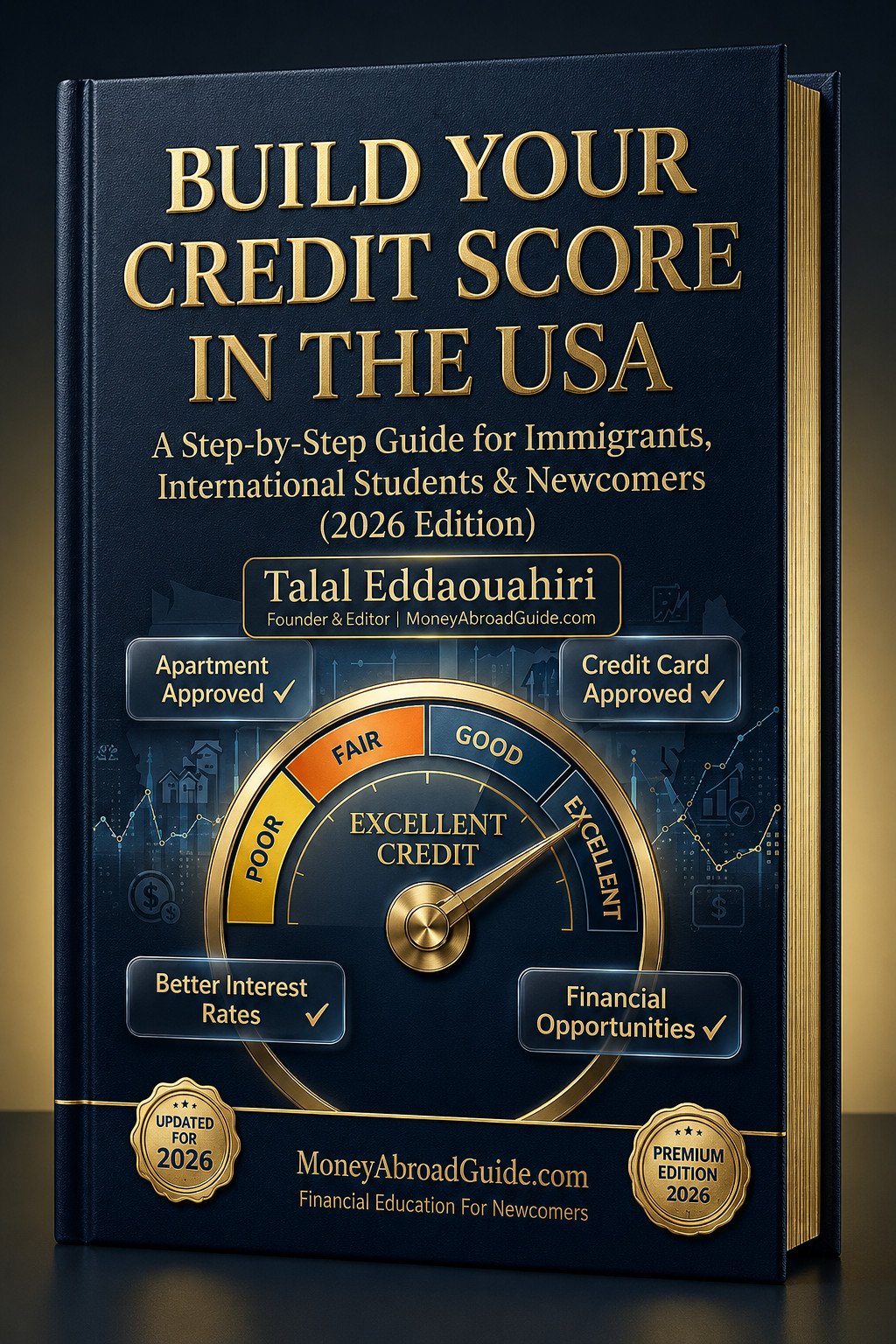
Build Your Credit Score in the USA
The complete step-by-step guide for newcomers and immigrants who want to build a strong U.S. credit profile from scratch — even with no Social Security Number. Available for $19.99.
- ✓ How to get your first U.S. credit card with no history
- ✓ The fastest path to a 700+ credit score
- ✓ Credit bureaus explained: Equifax, Experian, TransUnion
- ✓ Common mistakes that destroy immigrant credit scores
One-time purchase · Instant access · $19.99
Start Your Canadian Journey With Confidence
Building credit from zero is the hardest part of settling in — and the most rewarding once you crack it. Our complete guide gives newcomers the exact roadmap to a strong credit profile.
- Get your first card with no history
- The fastest path to 700+
- Avoid the mistakes that hurt newcomers
- Step-by-step, beginner-friendly
Enter your details for instant free access
Your Complete Canada Newcomer Starter Kit
Download our 4 professional PDF guides — 100% free
Newcomer Canada Checklist
SIN, bank account, credit card, provincial health card and housing — all your first steps.
First 30 Days in Canada
Day-by-day action plan for your first month in Canada.
Credit Building in Canada
Equifax vs TransUnion, secured cards, newcomer programs — your complete Canadian credit roadmap.
Provincial Health Insurance
Province-by-province health card eligibility, waiting periods — Ontario, BC, Quebec, Alberta.
How Prepared Are You for Canada?
10 quick questions — get your personalized Canada readiness score
Canada Financial Calculators
Plan your finances as a newcomer to Canada


