
How Much Does Renters Insurance Actually Cost?
According to the National Association of Insurance Commissioners (NAIC), the average premium for renters insurance (HO-4 policy) in the United States was $170 per year in 2021 — approximately $14 per month. Premiums vary by state based on local risk factors, coverage limits, and deductible chosen.
| State | Average Annual Premium (NAIC 2021) | Per Month |
|---|---|---|
| National average | $170 | ~$14 |
| Illinois | $154 | ~$13 |
| New Jersey | $151 | ~$13 |
| California | $177 | ~$15 |
| New York | $164 | ~$14 |
| Texas | $204 | ~$17 |
Source: National Association of Insurance Commissioners (NAIC), 2021 data (HO-4 renters insurance, broad named-peril coverage). Actual premiums vary by coverage amount, deductible, location, and individual risk profile.
How Much Does Renters Insurance Actually Cost?
According to the National Association of Insurance Commissioners (NAIC), the average premium for renters insurance (HO-4 policy) in the United States was $170 per year in 2021 — approximately $14 per month. Premiums vary by state based on local risk factors, coverage limits, and deductible chosen.
| State | Average Annual Premium (NAIC 2021) | Per Month |
|---|---|---|
| National average | $170 | ~$14 |
| Illinois | $154 | ~$13 |
| New Jersey | $151 | ~$13 |
| California | $177 | ~$15 |
| New York | $164 | ~$14 |
| Texas | $204 | ~$17 |
Source: National Association of Insurance Commissioners (NAIC), 2021 data (HO-4 renters insurance, broad named-peril coverage). Actual premiums vary by coverage amount, deductible, location, and individual risk profile.
Best Renters Insurance For Newcomers: Complete Guide for USA Immigrants (2026)
Quick Answer: Renters insurance protects your belongings, covers liability, and often satisfies lease requirements —typically costing just a modest amount per month, depending on your state, coverage level, and rental location. As a newcomer or immigrant, you can qualify even without a long U.S. credit history.
Moving to the United States as an immigrant, refugee, or international worker means navigating an entirely new housing system — often under time pressure, with limited documentation, and little familiarity with how American insurance markets work. One item that regularly catches newcomers off guard is the landlord’s requirement for renters insurance before handing over the keys.
Renters insurance is not legally mandated under federal law, but landlords across the country routinely require it as a lease condition. Beyond satisfying your lease, a policy provides genuine financial protection: personal property coverage if your belongings are stolen or damaged by fire or water, liability protection if a guest is injured in your unit, and additional living expenses if a covered event makes your rental temporarily uninhabitable.
For newcomers specifically, the path to getting covered raises practical questions. Can you apply without a Social Security Number? Does immigration status affect eligibility? Which insurers are most accessible to people with thin U.S. credit files? Understanding your tenant rights is equally important — USA.gov’s tenant rights resource outlines the protections renters hold regardless of immigration background, and the HUD Fair Housing and Equal Opportunity office enforces rules that prohibit insurers and landlords alike from discriminating based on national origin.
If you are in subsidized or assisted housing, coverage requirements may differ — the HUD Housing Choice Voucher (Section 8) program does not require renters insurance under federal rules, though individual landlords participating in the program sometimes do.
This guide covers everything newcomers need to know: how renters insurance works, what to look for as an immigrant applicant, state-specific considerations (including California, where the California Department of Insurance regulates residential policies and publishes consumer guides), how to compare providers, and how to file a claim. By the end, you will have the knowledge to choose a policy confidently — and affordably.
1. Best Renters Insurance For Newcomers: Quick Overview
Choosing renters insurance as a newcomer in the United States involves navigating carrier eligibility rules, documentation requirements, and state-specific regulation — all at once. The five providers below consistently rank as the most accessible options based on an analysis of published policy terms, underwriting guidelines, and newcomer-reported experiences.
Lemonade leads for digital-first newcomers. Its AI-driven application requires no SSN at binding — a driver’s license, passport, or Individual Taxpayer Identification Number (ITIN) is accepted — and policies activate in minutes. Premiums start at or below the national average of $170 per year ($14/month) reported by the National Association of Insurance Commissioners (NAIC) for 2021, and its licensed carrier status across all 50 states satisfies most lease requirements.
State Farm suits newcomers who prefer in-person support. Its agent network spans every state, making it easier for those unfamiliar with U.S. insurance terminology to walk through coverage limits, liability thresholds, and personal property schedules face-to-face. State Farm’s underwriting accommodates foreign-issued IDs for initial quotes in most states.
Allstate is strong for newcomers in high-density metro areas. Its multilingual customer service and broad optional endorsements — including identity theft protection, relevant to those establishing U.S. credit histories — add practical value beyond base coverage.
Toggle offers modular, subscription-style policies that let newcomers adjust coverage monthly as their household inventory grows. This flexibility is particularly useful during the first when personal property accumulates rapidly.
Hippo is worth considering for newcomers renting furnished units or short-term leases. Its smart-home coverage approach and rapid claims processing align with renters who may relocate within a year.
Key Eligibility Considerations
According to the California Department of Insurance, insurers are regulated at the state level, meaning underwriting rules — including acceptable ID forms — vary by jurisdiction. Newcomers should confirm ID acceptance policies directly with the carrier before signing a lease, since some landlords require proof of insurance at move-in.
Critically, under the Fair Housing Act, it is illegal for a landlord to require renters insurance from tenants of one national origin but not another, as national origin is among the seven protected classes. If a carrier or landlord denies coverage or imposes different terms based on immigration status in ways that map to a protected class, a complaint can be filed with HUD within 1 year of the last alleged discrimination — per HUD’s complaint process. Victims may also bring their own lawsuit in federal or state court under HUD’s Fair Housing Act enforcement framework.
For example, a newcomer renting a one-bedroom apartment who selects Lemonade’s base tier can secure liability coverage and personal property protection on the same day as their lease signing — without waiting for an SSN — removing a common bottleneck.
At a Glance
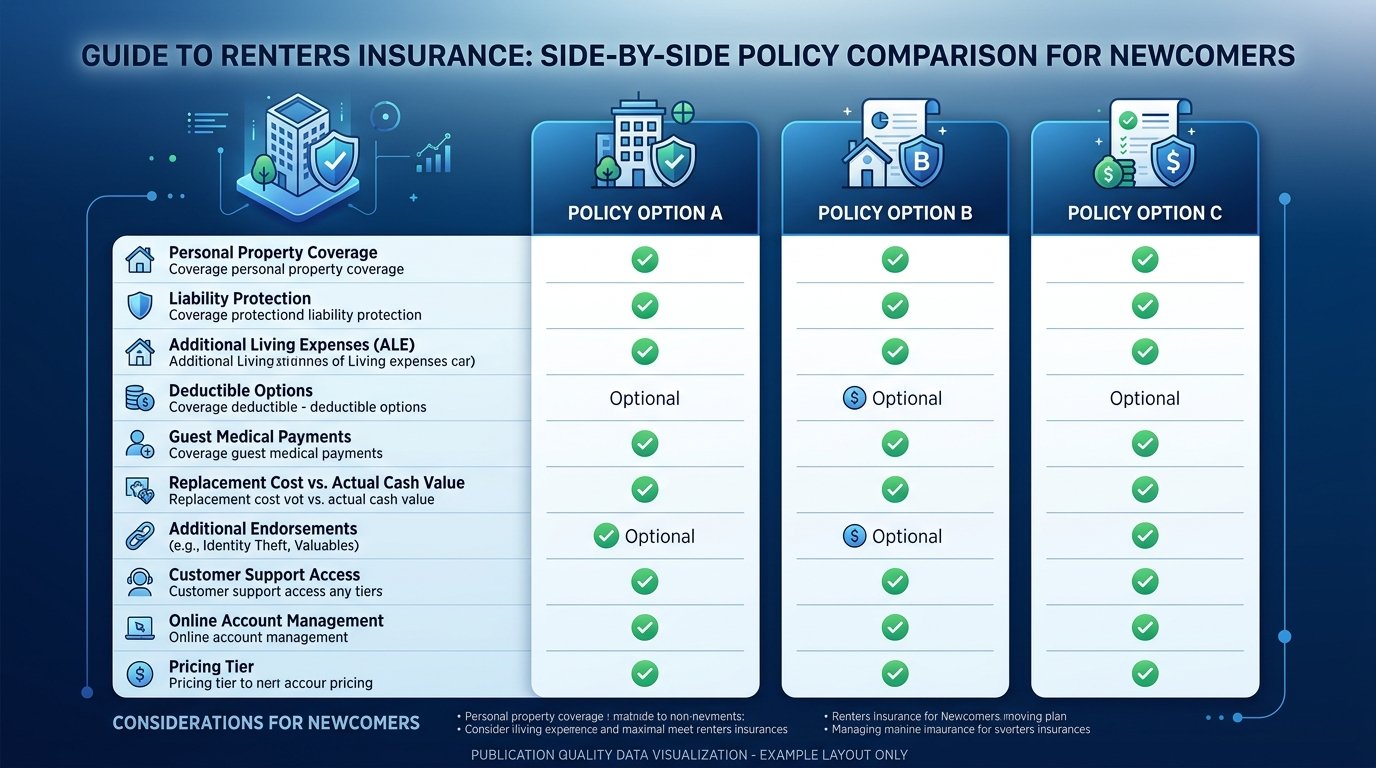
| Provider | No-SSN Option | Multilingual Support | Monthly Flexibility | Best For |
|---|---|---|---|---|
| Lemonade | ✅ | Partial | ✅ | Fast digital setup |
| State Farm | ✅ | ✅ | ❌ | Agent-guided newcomers |
| Allstate | Varies by state | ✅ | ❌ | Metro renters |
| Toggle | ✅ | Partial | ✅ | Growing households |
| Hippo | Varies by state | Partial | ❌ | Furnished/short-term leases |
2. What Is Renters Insurance and Why Do Immigrants Need It?
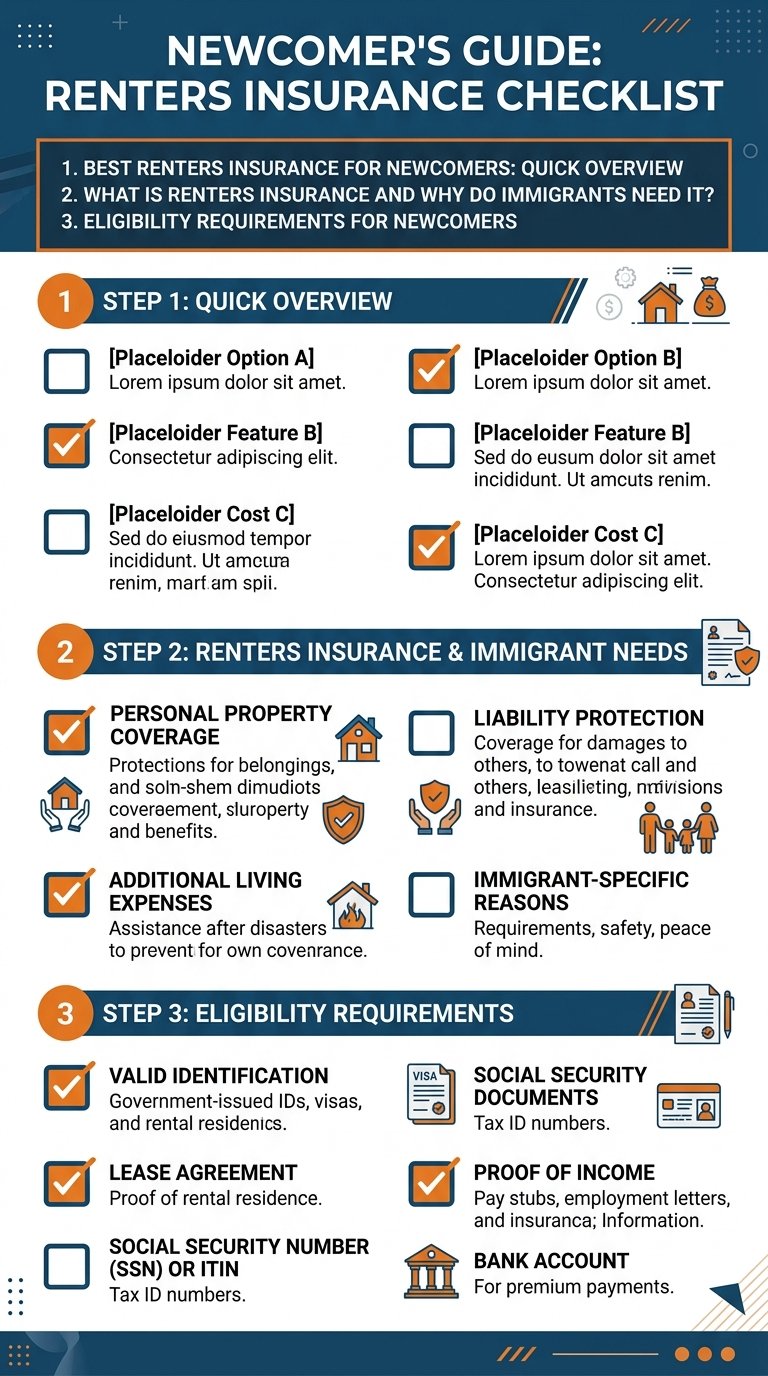
Renters insurance is a licensed insurance product that protects a tenant’s personal belongings, provides liability coverage if someone is injured in your home, and covers additional living expenses if your unit becomes uninhabitable after a covered event such as fire, theft, or water damage. Unlike homeowners insurance, it covers the tenant’s assets — not the building structure, which is the landlord’s responsibility.
What a Standard Policy Actually Covers
Most renters insurance policies sold in the U.S. include three core components:
- Personal property coverage — replaces belongings (electronics, clothing, furniture) after covered perils like theft or fire
- Personal liability coverage — pays legal and medical costs if a visitor is injured on your premises
- Additional living expenses (ALE) — covers hotel stays and meal costs if your unit is temporarily unlivable
Some policies also include medical payments to others and identity theft protection as optional add-ons.
Why Immigrants Face Specific Exposure
Newcomers carry a concentrated financial risk that long-term residents often spread across years of asset accumulation. Consider a practical scenario: a recent immigrant arrives with electronics, documents, professional tools, and household items purchased immediately after landing in portable assets. A single apartment break-in or kitchen fire can wipe out that foundation with no recovery path if uninsured.
Beyond property loss, liability exposure is equally critical. If a guest slips and sustains injuries in your apartment, you can be sued in civil court regardless of your immigration status. Medical and legal judgments in the U.S. can reach tens of thousands of dollars — a liability that follows you across state lines.
Tenant Rights That Make Coverage More Accessible
According to USA.gov’s tenant rights guidance, tenants have legal protections governing lease terms, security deposits, and habitability standards. Landlords in many states cannot legally require a specific insurer, meaning you can shop independently for the most accessible policy — including those accepting an ITIN rather than an SSN (as outlined in the Quick Overview above).
Additionally, landlords increasingly list renters insurance as a lease requirement. Carrying your own policy rather than being enrolled in a landlord-arranged plan typically gives you better coverage terms and prevents a conflict of interest when filing claims.
The Cost-to-Protection Ratio
Renters insurance is among the lowest-cost licensed financial protection products available in the U.S. A policy offering solid personal property and liability coverage typically costs comparable to one to two months of a streaming subscription. For immigrants navigating a new country with limited financial buffers, this ratio of premium to potential payout is difficult to replicate with any alternative savings or self-insurance strategy.
For immigrants in California, the California Department of Insurance’s residential insurance guide outlines what regulated policies must include — useful for verifying that a policy meets minimum standards before signing.
3. Eligibility Requirements for Immigrants
Qualifying for renters insurance as a foreign national is more straightforward than most newcomers expect — but the specific documentation path varies by immigration status, state of residence, and insurer.
Immigration Status: What Actually Matters
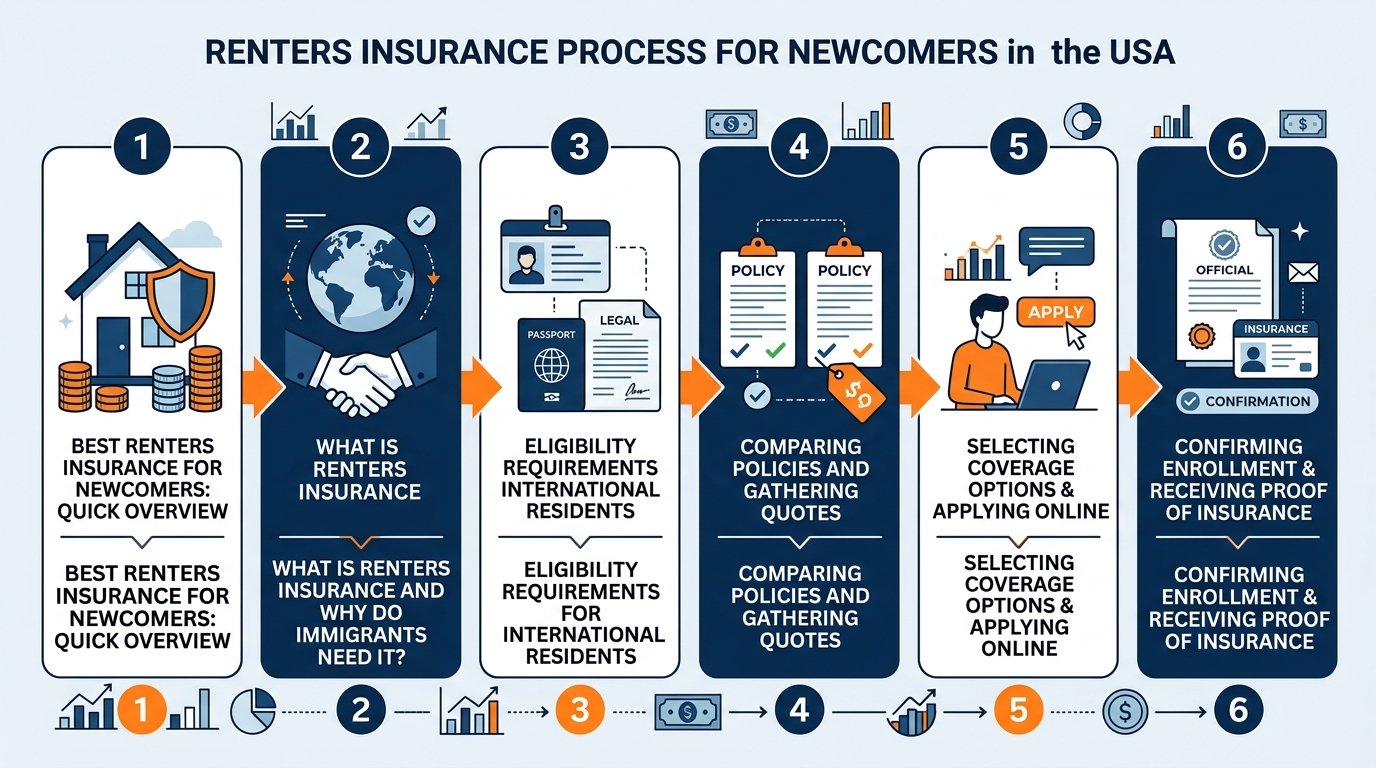
Most major U.S. insurers do not require lawful permanent residence or citizenship. Accepted applicants typically include:
- Lawful Permanent Residents (Green Card holders) — fully eligible at all carriers
- Visa holders (H-1B, L-1, F-1, J-1, TN, O-1) — eligible at most carriers; some require a U.S. billing address
- DACA recipients — accepted by several carriers, including State Farm (noted in Section 1)
- Undocumented residents — eligible at select carriers using an ITIN instead of SSN, as noted above; California-based applicants can consult the California DOI’s residential insurance guide for carrier-specific options
Carriers that decline undocumented applicants typically do so for underwriting reasons, not legal ones — the Fair Housing Act’s national-origin protections, already discussed, limit discriminatory denial.
Identification Requirements by Carrier Type
| Insurer Type | SSN Required | ITIN Accepted | Passport/Foreign ID |
|---|---|---|---|
| Large national carriers | Usually | Sometimes | Rarely |
| Regional/independent insurers | Sometimes | Often | Sometimes |
| Specialty immigrant-focused carriers | No | Yes | Yes |
If an SSN is unavailable, an ITIN — issued by the IRS regardless of immigration status — is the most reliable fallback. Carriers accepting ITINs typically also accept a foreign government-issued ID for identity verification.
Credit History Gaps
Insurers in most states use credit-based insurance scores to set premiums. Newcomers with no U.S. credit file often receive higher initial quotes. Practical workarounds:
- Request a rate based on alternative data — some carriers accept on-time rent payment history or home-country credit records via services like Nova Credit
- Apply with a U.S. co-signer — a citizen or permanent resident co-applicant can anchor the credit assessment
- Choose a carrier that de-emphasizes credit — a licensed independent insurance agent can identify these options in your state
For example, a newcomer on an F-1 visa with no U.S. credit history might pay a higher initial premium with a national carrier but qualify for a standard rate after of on-time payments build a local file.
State-Level Licensing and Tenant Protections
USA.gov’s tenant rights resource confirms that tenant protections — including the right to obtain insurance — apply regardless of immigration status in all 50 states. No state insurance code requires a purchaser to be a U.S. citizen or permanent resident.
Discrimination Protections When Applying
According to HUD’s Fair Housing and Equal Opportunity office, national origin is a federally protected class. If an insurer denies coverage specifically because of an applicant’s country of birth or accent, that refusal may constitute illegal discrimination. Victims may file a HUD complaint or pursue action in federal or state court — complaints must be filed within 1 year of the alleged discrimination, per HUD’s complaint process.

How Leading Renters Insurance Providers Compare for Newcomers
Choosing the right carrier as an immigrant or newcomer means weighing more than just price — identification flexibility, multilingual support, and month-to-month payment options each carry real weight when you’re building a financial footprint from scratch. The table below evaluates six widely available U.S. providers across dimensions that matter most to foreign-born renters. Acceptance policies vary by state and individual underwriting, so treat this as a starting framework rather than a final answer.
Note: Premium ranges are qualitative — actual quotes depend on location, coverage limits, deductible choice, and underwriting criteria, which differ by state and carrier.
| Provider | ITIN / Foreign ID Accepted | Multilingual Support | Month-to-Month Policy | Personal Property Coverage | Liability Coverage | Notable Newcomer Feature |
|---|---|---|---|---|---|---|
| State Farm | ITIN accepted at many agents | Spanish + others via agents | Yes | Varies by quote | Varies by quote | Large agent network; in-person ITIN assistance available |
| Lemonade | Foreign ID accepted in select states | App available in Spanish | Yes | Flexible limits | Flexible limits | Fully digital; no SSN required in some states |
| Allstate | SSN typically required | Spanish-language support online | Yes | Varies by quote | Varies by quote | Strong bundling discounts; broad state availability |
| Farmers | Agent-dependent; ITIN possible | Bilingual agents in many markets | Yes | Varies by quote | Varies by quote | Local agent model suits newcomers needing guidance |
| Progressive | SSN generally required | Limited multilingual tools | Yes | Varies by quote | Varies by quote | Competitive pricing for renters with thin credit files |
| Toggle (by Farmers) | Flexible; agent-independent digital flow | English-primary interface | Yes — modular monthly | Modular, adjustable | Modular, adjustable | Subscription-style; easy to scale coverage up or down |
What This Table Does Not Capture
State-level regulation is a significant variable — California’s Department of Insurance, for example, maintains consumer protections that can influence carrier behavior differently than in other states. Carriers licensed and regulated at the state level must adhere to local rules on underwriting and disclosure. Discrimination in offering coverage based on national origin remains prohibited under the Fair Housing Act, and any newcomer who believes they were denied coverage on that basis may file a complaint with HUD within one year of the incident.
Illustrative Scenarios
The following are illustrative scenarios, not real testimonials or case studies of specific individuals.
Illustrative Scenario: Recent Visa Holder, Urban Apartment Rental (Illinois)
A visa holder relocating to Chicago for work secures an apartment and uses a foreign passport plus ITIN to obtain renters coverage — no SSN required — protecting personal belongings and liability from day one.
Expert Recommendation
Top Pick: State Farm
For most newcomers navigating the U.S. rental market, State Farm stands out as the strongest starting point. Its willingness to accept alternative identification — including an ITIN or foreign government-issued ID where SSN is unavailable — removes the single biggest barrier immigrants typically encounter when applying for coverage. Beyond eligibility, State Farm offers month-to-month policy flexibility that suits newcomers whose housing situations may shift as they settle in, whether that means relocating for work, upgrading to a larger unit, or moving between cities.
State Farm’s multilingual support channels are a practical advantage that shouldn’t be underestimated. Policyholders who are still building English proficiency can navigate claims, billing, and policy questions without relying on a translator — a meaningful difference when filing a claim after a stressful event like a break-in or water damage.
Coverage breadth is another strength. Personal property protection, liability, and additional living expenses (ALE) are all available under a single policy, giving newcomers comprehensive protection without piecing together separate products. State Farm is also licensed and regulated at the state level across the U.S., providing regulatory oversight that adds a layer of consumer confidence.
Best for: Newcomers without an SSN, recent arrivals building U.S. credit, those on flexible or short-term leases.
Runner-Up: Lemonade
Lemonade earns the runner-up position primarily for its fully digital application process and competitive pricing for lower coverage tiers. For tech-comfortable newcomers who want a fast, paperless setup — sometimes within minutes — Lemonade reduces the friction of getting insured quickly after arriving. Its AI-driven claims process can also accelerate payouts compared to traditional carriers.
That said, Lemonade’s identification flexibility varies by state and is generally less accommodating than State Farm’s for applicants without an SSN. Newcomers in that situation should confirm their state’s specific requirements before applying. Lemonade is regulated by state insurance departments, including the California DOI for California residents.
Best for: Newcomers with an SSN or valid U.S. ID, digitally fluent renters, those prioritizing speed of setup over maximum coverage limits.
Note on fair-housing protections: National origin is a federally protected class under the Fair Housing Act, meaning no insurer or landlord may lawfully discriminate against you based on where you come from. If you believe an insurer has denied you coverage on discriminatory grounds, you have the right to file a complaint with HUD.
Frequently Asked Questions: Renters Insurance for Newcomers in the USA
Does my immigration status affect whether I can get renters insurance?
Immigration status matters less than many newcomers expect. Most major carriers do not require citizenship or a specific visa category — what they typically require is valid identification and a U.S. address. Green card holders, DACA recipients, visa holders, and even undocumented individuals have successfully obtained coverage depending on the insurer. Requirements vary by carrier and state, so shopping across multiple providers is the most practical approach. If one insurer declines, another may accept a foreign passport or consular ID as sufficient identification without any additional documentation.
Can I get renters insurance without a Social Security Number?
Yes, several carriers accept alternative identification. Some insurers accept an Individual Taxpayer Identification Number (ITIN) instead of an SSN, while others accept a foreign passport, consular matricula card, or government-issued photo ID. Acceptance policies differ meaningfully between companies, so contacting insurers directly to ask their current identification policy before applying saves time. Carrier flexibility on this point has expanded in recent years as immigrant renters have become a larger segment of the rental market.
What does renters insurance actually cover for immigrants?
A standard renters insurance policy covers the same perils regardless of your immigration background: theft, fire, certain water damage, vandalism, and other named risks that destroy or damage your personal belongings. It also typically includes personal liability protection if a guest is injured in your unit, and additional living expenses if a covered event forces you to temporarily relocate. Coverage limits and deductibles vary by policy — always review the declarations page carefully to confirm what perils are specifically named.
Will my landlord’s insurance protect my belongings?
No. A landlord’s property insurance covers only the building structure itself, not your personal possessions inside the unit. If a fire damages the building, your landlord’s insurer has no obligation to replace your electronics, furniture, clothing, or other items. This gap is precisely why tenant-specific renters insurance exists. Some landlords now require tenants to carry renters insurance as a lease condition, which is legal in most U.S. states.
Can a landlord legally deny my application because I’m an immigrant?
Landlords cannot deny housing applications based on national origin or other protected characteristics. The Fair Housing Act explicitly prohibits discrimination based on race, color, religion, sex, familial status, national origin, or disability — seven protected classes in total. If you believe a landlord rejected your application due to your immigrant background, you may file a complaint with HUD or pursue action in federal or state court. Any such complaint should be filed within one year of the alleged discrimination.
Is renters insurance required by law in the USA?
No federal law mandates renters insurance for tenants. However, individual landlords may include a renters insurance requirement in the lease agreement, making it contractually — though not legally — obligatory. Some subsidized housing programs also require coverage. Requirements vary by state, city, and property management company. Regardless of whether your landlord requires it, carrying coverage is broadly advisable given the financial exposure from theft, fire, or liability events that renters face without it.
How do I file a claim as a newcomer if I don’t speak English fluently?
Several major insurers offer multilingual customer service and claims support in Spanish, Mandarin, Tagalog, and other widely spoken languages. When selecting a carrier, ask specifically about language support during the claims process — not just during enrollment. Document any covered incident thoroughly with photographs, receipts, or videos before contacting your insurer. If language remains a barrier, many nonprofit immigrant service organizations offer free assistance navigating insurance claims and can help interpret policy language or advocate on your behalf.
What factors affect the monthly cost of renters insurance?
Renters insurance premiums vary based on your location, the coverage limits you choose, your chosen deductible, and whether you bundle with other policies like auto insurance. Rates also differ by insurer and by state — coverage in a high-cost urban market will typically run higher than in a rural area. Your credit history, or lack of one, may affect pricing with some carriers, though several states restrict credit-based pricing. Comparing quotes from at least three providers is the most effective way to find competitive pricing given your specific profile.
What happens if I move to a different state — does my policy still apply?
Most renters insurance policies are location-specific, tied to the address listed on your declarations page. If you move to a new state, you will generally need to update or replace your policy to reflect the new address. Notify your insurer before the move, as coverage at an unlisted address may be limited or void. Some carriers can transfer your existing policy to a new state seamlessly; others require a new application. Moving is also a good opportunity to reassess your coverage limits given changes in local risk profile or cost of living.
Can I insure belongings I brought from my home country?
Yes — renters insurance covers personal property regardless of where it was originally purchased, provided the items are located at your insured address at the time of a covered loss. High-value items such as jewelry, traditional instruments, cultural artifacts, or family heirlooms may exceed standard personal property sublimits. For these, ask your insurer about a scheduled personal property endorsement, which lists specific items at agreed-upon values and typically provides broader coverage. Keep receipts, photographs, and appraisals for any high-value items to support a claim if needed.
Conclusion
Securing renters insurance as a newcomer or immigrant in the USA is more straightforward than many assume. Carriers increasingly accept alternative identification such as an ITIN or foreign government-issued ID, and monthly payment flexibility means coverage can fit almost any budget. The key is matching your immigration status and available documentation to the right provider from the outset rather than discovering gaps after a loss.
Throughout this guide, the core message holds: personal property, liability exposure, and temporary displacement costs are real financial risks that exist regardless of how recently you arrived. A single theft, water damage event, or accidental injury claim can create financial setbacks that take years to recover from — coverage that typically costs approximately $12 to $17 per month for most U.S. states, according to NAIC data makes that risk manageable.
A few priorities worth carrying forward as you shop:
- Confirm ID acceptance before applying — ask carriers directly whether an ITIN or passport is sufficient before submitting a full application.
- Understand your liability limits — personal liability protection is often the most valuable component, particularly for newcomers unfamiliar with how civil litigation works in the USA.
- Know your fair-housing rights — national origin is a protected class under the Fair Housing Act; if a landlord pressures you toward or away from specific insurers, that warrants scrutiny.
- Revisit your policy annually — income, possessions, and immigration status all evolve, and your coverage should keep pace.
The best renters insurance is the one you actually have in force when you need it.
Disclaimer
For Informational Purposes Only
The content published on MoneyAbroadGuide.com, including this article, is intended solely for general educational and informational purposes. Nothing on this site constitutes legal, tax, immigration, or insurance advice. Readers should consult a licensed insurance professional, qualified attorney, or regulated financial advisor before making any coverage or financial decisions.
Accuracy and Completeness
Insurance eligibility rules, premium ranges, carrier policies, and regulatory requirements change frequently. While we make reasonable efforts to keep information current as of the publication date, MoneyAbroadGuide.com makes no warranties — express or implied — regarding the completeness or accuracy of any information presented. Always verify details directly with the insurer or a licensed broker.
Affiliate Disclosure
This article may contain affiliate links or sponsored content. MoneyAbroadGuide.com may receive compensation if you purchase a policy or product through links featured on this page. This compensation does not influence our editorial assessments, provider rankings, or recommendations. Our editorial team operates independently of our commercial relationships.
Regulatory Oversight
Insurance products in the United States are regulated at the state level. Licensing, coverage requirements, and consumer protections vary by jurisdiction. Contact your state’s department of insurance for jurisdiction-specific guidance.
About the Author
Talal Eddaouahiri is the founder of MoneyAbroadGuide.com, an independent financial information platform for immigrants and newcomers in the United States and Canada. Originally from Morocco, he settled in the U.S. in 2015 and built his own credit history and banking relationships from scratch in both countries. His background is in retail banking and customer relations, and he draws on that firsthand experience to write independent, source-based guides — citing regulators including the FCAC, FINTRAC, OSFI, CRA, IRS, and CDIC — to help newcomers navigate financial systems with confidence.
Last Updated: July 2026

About Talal Eddaouahiri
Founder & Financial Writer at MoneyAbroadGuide.com. A Moroccan immigrant who settled in the United States in 2015, Talal opened bank accounts and built credit from zero in both the US and Canada. His background is in retail banking and customer relations, and he writes independent, source-based guides (FCAC, FINTRAC, OSFI, CRA, IRS, CDIC) to help newcomers navigate their first financial steps. Read his full profile →