
You can open a bank account in the USA without an SSN in 2026. Here are all your options by situation. Just arrived, no ITIN yet? Open Comun ($0/month, accepts 100+ Latin American IDs or passport, FDIC-insured, online in minutes), Majority ($5.99/month, passport/Latin American ID, includes international calling), or Chime / Current (any foreign passport, $0 fees, 2-minute online setup). Have an ITIN? Walk into Bank of America (passport + ITIN, no SSN), Chase (Secure Banking, $4.95/month waivable, largest ATM network), Wells Fargo (ITIN-friendly, good for international wires), or Citibank Access Account (often $0 fee). Mexican national? U.S. Bank accepts Matrícula Consular as primary ID at many branches; Latino Community Credit Union and Juntos Avanzamos credit unions often accept passport only with $0 monthly fees. Documents to bring: valid foreign passport, ITIN letter (if applicable), Matrícula Consular (Chase/BofA/Wells/U.S. Bank), proof of U.S. address (utility bill, lease, or employer letter dated within 60 days), and a secondary ID. Call the branch ahead to confirm they handle ITIN openings.
Quick Answer — Best Bank For Newcomers To Usa
Additionally, This is your complete guide to best bank for newcomers to USA. 🏆 Best overall for newcomers with SSN: Chase Bank — largest branch network in the U.S., best app, easiest path to credit cards.
Furthermore, 🏆 Best for ITIN holders: Wells Fargo Clear Access or local credit union — most flexible documentation, no overdraft fees.
Moreover, 🏆 Best for zero fees: Chime or Varo — $0/month, no minimums, early paycheck access.
Importantly, 🏆 Best for F-1 students: Bank of America Advantage SafeBalance — $0 fee for students, accepts international student documents.
Notably, 🏆 Best without SSN (international): Wise — open online with just a foreign passport, multi-currency, $0 monthly fee.
What best describes your situation?
Key Facts: Best US Banks for Newcomers Without SSN
- The best bank for you depends on your immigration status — H-1B, F-1, green card, undocumented, or refugee each has a different best option.
- Major banks (Chase, BofA, Wells Fargo, Citibank) all accept ITIN in addition to SSN — call ahead to confirm branch-specific policies.
- Online banks like Chime and Varo charge $0/month but require an SSN — not available for ITIN-only holders.
- Credit unions are often the most welcoming institutions for ITIN holders and undocumented immigrants.
- Avoid banks with high monthly fees if you cannot meet waiver requirements yet — you could lose $180/year ($15/month) unnecessarily.
- Your bank choice directly affects your credit-building path — choose a bank that offers secured credit cards to its account holders.
- Most traditional banks on this list — Chase, Bank of America, Wells Fargo, Citibank, TD Bank, and Varo Bank — are directly FDIC-insured, protecting deposits up to $250,000 per depositor per account category. Credit unions are insured by the NCUA (National Credit Union Administration), not the FDIC, for the same $250,000 limit, backed by the full faith and credit of the U.S. government. Chime is a financial technology company, not a bank — eligible deposits are held at its FDIC-member partner banks. Wise is not a bank; deposit protections depend on the product used (see the Wise section below).
Why Choosing the Right Bank as a Newcomer to the USA Matters
Specifically, Choosing the right bank in the USA is not just about avoiding fees. For newcomers, your bank is the foundation of your entire U.S. financial identity. The bank you choose affects:
- Whether you can open an account at all — some banks are strict about requiring an SSN; others accept an ITIN or foreign passport.
- Your credit-building journey — banks that offer secured credit cards to their customers give you a faster path to a U.S. credit score.
- Your ATM access — a bank with few ATMs near you costs you $3–$5 per withdrawal in fees.
- Your monthly costs — monthly fees of $10–$25 can drain $120–$300 per year from your account if you can’t meet waiver requirements.
- Your international transfer costs — banks charge $25–$50 per international wire. You need a bank you can easily link to a transfer service like Wise.
Best Banks for Newcomers — Full Comparison Table (2026)
| Bank | Accepts ITIN? | Monthly Fee | Fee Waiver | ATM Network | Secured Card? | Best For |
|---|---|---|---|---|---|---|
| Chase Bank | ✅ Yes | $15/mo | Direct deposit $500+ | ~15,000 ATMs, 5,000+ branches | ✅ Yes | H-1B, green card, overall best |
| Bank of America | ✅ Yes | $12/mo (SafeBalance: $4.95) | Under 25 (no student enrollment required); $500 daily balance; qualifying direct deposit | 15,000+ ATMs | ✅ Yes | F-1 students, ITIN holders |
| Wells Fargo | ✅ Yes (+ Matricula Consular) | $5/mo | Primary account owner age 13–24; or $250+ qualifying electronic deposits; or qualifying military direct deposit | 11,000+ ATMs | ✅ Yes | Undocumented immigrants, ITIN |
| Citibank | ✅ Yes | $0–$12/mo | Balance or deposits | 65,000+ ATMs (Citi + AllPoint) | ✅ Yes | International ties, large cities |
| TD Bank | ✅ Yes | $5.99/mo | Min balance $100 | 2,600+ ATMs (northeast) | ❌ No | Northeast USA, extended hours |
| Chime | ❌ SSN only | $0 always | No fee ever | 60,000+ AllPoint ATMs | ✅ Credit Builder | Zero fees, early paycheck |
| Varo Bank | ❌ SSN only | $0 always | No fee ever | 55,000+ AllPoint ATMs | ✅ Varo Believe | High-yield savings (3.75% APY up to $5,000; conditions apply) |
| Wise | ✅ Passport often sufficient; SSN/ITIN may be requested | $0 | No fee ever | Visa debit card | ❌ No | International, multi-currency, no SSN |
| Credit Unions | ✅ Most do | $0–$5/mo | Varies | Shared branching network | ✅ Credit Builder | Refugees, undocumented, community |
Detailed Bank Reviews for Newcomers
1. Chase Bank — Best Overall for Newcomers With SSN
For example, Chase is the largest bank in the United States by assets and has one of the best overall packages for newcomers who have or can quickly obtain an SSN. The Chase Total Checking account has a $15/month fee. The fee is waived when you receive $500 or more in qualifying electronic deposits per statement period, maintain a $1,500 or more minimum daily balance, carry a $5,000 or more average beginning-day balance across linked qualifying Chase accounts, or link this account to a qualifying Chase checking account. Chase has nearly 15,000 ATMs nationwide, a top-rated mobile app, and integrates with Zelle for free instant domestic transfers.
However, The biggest advantage for newcomers is the path to credit building. Chase offers the Chase Freedom Rise credit card specifically for people with no U.S. credit history — you can apply once you have an open Chase checking or savings account — Chase states that having at least $250 in your Chase account can improve your approval odds, though Chase does not guarantee approval for existing customers. This is the fastest path from “no credit” to a real unsecured credit card with rewards.
⚠️ Chase Cons: $15/month fee if you miss waiver requirements. ITIN acceptance varies by branch — always call ahead to confirm.
2. Bank of America — Best for F-1 Students and ITIN Holders
Therefore, Bank of America is one of the most newcomer-friendly major banks, particularly for international students on F-1 visas. The Advantage SafeBalance Banking account charges only $4.95/month, waived for any account owner under the age of 25 — no student enrollment is required and has no overdraft fees — a critical feature for people just starting out. Bank of America accepts ITIN with a foreign passport and proof of address.
As a result, Bank of America also offers the BankAmericard Secured Credit Card, which allows ITIN holders to start building credit. Bank of America may review a secured card account for graduation to an unsecured card, but graduation is not guaranteed and no fixed timeline should be expected. If your account qualifies, Bank of America will notify you.
⚠️ BofA Cons: ITIN policies vary by branch — some branches are much more experienced than others with international documentation.
3. Wells Fargo — Best for ITIN Holders and Undocumented Immigrants
In fact, Wells Fargo has the most welcoming policy for ITIN holders among the Big Four banks. The Clear Access Banking account ($5/month, waived when the primary account owner is between 13 and 24 years old, when the account receives $250 or more in qualifying electronic deposits per fee period, or with a qualifying monthly military direct deposit) accepts ITIN plus foreign passport, and notably also accepts consular identification cards as valid identification — Wells Fargo currently accepts consular cards issued by Mexico, Guatemala, and Colombia.
Also, Wells Fargo also offers Spanish-language banking services and has dedicated Spanish-speaking staff at many branches, making it particularly accessible for Latin American newcomers. The Clear Access account has no overdraft fees by design — your card simply declines if you don’t have funds, protecting you from surprise charges.
⚠️ Wells Fargo Cons: 11,000 ATMs (fewer than Chase/BofA), past history of customer service issues.
4. Citibank — Best for International Ties and Large Cities
In addition, Citibank is particularly valuable for newcomers who have an existing banking relationship with Citi in their home country. Citi operates globally and in some cases allows international customers to pre-establish banking relationships before arriving in the USA. The Citi Access Account is specifically designed for people without an extensive U.S. banking history.
Finally, Citi’s AllPoint ATM network partnership gives access to 65,000+ fee-free ATMs — the largest network among traditional banks. This is a major advantage if you live in an area where Chase or BofA have limited presence.
5. Chime — Best Zero-Fee Online Bank (SSN Required)
Similarly, Chime is a fintech company (not a traditional bank) that offers the most accessible zero-fee banking in the USA. There is no monthly fee, no minimum balance, no overdraft fee, and no foreign transaction fee. The SpotMe feature lets qualifying members overdraft up to $200 with no fee. Early direct deposit gives you your paycheck up to 2 days early.
That said, The Chime Credit Builder Visa is one of the best secured credit cards available — it has no annual fee, no interest charges, and no minimum security deposit requirement (you fund it from your Chime account). It reports to all 3 major credit bureaus and is one of the fastest ways to build credit from scratch.
6. Wise — Best for Multi-Currency Banking Without SSN
Overall, Wise (formerly TransferWise) is not technically a bank but functions as a multi-currency account that is incredibly useful for newcomers. Wise is available in many countries, but not all — availability depends on your country of residence, and Wise is not available in New York or Alaska at this time. A passport is often accepted for registration, but Wise may request additional identity documents including an SSN or ITIN depending on your situation. Wise gives you a USD account number and routing number, which you can use to receive direct deposits and wire transfers.
Indeed, Wise is not a replacement for a traditional bank account — it does not build credit or offer loans. Wise is not an FDIC-insured bank. Standard Wise account balances are safeguarded in segregated accounts at regulated financial institutions, which protects your funds if Wise were to fail — but this is not the same as FDIC insurance. Eligible U.S. customers who activate Wise’s Interest feature may receive pass-through FDIC insurance through Wise’s Program Bank. But it is an excellent complement, especially for newcomers who arrive before getting their SSN, or for those managing money between multiple countries. International transfers through Wise cost a fraction of what banks charge.
7. Local Credit Unions — Best for Refugees and Underserved Communities
Consequently, Credit unions are nonprofit financial cooperatives owned by their members. They are not-for-profit, so they often have lower fees, better interest rates, and more personalized service than large banks. Many credit unions have community missions that include serving immigrants, refugees, and underserved populations. They are often more flexible on documentation requirements than national banks.
In practice, Resettlement agencies for refugees almost always have partnerships with local credit unions. If you are a refugee, ask your resettlement caseworker about the credit union they work with — opening an account there on day one is usually the fastest path to financial stability. Credit unions also frequently offer credit builder loans, which are one of the best ways to build credit if you cannot yet qualify for a credit card.
Best Bank by Immigration Status
| Your Status | Top Bank Pick | Why |
|---|---|---|
| H-1B / L-1 Worker | Chase Bank | Best ATM network, fastest path to Chase credit cards, top app |
| Green Card Holder | Chase or Citibank | Full banking + credit-building products available |
| F-1 Student (with OPT) | Bank of America | Student fee waiver, SafeBalance no overdraft, secured credit card |
| F-1 Student (no work auth) | Bank of America + Wise | BofA for campus banking, Wise for receiving money from home |
| H-4 Spouse (no EAD) | Wells Fargo or Citibank | ITIN accepted, can open joint account with H-1B spouse |
| DACA Recipient | Chase or Chime | SSN from EAD accepted at all banks; Chime for zero fees |
| Refugee / Asylee | Local Credit Union | Resettlement agency partnerships, flexible docs, credit builder loans |
| Undocumented Immigrant | Wells Fargo or Credit Union | ITIN + Matricula Consular accepted, Spanish-language service |
| TN / O-1 Visa | Chase Bank | SSN-based, full product access from day one |
Common Mistakes to Avoid When Choosing a Bank
🚫 7 Bank Selection Mistakes That Cost Newcomers Money
- Choosing a bank because it’s nearby — not because it suits your status — Proximity doesn’t matter if the bank rejects your ITIN. Always verify documentation acceptance first.
- Opening an account with a $12/month fee when you can’t meet the waiver — If you can’t immediately set up direct deposit, choose a no-fee bank (Chime, Varo) or the Wells Fargo Clear Access ($5/mo, easy waiver).
- Not asking about secured credit cards — The whole point of a bank account for a newcomer is to build credit. Chase, BofA, and Wells Fargo all offer secured cards — ask about them when you open your account.
- Picking a bank with few ATMs near your home or workplace — A bank with 2,000 ATMs in rural areas is useless in a major city. Check the ATM locator before committing.
- Opening only a checking account and ignoring savings — Open both at the same time. A high-yield savings account (even if just online) is where your emergency fund should grow.
- Trusting branch staff who say “we don’t accept ITIN” — This is often a training gap, not actual policy. Call the bank’s main line or ask to speak with a manager. At Wells Fargo and BofA, ITIN is officially accepted at the bank level; for Chase and Citibank, call your specific branch ahead to confirm — branch-level policies can vary.
- Using your bank for international transfers — Never wire money internationally through your bank if you can avoid it. The fees ($25–$50) and exchange rate markups (2–5%) are far worse than Wise, Remitly, or OFX. See our guide: Best Way to Send Money from the USA.
Illustrative Scenarios by Immigration Status
H-1B Worker (e.g., San Jose, CA)
Additionally, Consider someone who arrives from India on an H-1B visa and needs a bank account before their first paycheck. They apply for their SSN shortly after arrival but must wait for it. In the meantime, they open a Wise account with their foreign passport — giving them a U.S. account number to receive that first paycheck. When the SSN arrives a few weeks later, they open a Chase Total Checking account in-branch, set up direct deposit, and later apply for an entry-level credit card such as the Chase Freedom Rise. Over the following months of on-time payments and low utilization, they steadily build a U.S. credit history from zero.
Long-Term Undocumented Resident (e.g., Chicago, IL)
Furthermore, Consider someone who has lived in the USA for several years using only cash and money orders. A community organization helps them apply for an ITIN and file back taxes. With their ITIN, a foreign passport, and a Matricula Consular, they open a Wells Fargo Clear Access account — a branch experienced with ITIN accounts can typically complete this in under an hour. Over time, an established ITIN banking history can help support qualification for an ITIN mortgage, though requirements vary by lender.
Resettled Refugee (e.g., Columbus, OH)
Moreover, Consider someone resettled as a refugee through a resettlement agency. Shortly after arrival, a caseworker helps them open an account at a local credit union using their I-94 refugee documentation and the SSN issued at resettlement. Many community credit unions offer newcomer-friendly services and financial education, and some run Credit Builder Loan programs (for example, a small loan repaid over 12 months) that help establish a first U.S. credit history. Availability and program details vary by institution, so ask your local credit union what they offer.
F-1 Student (e.g., New York, NY)
Consider an international student arriving for a master’s program. Many university international-student offices can point students toward banks experienced with student documentation. A common path is opening a Bank of America Advantage SafeBalance account with a foreign passport and enrollment documentation, with the monthly fee waived for students — some banks will open the account with a passport before the SSN arrives. Once the student begins OPT employment and receives an SSN, they can open a secured credit card (for example, with a modest refundable deposit) and begin building a U.S. credit score.
H-4 Spouse (e.g., Dallas, TX)
Consider someone who comes to the USA with their spouse on an H-4 visa. Without an EAD, they have no SSN, so they apply for an ITIN to be claimed on the family tax return. With an ITIN, a foreign passport, and an apartment lease, they may find that some bank branches decline due to policy confusion — but banks with international-banking specialists (such as Citibank) can often open an account successfully. A Wise account can also help receive money from family abroad without bank wire fees. If an H-4 EAD is later approved, the account can be converted to a standard account and an SSN obtained.
DACA Recipient (e.g., Phoenix, AZ)
Consider someone who receives DACA status and an EAD card, giving them their first SSN. They open a Chime account — $0 fees, no minimum balance — and use its Credit Builder card, which requires no security deposit, for everyday purchases like gas and groceries, paying it off regularly. Over several months of consistent, on-time use, they build a U.S. credit history and can move on to mainstream rewards cards. A no-fee account plus a credit-builder product is a common starting point for building credit from zero.
After Opening Your Account: What To Do Next
Internal Resources
- How to Open a Bank Account as a Newcomer in the USA (Step-by-Step)
- ITIN vs SSN: Which Do You Need?
- How to Build Your Credit Score in the USA
- Best Credit Cards for Newcomers in the USA
- Best Way to Send Money from the USA
- Newcomers to the USA — Complete Financial Hub
- Newcomers to Canada — Complete Financial Hub
Frequently Asked Questions (FAQ)
1. What is the best bank for newcomers in the USA in 2026?
For newcomers with an SSN, Chase Bank is the best overall choice — largest branch network in the U.S., best credit card path (Freedom Rise), and top mobile app. For ITIN holders, Wells Fargo Clear Access Banking is the most welcoming. For zero-fee banking with SSN, Chime is unbeatable. For situations where you don’t yet have an SSN, Wise offers a multi-currency account with $0 fees that you can often open with a passport — though Wise may request additional identity verification and is not available in all countries.
2. Which banks accept ITIN instead of SSN?
Bank of America, Wells Fargo, Citibank, and TD Bank officially accept ITIN in place of an SSN to open a checking account; for Chase, ITIN acceptance can vary by branch — call ahead to confirm. In practice, individual branch policies vary — always call the specific branch ahead of your visit to confirm. Wells Fargo is generally considered the most consistently ITIN-friendly of the major banks. Local credit unions are also excellent ITIN-friendly options.
3. Can undocumented immigrants open a bank account in the USA?
Yes. With an ITIN and a foreign passport or Matricula Consular, many U.S. banks will open an account. Wells Fargo, Bank of America, and most community credit unions accept these documents. Having an ITIN is the key — apply for one through the IRS before trying to open a bank account. Some community banks in areas with large immigrant populations also have specific programs for undocumented customers.
4. Is Chime a good bank for newcomers?
Chime is excellent for newcomers who have an SSN — it has $0 monthly fees, no minimum balance, no overdraft fees, early paycheck access, and the Credit Builder card which is one of the best tools for building U.S. credit from scratch. The main limitation: Chime requires an SSN and is not available to ITIN-only holders. Chime is a financial technology company, not a bank — it uses The Bancorp Bank and Stride Bank as banking partners, both FDIC members. Eligible deposits are protected through pass-through FDIC coverage up to $250,000 at these partner banks, which is not the same as being directly FDIC-insured.
5. What is the easiest bank account to open as a newcomer?
Wise is often the easiest to open for those without a U.S. SSN — a passport is frequently sufficient to register, and it can be done online in many countries even before arriving in the USA. Note that Wise is not available in all countries, and may request additional identity documents including an SSN or ITIN depending on your situation. Among traditional banks, Bank of America’s Advantage SafeBalance Banking account and Wells Fargo Clear Access Banking are typically the easiest for newcomers with ITIN. Chase is straightforward for those with an SSN.
6. What bank account should an F-1 student open?
Bank of America Advantage SafeBalance Banking ($4.95/month, waived for any account owner under 25 — no student enrollment required) or Chase College Checking ($0/month for up to 5 years while in college). F-1 students typically present a foreign passport along with proof of enrollment — confirm current document requirements with your specific branch before visiting. If you don’t yet have an SSN, BofA and some Chase branches will open an account with passport alone or with an ITIN.
7. Should I open a checking account, savings account, or both?
Both. Open a checking account for daily spending — it comes with a debit card and direct deposit. Open a savings account simultaneously for your emergency fund. Most major banks offer both in one visit. For your savings account, consider a high-yield savings account at an online bank (Varo, Marcus by Goldman Sachs, Ally) which pays 3.75–5% APY — far more than the 0.01% at traditional bank savings accounts.
8. How do I avoid monthly bank fees as a newcomer?
The easiest ways: (1) Choose a no-fee bank like Chime or Varo (SSN required). (2) At traditional banks, set up qualifying electronic deposits of $500 or more — this waives the $15/month fee at Chase and qualifying fees at Bank of America. (3) For Wells Fargo Clear Access Banking ($5/month), the fee is waived if the primary account owner is between 13 and 24 years old, or with $250 or more in qualifying electronic deposits per fee period. (4) Choose Bank of America Advantage SafeBalance Banking ($4.95/month, waived for any account owner under 25). (5) Maintain the minimum balance if required.
9. What is the difference between a bank and a credit union?
Banks are for-profit corporations owned by shareholders. Credit unions are nonprofit cooperatives owned by their members. Credit unions typically offer lower fees, better interest rates on savings, and more personalized service. They require membership (usually based on your employer, location, or community). For newcomers, credit unions are often more flexible on documentation and have a stronger community mission. Both are federally insured up to $250,000 (FDIC for banks, NCUA for credit unions).
10. Which bank is best for building credit as a newcomer?
Chase is the best path for credit building among traditional banks — the Chase Freedom Rise card is designed for people new to credit and can be applied for once you have an open Chase account, with a $250+ balance improving your approval odds. Note that Chase does not guarantee approval for existing customers and states no specific waiting period. Chime’s Credit Builder Visa (for SSN holders) is the easiest secured card to get — no hard credit check, no minimum deposit required. Bank of America and Wells Fargo also offer secured cards to ITIN holders.
11. Can I have accounts at multiple banks?
Yes, and it is actually recommended. A common setup for newcomers: a Chase or BofA account for your primary checking and credit card relationship, a Chime or Varo account for zero-fee backup banking, and a Wise account for international transfers and receiving money from abroad. There is no limit to how many U.S. bank accounts you can have, and having multiple accounts provides important redundancy.
12. Do I need a minimum deposit to open a bank account?
Most major banks require $0–$25 to open a checking account. Chase requires $0. Bank of America requires $25 for some accounts. Wells Fargo requires $25. Citibank requires $0 for the Access Account. Online banks like Chime and Varo require $0. Bring at least $50–$100 in cash to your first bank visit as a safety margin, even if the official minimum is $0.
13. What is ChexSystems and will it affect me as a newcomer?
ChexSystems is a consumer reporting agency that tracks negative banking history (unpaid overdrafts, fraud, closed-for-cause accounts). When you apply for a bank account, the bank checks your ChexSystems report. As a newcomer with no prior U.S. banking history, your report will be blank — this is not negative. A blank report is treated as neutral. You only have a problem with ChexSystems if you had a prior bad banking experience in the USA.
14. What happens if a bank rejects my application?
If one bank rejects your application (usually due to ITIN policy confusion or ChexSystems issues), try a different bank. If you are an ITIN holder, specifically target Wells Fargo or a local credit union — they are the most consistently ITIN-accepting. If you are rejected due to a ChexSystems record, apply for a second-chance account (Wells Fargo Clear Access, Chime). If you need a bank account immediately, open a Wise account online — it has no rejection based on U.S. banking history.
15. Can I open a bank account for my children?
Yes. Most U.S. banks offer custodial or joint accounts for minors. A parent or guardian (the adult account holder) opens the account on behalf of the child. The child usually needs a Social Security Number (SSN) — minors who are U.S. citizens or green card holders are eligible for an SSN. Chase, BofA, and Wells Fargo all offer custodial checking and savings accounts for children.
16. Is my money safe in a U.S. bank?
Yes, with important distinctions by institution. Traditional banks on this list — Chase, Bank of America, Wells Fargo, Citibank, TD Bank, and Varo Bank — are directly FDIC-insured, protecting deposits up to $250,000 per depositor per account category even if the bank fails. Credit unions are insured by the NCUA for the same $250,000 limit, backed by the U.S. government. Chime is not a bank — eligible deposits are held at FDIC-member partner banks (Bancorp Bank and Stride Bank), providing pass-through FDIC protection. Wise is not a bank and is not directly FDIC-insured; standard Wise balances are safeguarded in segregated accounts, and customers who activate the Wise Interest feature may receive pass-through FDIC insurance through Wise’s Program Bank. In over 85 years of FDIC history, no depositor has ever lost FDIC-insured funds due to a bank failure.
17. What is Zelle and should I use it?
Zelle is a free instant money transfer service built into the apps of Chase, BofA, Wells Fargo, Citibank, and hundreds of other banks. It lets you send money to any U.S. bank customer in minutes using just their phone number or email — completely free. It is the best way to pay rent, split bills, or transfer money between friends in the USA. Note: Zelle payments are instant and cannot be reversed — always verify the recipient before sending.
18. What bank has the most ATMs for newcomers?
Citibank has access to 65,000+ fee-free ATMs through its AllPoint network partnership — the largest of any traditional bank on this list. Chase has approximately 15,000 proprietary ATMs and more than 5,000 branches nationwide. Bank of America has 15,000+. For zero-fee ATM access nationwide, Chime and Varo both use the AllPoint and MoneyPass networks with 60,000+ locations. Charles Schwab Bank reimburses all ATM fees worldwide — a great option if you travel internationally.
19. Should I get a joint account with my spouse?
A joint account is a good option if both spouses are co-managing household finances. Both spouses will need to provide their individual IDs and tax IDs (SSN or ITIN). A joint account means both account holders have equal access to funds. This can be useful for H-4 spouses without an EAD — they can have full banking access through a joint account with their H-1B spouse, even while waiting for their own ITIN.
20. How is a high-yield savings account different from a regular savings account?
A high-yield savings account (HYSA) pays significantly more interest than a traditional savings account. In 2026, HYSAs at online banks like Varo, Marcus by Goldman Sachs, and Ally pay 3.75–5% APY. Traditional bank savings accounts at Chase, BofA, and Wells Fargo pay 0.01–0.05% APY. On a $5,000 emergency fund, a HYSA earns $200–$250/year versus $5/year at a traditional bank. Open your primary checking at a big bank and keep your savings at an HYSA online bank.
21. What bank should I use for international money transfers?
Do not use your bank for international transfers — the fees ($25–$50 per wire) and exchange rate markups (2–5%) are far too expensive. Use Wise for the best exchange rates, Remitly for speed to developing countries, or OFX for large transfers. Keep your regular bank for domestic transactions and use these specialist services for international transfers. The savings over a year can be $300–$1,000 depending on how often you send money home.
22. Can I open a business bank account as a newcomer?
Yes, with the right documents. You need: an EIN (Employer Identification Number) from the IRS, your business formation documents (LLC Articles of Organization or Corporation Articles of Incorporation), a personal ID, and proof of address. Online business banks like Mercury and Relay are particularly newcomer-friendly and do not require in-person visits. Chase, BofA, and Wells Fargo all offer business accounts but may require additional documentation for non-U.S.-citizen business owners.
Sources and References
- FDIC.gov — Federal Deposit Insurance Corporation
- Consumer Financial Protection Bureau (CFPB)
- Chase Bank — Checking Account Options
- Bank of America — Checking Accounts for Newcomers
- Wells Fargo — Clear Access Banking
- Citibank — Access Account
- Chime — No-Fee Banking and Credit Builder
- Varo Bank — High-Yield Savings and Zero-Fee Banking
- Wise — Multi-Currency Account for Newcomers
- NCUA.gov — National Credit Union Administration
- IRS.gov — Individual Taxpayer Identification Number (ITIN)
- Migration Policy Institute — Immigrant Banking Access Data
Conclusion
The right bank makes a real difference for newcomers in the United States. Whether you are an H-1B worker building toward homeownership, an F-1 student starting your financial life, a refugee rebuilding from scratch, or an undocumented immigrant working hard to support your family — there is a bank on this list that was built for you.
The most important thing is to act quickly. Every month without a bank account is a month of lost credit-building time, a month of unnecessary fees on check-cashing, and a month of financial exposure. Open your account today, set up direct deposit, apply for a secured credit card within 90 days, and use a specialist service like Wise for international transfers. Your financial foundation in America starts with that first bank account.
📘 Build Your Credit Score in the USA (2026 Edition)
Want to build your credit faster? Get the complete 112-page guide: Build Your Credit Score in the USA (2026 Edition) by Talal Eddaouahiri.
Step 1: Apply for an ITIN (IRS Form W-7, free, 6–11 weeks). Step 2: Walk into Bank of America with passport + ITIN + US address proof — no SSN needed. No ITIN yet? Open Chime or Current online in 2 minutes with a foreign passport only. Chase, Wells Fargo, and Citi also accept ITIN holders — bring passport plus one additional government ID.
Bank of America, Chase, Wells Fargo, Citi, and TD Bank all accept ITIN holders. Required documents: valid passport, ITIN, and a US address proof (utility bill, lease, or hotel confirmation). Neobanks (Chime, Current, Varo) require only a foreign passport — no ITIN or SSN needed.
Yes, using neobanks. Chime, Current, and Varo accept a foreign passport only — no SSN or ITIN required. They provide a VISA or Mastercard debit within 5–10 days and are FDIC-insured. These work as temporary accounts while your ITIN application processes (6–11 weeks).
About Talal Eddaouahiri
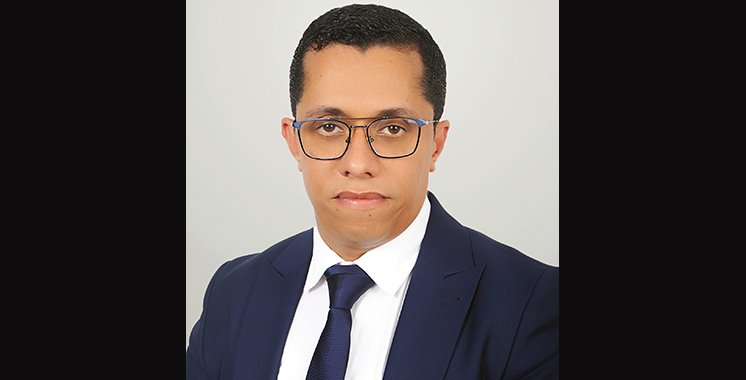
Founder & Financial Writer at MoneyAbroadGuide.com. A Moroccan immigrant who settled in the United States in 2015, Talal opened bank accounts and built credit from zero in both the US and Canada. His background is in retail banking and customer relations, and he writes independent, source-based guides (FCAC, FINTRAC, OSFI, CRA, IRS, CDIC) to help newcomers navigate their first financial steps. Read his full profile →