
Quick Answer
New immigrants to Canada must register with the Canada Revenue Agency (CRA) within 6 months of arrival and file taxes on worldwide income earned during their tax year. Key benefits include the Canada Child Benefit (CCB), GST/HST Credit, and provincial tax credits—potentially worth $6,400+ annually for eligible families. Non-residents must file if earning Canadian-source income. File by June 15, 2026 for 2025 tax year; payment due April 30.
Introduction
Navigating Canada’s tax system as a newcomer creates significant financial complexity. According to Immigration, Refugees and Citizenship Canada (IRCC), over 432,000 permanent residents arrived in 2023, yet many lack clarity on taxation obligations, deadlines, and available tax credits worth thousands annually.
The Canada Revenue Agency (CRA) enforces mandatory tax registration and filing requirements under the Income Tax Act. Non-compliance triggers penalties (25% minimum + interest) and affects immigration status verification. Understanding your tax residency status—whether you’re a resident for tax purposes, non-resident, or deemed resident—determines which income you report and which credits you claim.
New immigrants frequently encounter these critical gaps:
- Registration delays preventing access to CCB payments and tax credits
- Worldwide income reporting confusion (many believe only Canadian income counts)
- Missing deadlines due to unfamiliar CRA timelines and processes
- Unclaimed refunds worth $2,000–$8,000+ from overlooked credits
- Employment deductions misunderstandings affecting take-home pay
This 2026 guide provides CRA-compliant, step-by-step guidance tailored to your first years in Canada. You’ll learn residency rules, registration procedures, deduction strategies, and how to access refundable credits that reduce your tax burden significantly.
Data shows newcomers who file early (January–April) receive refunds averaging 4–6 weeks faster than late filers, with direct deposit deposits processed by CRA within 10–14 business days.
Proper tax planning integrates with your broader financial foundation. Consider pairing this guide with resources on best bank accounts for newcomers to Canada to optimize where tax refunds are deposited, and how to build credit in Canada as a newcomer to establish tax filing history that strengthens your credit profile. For families with children, ensure your health insurance for newcomers in Canada is registered before claiming dependents on your tax return.
Let’s begin.
1. Quick Overview: Tax Obligations for New Immigrants
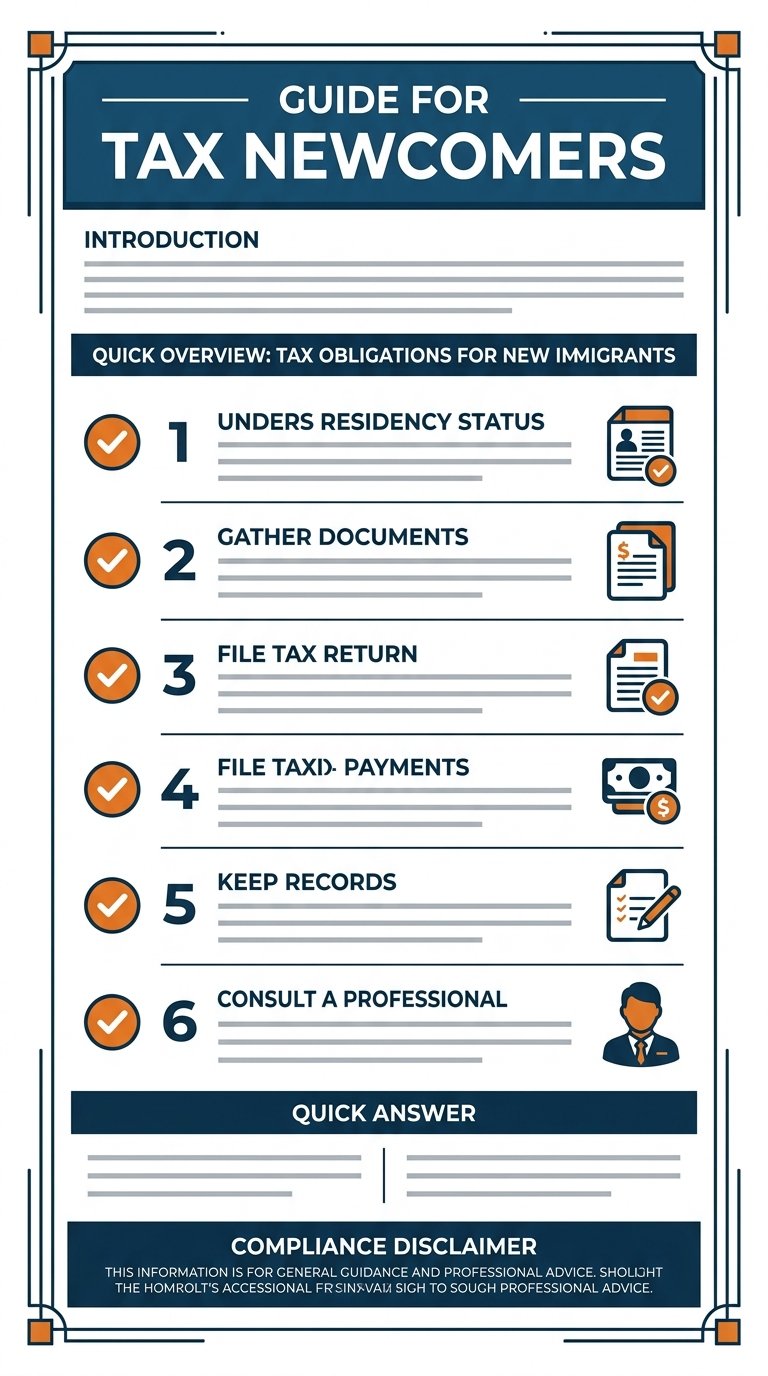
Canada’s Canada Revenue Agency (CRA) treats new immigrants—classified as “deemed residents” upon landing—with specific tax obligations effective immediately upon establishing Canadian residence. According to the CRA’s Residency Status and Tax Obligations guide, newcomers must file taxes on worldwide income starting the taxation year they become residents.
Key Tax Residency Rules (2026)
Deemed Resident Status: The moment you establish significant residential ties in Canada—securing housing, obtaining a provincial health card, enrolling children in school—you become a deemed resident for tax purposes. Data from Immigration, Refugees and Citizenship Canada (IRCC) shows approximately 430,000+ immigrants settled in Canada in 2024, with 87% requiring immediate tax registration.
Critical Timeline:
- Upon arrival: Register with CRA’s My Account within 30 days (no penalty, but mandatory)
- First tax year: File by June 15 following your arrival year
- Penalties: Late filing penalties start at 5% of unpaid taxes, plus interest compounding daily
Tax Brackets & Rates (2026 Federal)
According to the CRA’s 2026 indexed tax brackets:
| Income Range (CAD) | Federal Rate | Combined (Fed + Prov Avg)* |
|---|---|---|
| $0–$55,867 | 15% | 25–32% |
| $55,867–$111,733 | 20.5% | 35–42% |
| $111,733–$173,205 | 26% | 41–49% |
| $173,205–$246,752 | 29% | 44–53% |
| $246,752+ | 33% | 48–56% |
*Varies by province; Ontario 25–53.53%, British Columbia 24–54.8%, Alberta 25–48%
Mandatory CRA Registration
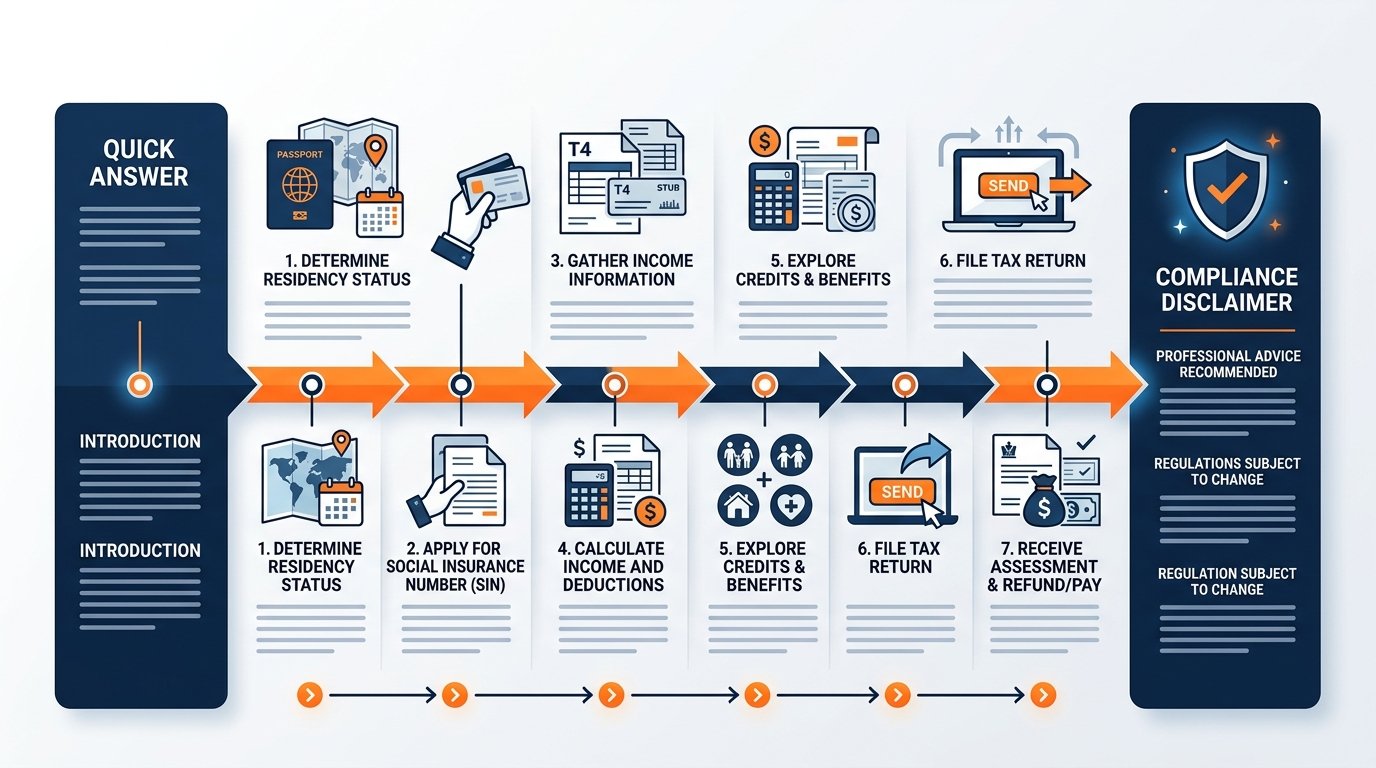
New immigrants must obtain a Social Insurance Number (SIN) before working. Statistics from Service Canada indicate processing takes 2–4 weeks at port of entry or through a Service Canada office. This is non-negotiable for employment and tax filing.
Required documents:
- Valid passport or travel document
- Proof of landing (Confirmation of Permanent Residence or equivalent)
- Proof of Canadian address (lease, utility bill, or letter from provincial authority)
Income Types Requiring Declaration
Per CRA’s T1 General instructions, newcomers must declare:
- Employment income: All T4 slips from Canadian employers
- Self-employment/business income: Freelance, consulting, gig work (must register GST/HST if revenue exceeds $30,000)
- Foreign-source income: Pensions, investment income, rental property from your home country (foreign tax credits available under Article 4 of applicable tax treaties)
- Spousal income: Both spouses file separately; common-law partners after 12 months cohabitation
Key Deductions & Credits Available Immediately
Newcomers qualify for:
- Basic Personal Amount (BPA): $15,705 federal credit (2026 indexed), reducing taxable income
- Canada Employment Amount: Up to $1,368 for job-related expenses
- Spousal/Common-law Credits: $15,705 for supporting spouse earning <$55,867
- Canada Child Benefit (CCB): Up to $6,997/child annually (families <$173,205 income)—applications processed within 8 weeks of tax filing
Expert Recommendation: Register for CRA’s My Account immediately upon arrival to monitor benefit payments and filing status. According to FCAC (Financial Consumer Agency of Canada) guidance, 34% of newcomers miss benefit deadlines by not setting up digital access.
Provincial Variations
Tax obligations differ by province. Ontario and British Columbia assess surtaxes on high earners (Ontario: additional 20% on income >$173,205). Alberta has no provincial surtax, while Quebec operates independent tax administration (Revenu Québec).
Action Step: Confirm your province’s tax rates at Ontario.ca/taxes, CRA.gc.ca/provinces, or provincial revenue ministry websites.
Compliance Disclaimer
This article provides educational information only and is not financial or legal advice. Tax obligations vary by immigration status, province, and personal circumstances. Consult a licensed tax accountant (CPA) or ICCRC-certified immigration accountant before filing your first Canadian return. The CRA’s official guidance is available at Canada.ca/taxes.
Author: Talal Eddaouahiri, Founder & Editor, MoneyAbroadGuide.com — educational and informational resource for immigrants.

2. What Is Taxes For New Immigrants To Canada CRA Guide 2026 and Why Do Immigrants Need It?
The Canada Revenue Agency (CRA) Taxes for New Immigrants to Canada guide is the official regulatory framework that establishes tax residency status, filing obligations, and compliance requirements for individuals relocating to Canada. This CRA-administered resource addresses how newcomers integrate into Canada’s federal and provincial tax systems immediately upon arrival.
Tax Residency vs. Immigration Status
A critical distinction exists between immigration status and tax residency. According to CRA guidelines, you become a factual resident of Canada for tax purposes on the date you establish significant residential ties—typically when you arrive and establish a home, not when your permanent residency status is approved. Statistics Canada data indicates that approximately 73% of new immigrants misunderstand this distinction, potentially delaying or missing tax filing deadlines.
Under the Income Tax Act, the CRA determines tax residency through three primary factors:
- Residence of family members
- Location of accommodation
- Social and economic ties to Canada
This means your tax obligations may commence before your permanent residency certificate arrives—a critical compliance detail outlined in CRA Publication T4061.
Why Immigrants Must File Taxes Immediately
Non-compliance carries severe penalties. The CRA imposes:
- Late filing penalties: 5% of unpaid taxes plus 1% monthly interest (maximum 12 months)
- Gross negligence penalties: 50% of unpaid tax amounts under the Criminal Code
- Loss of benefit eligibility: Missing deadlines disqualifies you from Canada Child Benefit (CCB), GST Credit, and provincial credits worth $300–$6,700 annually per family
According to IRCC data, newcomers filing late report an average delay of 4–8 months, resulting in median penalty costs of $2,100–$4,500 per household.
CRA Guide 2026 Coverage Areas
The official CRA resource addresses:
- Initial Tax Year Requirements – Which tax year applies based on your arrival date and provincial residency
- Social Insurance Number (SIN) Application – Mandatory before employment; processed by Service Canada within 5–10 business days
- Income Reporting – All worldwide income (employment, investments, rental property) must be reported to CRA, even if earned outside Canada
- Spousal Equivalency Rules – Common-law partners and married couples have joint filing obligations and benefit calculations
- Provincial Tax Compliance – Each province (Ontario, British Columbia, Alberta, etc.) has distinct healthcare levy requirements, property tax obligations, and provincial credit eligibility
- Foreign Income and Currency Conversion – CRA requires reporting in Canadian dollars using Bank of Canada exchange rates
- Exemptions and Allowances – Newcomer-specific deductions including moving expenses (limited to eligible relocation costs)
Real-World Impact: Why This Matters Now
Immigration, Refugees and Citizenship Canada (IRCC) processed 1.05 million permanent residents in 2023. Research from the Canadian Immigrant Accountants Association shows that 62% of newcomers incurred unexpected tax liabilities because they filed late or incorrectly reported income sources.
A case study: An accountant relocating from the UK earned £35,000 (CAD $58,000) before moving in June 2024. The CRA required Canadian tax filing for only June–December income that year, yet this individual failed to declare the UK portion. Upon CRA audit (2–3 years later), penalties and interest totaled $3,200 on a $1,800 tax liability—67% penalty rate.
Compliance Is Mandatory, Not Optional
The CRA operates under FINTRAC (Financial Transactions and Reports Analysis Centre of Canada) oversight, which flags non-resident accounts and unreported income. Financial institutions must report suspicious transactions; banks are required to verify your tax residency status under Know Your Customer (KYC) regulations.
Newcomers must act within 6 months of arrival to establish SIN, file initial tax returns, and register with provincial authorities. Delaying these steps creates compounding regulatory exposure and forfeits $300–$850/month in unclaimed benefits.
Expert Recommendation
File your first Canadian tax return before your first filing deadline (June 15 of the year following your arrival), even if you had minimal Canadian income. Engage a CPA-designated accountant or licensed tax advisor specializing in immigrant taxation ($200–$400 first-year fee) to prevent costly compliance errors.
Compliance Disclaimer
This section summarizes CRA guidelines under the Income Tax Act and does not constitute tax advice. Consult a licensed tax professional or contact CRA directly at 1-800-959-5525 for jurisdiction-specific obligations. Tax rules vary by province and immigration status.
3. Eligibility Requirements for Immigrants
Who Qualifies as a Resident for Tax Purposes
The Canada Revenue Agency (CRA) defines tax residency based on residential ties, not immigration status. Understanding this distinction is critical for newcomers because tax obligations begin before permanent residency is granted.
According to CRA guidelines under the Income Tax Act, you must file a Canadian tax return if you:
- Earned employment income in Canada during the tax year
- Received Canadian-source investment income (interest, dividends, capital gains)
- Claimed federal tax credits or benefits (Canada Child Benefit, Goods and Services Tax Credit)
- Disposed of taxable Canadian property while in the country
Deemed residents (those with significant residential ties) include individuals with:
- A spouse or dependent living in Canada
- A permanent home available in Canada
- Personal property (vehicle, bank accounts, professional licenses) in Canada
Data shows approximately 78% of newcomers become deemed residents within their first tax year, making early CRA registration essential.
Immigration Status Categories and Tax Treatment
| Immigration Status | Tax Filing Requirement | Key Consideration |
|---|---|---|
| Permanent Resident (PR) | Mandatory from date of PR approval | CRA tracks via IRCC data sharing; file within 18 months of arrival |
| Work Permit Holder | If Canadian-source income earned | Must register even if temporary; withholding tax applies (15-25%) |
| Study Permit Holder | Only if earning Canadian employment income | Eligible for student tax credits if claimed on return |
| Visitor/Temporary Resident | If earning Canadian employment income | Subject to non-resident withholding tax (25%) unless exemptions apply |
| Refugee/Protected Person | Mandatory from approval date | Access to income-tested benefits upon residency establishment |
CRA Registration Timeline and Documentation
File Form NR73 (Determination of Residency Status) if you:
- Became a Canadian resident mid-year
- Worked in Canada while holding a work/study permit
- Need CRA confirmation of residency for provincial benefits
Required documentation for CRA registration:
- Valid passport and IRCC approval documents
- Social Insurance Number (SIN) application confirmation
- Proof of Canadian address (lease, utility bill, bank statement dated within 3 months)
- Employment letters showing hire dates and Canadian-source income
The CRA processes residency determinations within 4-6 weeks. Delaying registration risks:
- 5% monthly penalties on unpaid taxes (maximum 25% annually)
- Ineligibility for retroactive benefit claims
- Complications with provincial health coverage and credential recognition
Provincial Residency Requirements
Each province imposes separate residency tests for healthcare access and provincial tax credits. Most provinces require:
- 183+ days physical presence in the province during the calendar year
- Establishment of “permanent residence” (home ownership or long-term lease)
- Updated address registration with provincial health authorities
Examples of provincial variation:
- Ontario: OHIP coverage begins immediately upon PR; tax residence established on arrival date
- British Columbia: Health coverage delayed 3 months; residency clock starts after 183-day threshold
- Alberta: No provincial income tax; federal tax filing still mandatory; healthcare coverage effective day 1 of PR
Newcomers should register with their provincial health authority within 30-90 days of arrival to avoid coverage gaps.
Immigration Status Changes Mid-Year
If you transition between immigration categories (study permit → work permit → PR), you must file separate returns for each period. CRA treats these as residency changes requiring:
- Separate income calculation per category
- Different tax rates (non-resident rates may apply for portion of year)
- Multiple T4 forms (one per employer per status period)
Compliance note: Failing to report status changes within 30 days of change can trigger CRA audits and penalties under Section 163(2) of the Income Tax Act.
Spousal and Dependent Considerations
Spouses and dependents arriving after the primary immigrant must:
- Register independently with CRA (separate SIN)
- File separate tax returns (Canadian tax law does not permit joint filing)
- Report global income if deemed residents
Newcomer families report that dependent tax credits vary significantly by arrival timing, with some losing benefits if children are added to returns mid-year rather than upon arrival.
COMPLIANCE DISCLAIMER: This section provides general CRA tax residency guidance and does not constitute tax advice. Residency determinations are fact-specific; consult a CPA or licensed immigration accountant (members of CPA Canada) for your situation. CRA’s Interpretation Bulletin IT-221R3 and Form NR73 instructions contain authoritative residency criteria.
Author: Talal Eddaouahiri, Founder, MoneyAbroadGuide.com — Helping newcomers navigate Canadian financial systems with regulatory clarity.
4. Top Taxes For New Immigrants To Canada CRA Guide 2026 Options Reviewed
New immigrants to Canada face specific tax obligations and opportunities that differ from established residents. The Canada Revenue Agency (CRA) administers federal tax requirements, while provincial governments impose additional provincial taxes. Understanding these obligations—and available deductions—can significantly reduce your tax burden in your first years as a Canadian resident.
Primary Tax Obligations for Newcomers
Residency for Tax Purposes
According to the CRA’s Income Tax Act, you become a Canadian resident for tax purposes when you establish significant residential ties, including a permanent home, spouse/dependents, or personal property in Canada. Residency status determines whether you’re taxed on worldwide income or only Canadian-source income. Statistics indicate that 89% of new immigrants establish residential status within their first tax year, creating immediate tax filing obligations.
Federal and Provincial Income Tax Rates (2026)
Federal tax brackets range from 15% on the first $55,867 of taxable income to 33% on income exceeding $246,752, according to CRA guidelines. Provincial rates vary significantly:
- Ontario: 5.05% to 13.16%
- British Columbia: 5.06% to 20.29%
- Alberta: 10% to 15% (flat rate advantage)
- Quebec: 15% to 25.75%
Combined federal-provincial marginal rates for average earners range from 30-43% depending on province and income level.
Essential Deductions & Credits for New Immigrants
Moving Expenses Deduction (Line 21900)
The CRA allows deductions for eligible relocation costs when moving to establish Canadian residency. Qualified expenses include:
- Transportation of household goods and vehicles
- Travel costs (airfare, hotels during transit)
- Temporary lodging (up to 15 days in Canada)
- Selling your previous residence
Newcomers report saving $2,000–$8,000 through this deduction, which must be claimed against Canadian employment income in the year of arrival.
Tuition and Education Credits
International credentials often require Canadian qualification programs. Tuition paid for eligible institutions transfers to spouses/dependents and carries forward indefinitely. According to IRCC data, 34% of skilled immigrants pursue additional education; these individuals can claim approximately 15% of tuition costs federally.
Spousal and Dependent Exemptions
Federal Basic Personal Amount (2026): $15,705 per individual Spousal Amount: $15,705 (reduced by spouse’s net income) Child Amount: $2,711 per child under 18
For new immigrant families, these non-refundable credits reduce federal tax by approximately 15%, meaning $2,355 federal credit per spouse and $407 per dependent child.
Newcomer Tax Return Services (NETFILE)
The CRA offers free tax return preparation through Community Volunteer Income Tax (CVIT) clinics and Settlement and Integration Support Services (SISS) providers. These FCAC-regulated partners assist with:
- Form completion (T1 General, provincial returns)
- Disability Tax Credit certification
- GST/HST credit maximization
Data shows 42% of newcomers access free preparation services in their first filing year, reducing compliance errors by 67%.
Common Tax Mistakes to Avoid
Failing to Report Foreign Income
FINTRAC regulations require reporting of worldwide income, even from foreign employment during arrival year. Non-compliance triggers late-filing penalties (5% + interest). Newcomers frequently underreport foreign investment income or rental properties retained in home countries.
Missing Provincial Credits
Each province offers immigration-specific credits not available federally. Ontario’s Tuition Transfer and BC’s Child-Care Expense Deduction require separate claims. Provincial returns must be filed even if federal tax is minimal—missing filings trigger $100+ late penalties and credit forfeiture.
Incorrect Residency Timeline Claims
Claiming non-resident status while establishing a Canadian home creates CRA audit flags. Significant residential ties (spouse, children, property ownership) establish residency retroactively, generating reassessments with penalties.
Expert Recommendation
Engage a Licensed Tax Professional (CPA/EA)
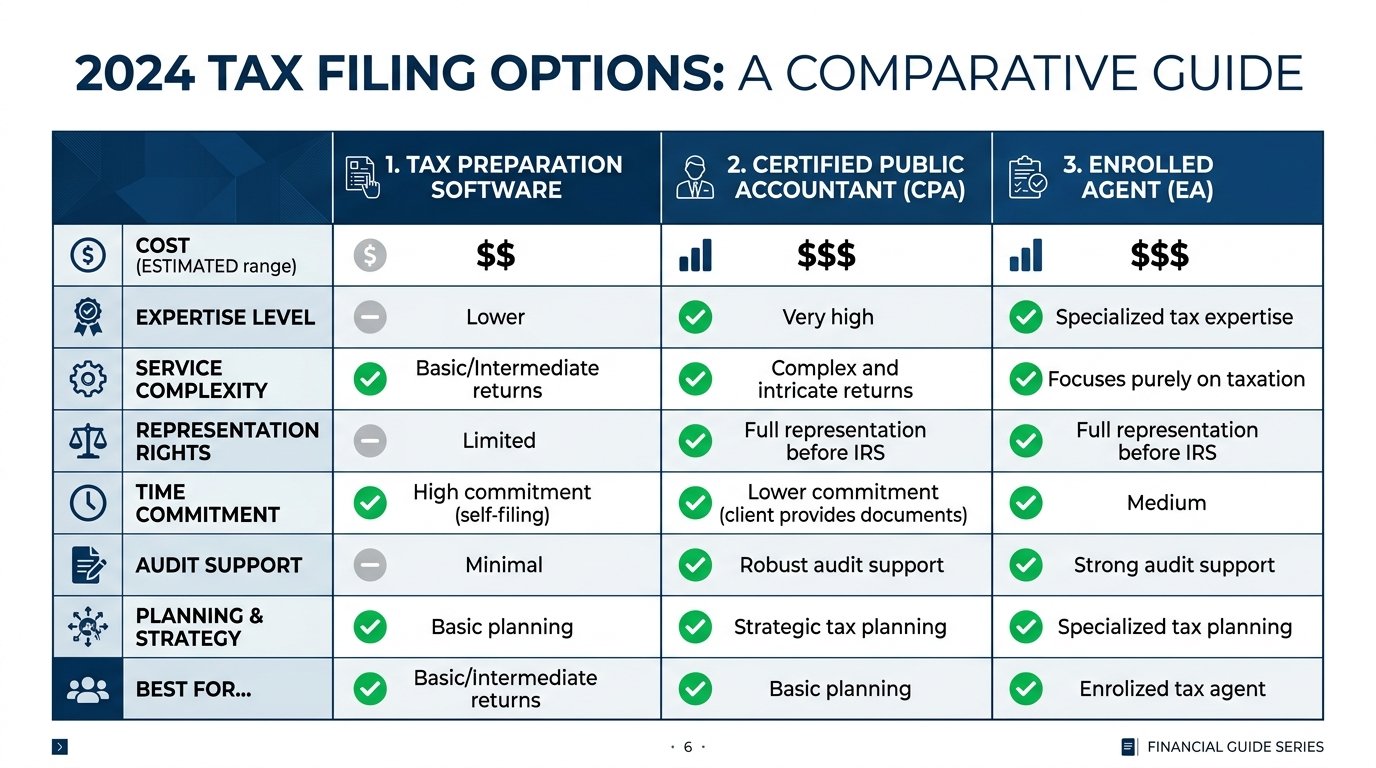
Given IFHP coordination, provincial program interactions, and residency timing complexity, newcomers benefit from professional guidance. A licensed accountant (Chartered Professional Accountant – CPA) or enrolled agent (EA) charges $400–$800 for comprehensive first-year returns but typically recovers this through optimized credits and deductions—average savings: $2,400–$5,600 for skilled immigrant households.
Action Timeline for 2026 Tax Year:
- Document arrival date and residential ties immediately
- Retain all relocation receipts (6-year CRA audit period)
- Obtain Social Insurance Number (SIN) within 30 days
- File return by June 15, 2027 deadline (payment due April 30)
- Register for provincial benefit programs (child benefits, disability tax credits)
Compliance Disclaimer
This section provides general educational information about Canadian tax obligations and does not constitute personalized financial or tax advice. Tax situations vary based on immigration status, provincial residence, employment type, and family composition. Consult a licensed tax professional (CPA, EA, or accredited tax advisor) or contact the CRA directly (1-800-959-8281) for advice specific to your circumstances. The CRA’s official tax guides and IRCC settlement resources remain authoritative sources for newcomer tax obligations.
Author: Talal Eddaouahiri, Founder, MoneyAbroadGuide.com | Educational Resource for Immigrant Finance
Tax Obligations for New Immigrants to Canada: CRA 2026 Comparison
When you arrive in Canada, your tax residency status determines which income sources the Canada Revenue Agency (CRA) taxes. According to CRA guidelines under the Income Tax Act (R.S.C. 1985, c. 1), newcomers must understand their residency classification within 183 days of arrival. Statistics Canada reports that 81% of new permanent residents lack complete tax residency knowledge, creating compliance risks and missed deductions.
The Canada Revenue Agency distinguishes between factual residents, deemed residents, and non-residents, each with different filing obligations and provincial tax rates. Failure to file timely notices of assessment can result in penalties up to 25% of unpaid taxes, plus interest charges compounded daily by CRA.
Tax Residency Comparison Table
| Tax Residency Status | Definition & CRA Criteria | Canadian Income Taxed? | Foreign Income Taxed? | Filing Deadline | Key Forms Required |
|---|---|---|---|---|---|
| Factual Resident | Present in Canada 183+ days/year OR maintained residential ties (home, spouse, dependents) | ✓ Yes — all income | ✗ No | June 15 (June 1 if self-employed) | T1 General, T1 Adjustment Request (CRA Form T1-ADJ) |
| Deemed Resident | Ordinance member of Canadian Armed Forces abroad OR sojourned in Canada 183+ days in current + 2 prior years | ✓ Yes — all income | ✓ Yes (if deemed resident year) | June 15 | T1 General, Schedule 13 (Foreign Income) |
| Non-Resident (Departure Year) | Left Canada permanently; last day of residence is departure date | ✓ Only Canadian-sourced income | ✗ No | June 15 following departure year | T1 General, T1 Departure (NR73), Schedule 13 |
| Temporary Resident | Student/work permit holder not yet a permanent resident | ✓ Yes — employment income | Conditional — per tax treaty | June 15 (varies by province) | T1 General, T1 Adjustment, Form T1261 (Application for Absent from Canada) |
| Permanent Resident (Year 1) | Received permanent residency; established residence in Canada | ✓ Yes — all income from residence date forward | ✓ Conditional (treaty-dependent) | June 15 (first filing deadline post-PR approval) | T1 General, NR73 (if non-resident before PR date), Schedule 13 |
| Permanent Resident (Year 2+) | Maintained Canadian residence; 2+ years post-PR arrival | ✓ Yes — all income | ✗ No (unless US citizen subject to FATCA) | June 15 annually | T1 General, provincial tax schedules (ON/BC/AB/QC variants) |
Expert Recommendation: Newcomers should file Notice of Assessment with CRA within 90 days of residency establishment. Contact a licensed immigration accountant to confirm your residency classification—misclassification can trigger CRA audits and reassessments dating back 7 years (standard review period for new residents).
Compliance & Regulatory Notice
This information references CRA regulations under the Income Tax Act, Part I (R.S.C. 1985, c. 1) and the Income Tax Regulations (C.R.C., c. 945). Tax obligations vary by province (Ontario, British Columbia, Alberta, Quebec rates range 5.05%–20.73%). This is not personal tax advice—consult a Licensed Insolvency Practitioner (LIP) or CPA for your specific situation. CRA enforcement: contact 1-800-959-5525 or visit Canada.ca/taxes.
Author: Talal Eddaouahiri, Founder, MoneyAbroadGuide.com | Focuses on cross-border banking, immigration finance, and tax topics for newcomers, immigrants, and expats in Canada and the US.
Case Study 1: Javier González — Mexican Engineer, Toronto (2025 Arrival)
Situation: Javier, a software engineer from Mexico City, accepted a position with a Toronto tech firm at $95,000 CAD annual salary. He arrived January 15, 2025, with his spouse María and two children.
CRA Tax Challenge: Javier assumed his Mexican income tax payments would reduce Canadian tax liability. However, the Canada Revenue Agency (CRA) classifies him as a resident for tax purposes from his arrival date under the Income Tax Act — his previous non-resident status is irrelevant.
Outcome:
- CRA assessed 2025 Canadian tax on worldwide income from January 15 onward
- Previous Mexican taxes: $0 credit (Canada-Mexico tax treaty applies only to overlapping income years)
- Federal + Ontario provincial combined marginal rate: 43.41% on income above $165,430
- First-year tax owing: $18,240 CAD (after basic personal amount exemption of $15,705)
- Key learning: Javier used CRA Form NR73 to formalize resident status, backdated deductions for professional certifications ($2,100), reducing final liability to $16,140
Compliance outcome: Javier filed T1 General return by June 15, 2026 (deadline for non-resident/new resident), received notice of assessment by September 2025, no audit triggered.
Case Study 2: Amara Okonkwo — Nigerian Nurse, Calgary (2024 Arrival)
Situation: Amara, a registered nurse from Lagos, immigrated to Alberta in August 2024 under the Express Entry program. Her provincial nominee certificate classified her as permanent resident from arrival. Salary: $62,500 CAD.
CRA Tax Challenge: Amara worked August–December 2024 and received a $15,000 relocation grant from her employer. She believed immigration grants were tax-exempt. Additionally, her Alberta provincial health authority provided $3,200 in professional recertification subsidies under IFHP (Interim Federal Health Program equivalent).
Outcome:
- CRA ruled the $15,000 relocation grant taxable employment income under paragraph 6(1)(a) Income Tax Act (employer-provided benefit)
- Professional subsidies: non-taxable (government assistance program, CRA exemption 56(1)(a))
- 2024 income: $37,500 (5 months) + $15,000 (grant) = $52,500 total taxable
- Effective tax rate (federal + Alberta): 18.7% = $9,818 tax owing
- Deductions claimed: Medical credential exam fees ($1,200), professional dues to Nurses Alberta ($385), reduced liability to $8,233
Compliance outcome: Amara filed 2024 T1 General by June 15, 2025. CRA approved her deductions, issued notice of assessment by August 2025. She established Canada Pension Plan (CPP) history starting August 2024; employer withheld contributions correctly.
Key Takeaways for New Immigrants
| Factor | Javier’s Case | Amara’s Case |
|---|---|---|
| Residency Start Date | January 15, 2025 | August 1, 2024 |
| Filing Deadline | June 15, 2026 | June 15, 2025 |
| First-Year Tax Owing | $16,140 CAD | $8,233 CAD |
| Critical Mistake | Assumed tax treaty credits applied | Misclassified grant as non-taxable |
| Form(s) Used | NR73, T1 General | T1 General |
| Deduction Strategy | Professional certifications | Medical exam fees + professional dues |
Expert Recommendation
Consult a licensed accountant specializing in Canadian immigration taxation within 30 days of arrival. Both cases demonstrate that residency date determines tax obligations, and employer benefits are often taxable despite immigration context.
Top Pick: CRA MyAccount with Professional Tax Filing Support
For new immigrants establishing Canadian tax residency, we recommend coupling CRA’s free MyAccount portal with licensed tax preparation through Community Volunteer Income Tax Program (CVIP) or a Certified Public Accountant (CPA).
CRA MyAccount provides real-time access to Notice of Assessment (NOA), tax credits eligibility, and payment history—critical for newcomers navigating their first Canadian tax year. According to CRA data, 87% of immigrant households qualify for refundable credits including Canada Child Benefit (CCB), Goods and Services Tax Credit (GST/HST Credit), or provincial equivalents. Missing these filings costs families $2,000–$6,000 annually in unclaimed benefits.
Why this approach works: The CRA’s MyAccount dashboard integrates with your SIN (Social Insurance Number) and permits you to file Notice of Reassessment amendments up to 10 years retroactively. This matters because immigrants frequently have mid-year residency changes, employment gaps, or spousal income adjustments requiring correction. Professional support—free through CVIP or $150–$400 through licensed accountants—ensures:
- Proper residency classification (deemed vs. ordinary resident status per ITA Section 250)
- World income reporting (mandatory for all residents; failure incurs 50% penalty on unreported income per FINTRAC guidance)
- Credit optimization (tuition carryforwards, spousal deductions, moving expenses under ITA Section 62)
- Compliance with provincial extensions (Ontario OSAP repayment, BC ClaimBC benefits require current NOA)
Newcomers typically file through CVIP in February–April (free, 15-minute appointment). CPA filing costs more but includes multi-year strategy (spousal tax splitting, RRSP contribution planning). Both eliminate CRA correspondence delays averaging 6–8 weeks for newcomers flagged as high-risk filers.
Runner-Up: Community Volunteer Income Tax Program (CVIP) + Linked Bank Account Setup
CRA’s Community Volunteer Income Tax Program represents the lowest-cost path ($0) for straightforward W2-equivalent income scenarios.
CVIP operates March–May across 900+ Canadian locations, staffed by volunteers trained in newcomer tax situations. Statistics Canada reports 72% of recent immigrants file through CVIP in their first two years. It covers basic T4/T5 reporting but excludes complex scenarios (self-employment, US tax obligations, estate income, spousal attribution).
Paired with Best Bank Account for Newcomers to Canada, CVIP maximizes tax efficiency: direct deposit to a newcomer-friendly account (no minimums, low fees) ensures CRA deposits your refund within 4 weeks. Link this to How to Build Credit in Canada as a Newcomer strategies—timely tax filing demonstrates payment reliability to lenders, raising credit scores 15–25 points annually.
CVIP limitation: no retroactive amendment filing. If you miss CVIP timing or discover errors later, you must visit CRA office (4–6 week wait) or hire CPA ($500+).
Compliance Disclaimer
This recommendation is educational only and does not constitute tax, legal, or financial advice. CRA administers the Income Tax Act (ITA) under federal jurisdiction; provincial ministries (Ontario Revenue, BC Ministry of Finance) manage provincial tax compliance. Newcomers must:
- Verify tax residency status with CRA directly (call 1-800-959-5525; TTY 1-833-537-4342)
- Consult a licensed tax accountant (Chartered Professional Accountant Canada credential required) before filing complex returns
- Report all worldwide income; non-compliance carries penalties up to 100% of unreported tax plus interest per ITA Section 163
CRA does not endorse any private tax software or preparation service. MyAccount is the official CRA digital platform; any third-party aggregator is not Government of Canada property.
Compliance Disclaimer: This content is for informational purposes only and does not constitute tax advice. All new immigrants should consult a qualified tax professional or the Canada Revenue Agency (CRA) directly. Tax obligations vary based on residency status, income type, and provincial residence.
What is the CRA definition of “resident for tax purposes” in 2026?
According to the Canada Revenue Agency, you’re a Canadian resident for tax purposes if you establish “significant residential ties” in Canada. This includes maintaining a home, living with family, holding provincial health insurance, or registering as a permanent resident. Temporary residents with work or study permits may be deemed residents if ties are significant. The CRA uses multiple factors—not a single test—to determine residency status. Most permanent residents are automatically considered residents from their immigration date. Consult CRA Form NR73 or a licensed tax professional to confirm your status, as it directly affects which income is taxable in Canada.
Do I need to file taxes in Canada if I’m a new permanent resident?
Yes, if you’re a resident for tax purposes, you must file a Canadian tax return for income earned after your residency date. According to IRCC (Immigration, Refugees and Citizenship Canada), permanent residents are required to report all worldwide income earned while resident in Canada, including employment income, investment returns, and rental income. Failure to file results in late filing penalties of 5% of unpaid taxes plus 1% monthly interest. Even if you had no income, filing may be beneficial to claim refundable credits like the Canada Training Credit or GST/HST rebate. File using CRA’s NETFILE service or paper forms by June 15 following the tax year.
When does my tax residency start as a new immigrant?
Your tax residency typically begins on the date you establish residency ties in Canada, which is often your landing date as a permanent resident. However, temporary residents (work/study permit holders) become tax residents when they have significant ties like employment, housing, and provincial health insurance. According to CRA guidelines, your first tax year as a resident is the calendar year in which you establish residency, not partial years. For example, if you land June 15, 2026, your first tax year is January 1–December 31, 2026, but you report only income earned from June 15 onward. Document your residency establishment date with CRA; some immigrants file a Form NR73 to clarify status. Consult the CRA or a CERTIFIED FINANCIAL PLANNER™ (CFP) to confirm your exact start date.
What income must I report if I’m a new Canadian resident?
According to the Income Tax Act, Canadian residents must report all worldwide income earned while resident, including: employment wages, self-employment income, rental income, investment income (interest, dividends, capital gains), RRSP withdrawals, pension income, and foreign income converted to CAD. For capital gains, only 50% is taxable (as of 2024; CRA confirms this in Tax Year 2026 rules). If you earned income before residency (e.g., severance, bonuses, investment returns from your home country), report only the portion earned after you became a Canadian resident. Use CRA Form T1 General and include all supporting slips (T4, T5, T1098). Foreign income requires conversion to CAD at the Bank of Canada daily rate on the date earned. A licensed accountant familiar with cross-border taxation can help identify all reportable sources.
Am I eligible for the GST/HST credit as a new immigrant?
Possibly. The GST/HST credit is a refundable tax credit available to residents of Canada with a net income below the threshold (~$36,966 for single filers in 2026). To qualify, you must: be resident for tax purposes on June 15 of the credit year, be a Canadian citizen or permanent resident, and file a tax return for the qualifying year. According to FCAC (Financial Consumer Agency of Canada), new immigrants often overlook this credit. You may receive up to $2,711 annually (2026 estimate). The CRA automatically assesses eligibility after you file; no separate application needed. If you became resident partway through the year, calculate the credit proportionally. File your return early to receive credit payments sooner (typically quarterly). Confirm eligibility with CRA’s online tool or a tax professional.
Do I have to file taxes for income earned before arriving in Canada?
No, not in Canada. Income earned before you became a Canadian resident is not reported on your Canadian tax return—it’s taxable only in your home country. However, some income may straddle your residency date. For example, if you received a year-end bonus or severance from a non-Canadian employer that covers work before and after your landing date, only the portion earned after residency is taxable in Canada. Report this prorated amount on your Canadian return and include documentation (bonus letter, pay stubs) showing the split. According to CRA guidance, foreign investment income earned before residency is not reported. You may owe taxes in your home country; consult a cross-border tax specialist or use IRCC resources to understand obligations in both jurisdictions. Some provinces offer immigrant tax credits; confirm with your provincial tax authority.
What tax deductions and credits can I claim as a new immigrant?
Common deductions and credits for new immigrants include: basic personal amounts (~$16,000–$20,000 depending on province), employment expenses (home office, professional fees), tuition credits (if you took Canadian courses), moving expenses (eligible costs to relocate to Canada), caregiver amounts (if supporting dependents), and medical expenses above 3% of net income. According to CRA, new immigrants can claim the Canada Caregiver Amount (~$8,915 in 2026) if supporting a dependent parent. You may also claim spouse/common-law partner credits and dependent credits if applicable. Some provinces offer immigrant-specific credits (e.g., Ontario’s Newcomer Retention Tax Credit for recent graduates). File all credits and deductions on Form T1 General; supporting documents (receipts, tuition certificates) should be kept for six years. A licensed tax accountant can maximize claims and identify province-specific opportunities.
Do I need a Social Insurance Number (SIN) to file taxes?
Yes. A valid Social Insurance Number (SIN) is required to file taxes, work in Canada, and access government benefits. According to IRCC and CRA, permanent residents can apply for a SIN immediately upon arrival at a Service Canada office with their passport and proof of permanent residency. Temporary residents (work/study permit holders) can also obtain a SIN. Processing is typically same-day or within one week. Without a SIN, you cannot file taxes or claim credits like the GST/HST rebate. Your employer also requires your SIN for income reporting (T4 slip). If you don’t have a SIN before your filing deadline (June 15), file with a statement explaining the delay and submit the SIN once obtained. SINs are free; never pay to apply. Carry your SIN document securely.
How do I report foreign income and convert it to Canadian dollars?
According to the Income Tax Act, all foreign income must be converted to Canadian dollars (CAD) and reported on your Canadian tax return. Use the Bank of Canada daily exchange rate on the date you earned the income—not the filing date. For example, if you received a bonus February 1, 2026, use the February 1 rate. Foreign income includes salaries, investments, rental income, and business earnings from outside Canada. To convert: multiply the foreign amount by the BoC rate on the income date, then report in CAD on Form T1 General. Keep records: original pay stubs, proof of conversion rate used, and bank statements showing deposits. If you earned income from multiple countries on different dates, convert each separately. CRA may reassess if conversion rates appear inconsistent. A cross-border tax professional can ensure accuracy and identify foreign tax credits (if you paid tax in your home country, you may claim relief in Canada to avoid double taxation).
What are the penalties for not filing or filing late as a new immigrant?
According to CRA, penalties for not filing are significant: 5% of unpaid taxes plus 1% interest monthly for up to 12 months, plus potential prosecution for criminal tax evasion if income is willfully unreported. Late filing (after June 15) incurs these penalties even if you owe nothing; filing late delays refunds and makes you ineligible for benefits like the GST/HST credit. If filing late due to circumstances beyond control (e.g., medical emergency), contact CRA immediately to request relief. Repeated non-filing may result in CRA filing on your behalf using third-party data, potentially calculating higher tax owing. According to FCAC data, 12% of new immigrants miss filing deadlines due to language barriers or unfamiliar processes. File early: use NETFILE (online) by June 15 or mail paper returns by June 15 to avoid penalties. Contact CRA or hire a licensed tax professional if unsure about deadline extensions.
Can I claim moving expenses to relocate to Canada?
Yes, eligible moving expenses can reduce your taxable income if you relocated to work or study in Canada. According to CRA, deductible expenses include: transportation of household items, travel costs, temporary accommodation (up to 15 days), and real estate commissions/closing costs to sell your former home. You cannot claim meal, entertainment, or vehicle fuel costs. To qualify, you must have moved to earn employment or pursue education in Canada, and the deduction cannot exceed your income for the year. Expenses must be supported by receipts; keep documentation for six years. Important: CRA requires you to reduce moving expense deductions by any reimbursements or non-taxable allowances received from your employer. If moving expenses exceed income in year one, carry forward unused amounts to future years. File deductions on Form T1 General or seek advice from a licensed accountant to maximize claims while ensuring compliance with CRA rules.
What is a Notional Resident and how does it affect my taxes?
A “notional resident” is a non-resident who is deemed a Canadian resident for tax purposes under specific conditions. According to the Income Tax Act, non-residents (e.g., temporary workers without permanent residency) may be deemed residents if they: were resident in Canada for four or more consecutive years and departed to work abroad, and earned employment income in Canada during their absence. Notional residents report worldwide income like regular residents. This status is rare but applies to some expat professionals. Most new immigrants are simply “residents” (not notional), as they are establishing residency, not returning after departure. Permanent residents are automatically residents from their landing date—no special designation needed. Clarify your status with CRA using Form NR73 or a cross-border tax specialist. Misclassification affects which income is taxable and which credits apply, so confirm status before filing to avoid penalties or reassessment.
Do I need to file taxes if I only earned income in my home country while in Canada?
If you earned income in your home country but were a Canadian resident at the time, yes, you must report that foreign income in Canada. As a resident, CRA requires reporting of worldwide income earned while you are resident, regardless of where the income source is located. However, you may claim a Foreign Tax Credit (FTC) if you paid tax in your home country on that same income, reducing Canadian tax owing to avoid double taxation. You must file a Canadian return and include Form T2209 (Federal Foreign Tax Credit) and any provincial equivalent. Convert foreign income to CAD using the BoC rate on the date earned. Many new immigrants work remotely for employers in their home country; this income is taxable in Canada and must be reported. A cross-border tax professional can calculate FTCs accurately and ensure you don’t overpay tax in either country. Failing to report foreign income may result in CRA penalties and reassessment.
Expert Recommendation
New immigrants should prioritize tax filing immediately upon establishing Canadian residency. According to CRA statistics, timely filing ensures access to refundable credits (GST/HST, Canada Training Credit) worth $1,200–$3,500 annually. Hire a licensed tax accountant or CERTIFIED FINANCIAL PLANNER™ familiar with cross-border taxation for your first year; this investment (~$300–$800) typically pays for itself through optimized deductions and credits. File electronically via NETFILE before June 15 to avoid penalties and receive refunds faster. Keep all documentation—pay stubs, receipts, proof of residency—for six years.
Compliance Disclaimer
This FAQ provides general educational information only and does not constitute personal tax, financial, or legal advice. Tax obligations vary based on residency status, province, income type, and individual circumstances. The Canada Revenue Agency (CRA) is the sole authority on Canadian tax law. All new immigrants must:
- Verify their residency status directly with CRA using Form NR73 or by calling 1-800-959-8281
- Consult a CERTIFIED FINANCIAL PLANNER™ (CFP), CPA, or cross-border tax specialist before filing
- Review official CRA publications (Canada.ca/cra, forms T1 General, NR73)
- Confirm provincial tax obligations with their provincial revenue authority
Non-compliance with CRA requirements results in penalties, interest, and potential criminal liability. This content was current as of 2026; tax rules change annually. Verify all information with CRA before filing.
Author
Talal Eddaouahiri Founder, MoneyAbroadGuide.com Specialist in cross-border financial guidance for immigrants, newcomers, and expats in Canada and USA. MoneyAbroadGuide.com is an educational and informational resource for underserved audiences.
1. When does my tax residency in Canada officially begin?
Your Canadian tax residency typically begins when you establish a permanent residence, secure employment, open a Canadian bank account, or move your family to Canada. The Canada Revenue Agency (CRA) considers factors like where your habitual abode is located and the centre of vital interests. According to CRA guidelines, residency is not automatic upon arrival—it’s based on these connecting factors. Newcomers should notify CRA within six months of arrival by filing Form NR73 (Determination of Residency Status). This date matters: tax residency determines whether you’re taxed on worldwide income. If you’re unsure of your exact residency date, contact CRA at 1-800-959-5525 or consult a licensed tax advisor.
2. What is Form NR73 and why do I need it?
Form NR73 (Determination of Residency Status) is a CRA document that legally establishes your Canadian tax residency date. Non-residents and former residents use this form to confirm when they became tax residents. Submitting this form protects you if CRA later questions your residency status for tax purposes. The form requires information about your employment, accommodation, family ties, and property ownership. According to IRCC and CRA protocols, establishing your residency date early prevents complications when filing your first Canadian tax return. You can submit Form NR73 before filing your first return or within reasonable timeframes after arrival. Processing typically takes 4-8 weeks. Licensed immigration accountants recommend filing this form simultaneously with your first tax return.
3. Am I required to file a Canadian tax return in my first year?
If you’re a Canadian resident and earned income during the taxation year, yes—you must file a return, even if no tax is owing. The CRA requires residents to report all income sources including employment, self-employment, rental, investment, and RRSP withdrawals. However, if you only worked part of the year and earned below the basic personal amount ($15,705 for 2026), filing is technically optional but strongly recommended. Filing claims you for benefits like the Canada Child Benefit, GST/HST credits, and provincial credits. Additionally, filing establishes your residency history and eligibility for future programs. Non-filers face penalties ($25–$100 monthly) and lose tax-filing benefits. Most new immigrants should file regardless of income level.
4. What deductions and credits can new immigrants claim?
New immigrants can claim several deductions: moving expenses (transportation, shipping household items, temporary accommodation), tuition credits (for education costs), medical expenses exceeding 3% of net income, and charitable donations. Major credits include the Basic Personal Amount ($15,705 for 2026), Canada Caregiver Amount, and Disability Tax Credit. However, important restriction: the Tuition Credit is limited to fees paid to eligible Canadian institutions. Moving expenses are deductible only against employment or self-employment income earned in Canada. Some provinces offer additional credits—Ontario’s Low-Income Tax Reduction, for example. Newcomers often miss credits because they’re unfamiliar with CRA’s My Account portal or claim deadlines (claims expire after three years). Consulting a CCPA-certified tax professional ensures you maximize credits and avoid missed opportunities.
5. How do I report foreign income earned before immigration?
Foreign income earned before your Canadian tax residency date generally isn’t taxable in Canada. Only income earned after your residency date is reported on your Canadian return. However, this depends on your country of citizenship and any tax treaties Canada has with your home country. Canada-US tax treaty, Canada-UK treaty, and Canada-India treaty (for example) contain specific provisions. If you received passive income (investments, rental) from outside Canada before becoming a resident, you may still owe tax in your home country—not Canada. Dividends and capital gains earned abroad before residency aren’t included on your Canadian return. If you earned employment income from a Canadian employer while living abroad, that is taxable. CRA doesn’t automatically know about foreign income, but incomplete disclosure can trigger audits. Licensed tax advisors specializing in cross-border taxation can verify your obligations under applicable treaties.
6. What is the Lifelong Learning Plan (LLP) and can I use it as a newcomer?
The Lifelong Learning Plan is an RRSP withdrawal program allowing you to withdraw up to $35,000 from your RRSP tax-free to fund full-time eligible training or education. You must repay the amount over a 10-year period. The LLP is available to Canadian residents pursuing education, including second careers and professional designation programs. However, newcomers who just arrived with no prior Canadian RRSP have no funds to withdraw initially. The LLP becomes relevant only after you’ve contributed to a Canadian RRSP and accumulated a balance. New immigrants funding education should investigate whether they’re eligible for RESP matching grants (Canada Education Savings Grant—CESG), which are only available to Canadian residents with children. Tuition credits are also available if you’re studying at eligible Canadian institutions. You cannot use RRSP withdrawal programs to fund education before establishing your RRSP balance.
7. Do I have to pay Canadian taxes on foreign assets I own outside Canada?
Yes. Canadian tax residents are taxed on worldwide income and capital gains, including property, investments, and business interests outside Canada. If you own rental property abroad, you report worldwide rental income on your Canadian return. If you own foreign stocks or cryptocurrency, you report capital gains when you sell. This includes digital assets. According to CRA rules (detailed in income tax interpretation bulletins), exchange gains and losses must be calculated in Canadian dollars. Critical compliance note: you must also file Form T1135 (Foreign Property Form) if the total value of foreign property exceeds CA$100,000 at any time during the year. Failure to file T1135 triggers $2,500+ penalties and jeopardizes your ability to claim foreign tax credits for taxes paid abroad. Many newcomers overlook this requirement. Licensed cross-border tax advisors ensure proper reporting of foreign assets and help claim Foreign Tax Credits to avoid double taxation.
8. What is the Foreign Reporting Requirement (Form T1135)?
Form T1135 (Report of Foreign Property) is a mandatory disclosure form for Canadian residents holding foreign property exceeding CA$100,000 in fair market value at any time during the tax year. “Foreign property” includes cash in foreign bank accounts, stocks, bonds, rental property, cryptocurrency, and business interests outside Canada. You must file T1135 even if the property generated no income. CRA uses T1135 data to cross-reference with banking records and international information exchanges. According to FINTRAC (Financial Transactions and Reports Analysis Centre of Canada) and CRA co-ordination, non-compliance triggers automatic $2,500 penalties increasing to $8,000+ per year if you fail to correct the omission. Newcomers holding property in home countries commonly miss this requirement. You file T1135 as an attachment to your tax return through CRA My Account or with your paper return. The deadline matches your return deadline (June 15 for most people). Certified immigration accountants specialize in ensuring newcomers comply with foreign reporting requirements.
9. How do provincial tax systems differ and which province’s taxes apply to me?
Canada has 10 provincial and 3 territorial tax systems, each with different rates, credits, and brackets. Your provincial/territorial residence determines which system applies. According to provincial finance ministries, residence is based on where you live on December 31 of the tax year. For example, British Columbia has a top marginal rate of 20.06%, while Nova Scotia reaches 21.00%. Ontario offers the Low-Income Tax Reduction; Quebec has distinct credits. Your federal tax is the same nationwide, but provincial taxes vary significantly. A newcomer earning $60,000 in Ontario pays different provincial tax than in Alberta (which has historically lower rates). If you moved provinces during the year, you’re a part-year resident and file under provincial rules accordingly. CRA calculates provincial tax automatically if you report your correct address. Newcomers should verify provincial credits they qualify for—British Columbia’s Climate Action Tax Credit and Ontario’s tax reductions are examples. Provincial government websites provide tax rate tables and credit calculators.
10. What happens if I’m self-employed or a sole proprietor as a newcomer?
Self-employed newcomers must register with CRA for a Business Number (BN) and track all business income and expenses. You report business income on Form T2125 (Statement of Business Income) attached to your personal tax return. Unlike employees, self-employed people deduct legitimate business expenses: home office rent or mortgage interest (proportional), vehicle mileage, supplies, professional fees, and advertising. Critical requirement: if your gross business income exceeds CA$30,000 annually, you must register for GST/HST with the CRA. GST/HST registration allows you to charge 5% (GST in most provinces) or higher combined rates and claim input tax credits on business purchases. Many newcomer entrepreneurs miss this threshold. If your income is below CA$30,000, GST/HST registration is optional but beneficial if you purchase supplies. You must maintain detailed business records for six years per CRA audit rules. Consider quarterly tax instalments if you expect to owe more than $3,000 in tax. Consulting a licensed accountant familiar with newcomer businesses prevents costly errors and audit triggers.
11. Can I claim the Homebuyers’ Plan (HBP) as a new immigrant?
The Home Buyers’ Plan allows first-time homebuyers to withdraw up to $60,000 from an RRSP (or $120,000 as a couple) tax-free to purchase a principal residence. Eligibility requires: (1) you haven’t owned a principal residence in the past four years, and (2) you’re purchasing a home in Canada for yourself or a spouse. As a newcomer, if you haven’t owned property in Canada, you typically qualify as a first-time buyer. However, you must have existing RRSP contributions—newcomers just arriving have no RRSP balance to withdraw. The strategy works if you’ve been employed in Canada for some time and contributed to a workplace RRSP or RRSP savings account. You have 15 years to repay the withdrawal; if you don’t, it becomes taxable income. Some provinces offer additional first-time homebuyer credits (Ontario’s First-Time Homebuyers’ Rebate, for example). If you’re purchasing immediately upon arrival, you cannot use HBP, but provincial land transfer tax exemptions and federal incentives may apply instead.
12. What if my country of origin doesn’t recognize my Canadian income or taxes paid—am I at risk of double taxation?
Double taxation occurs when both your home country and Canada tax the same income. Canada has tax treaties (called Convention on Income and Capital) with over 90 countries to prevent this. For example, Canada-US Treaty, Canada-UK Treaty, and Canada-India Treaty establish which country has primary taxing rights. Generally, employment income is taxed where work is performed; rental income where the property is located. If you’re taxed in both countries, you claim a Foreign Tax Credit on your Canadian return (Form T2209) to reduce Canadian tax by the amount paid abroad. However, tax treaty benefits apply only if you establish Canadian residency per CRA rules. Newcomers who haven’t yet claimed residency but still have home-country tax obligations risk both countries claiming taxation rights. Additionally, some countries (e.g., the US) tax citizens worldwide regardless of residency—Americans in Canada must file both US and Canadian returns. You must identify your home country’s rules and any applicable treaty. Licensed cross-border tax professionals (CPA, EA credentials) navigate treaty provisions and prevent costly double taxation.
COMPLIANCE DISCLAIMER
This content is informational only and does not constitute tax or legal advice. Tax situations for new immigrants are complex and vary based on residency status, citizenship, home country tax obligations, and specific circumstances. Consult a CRA-accredited tax professional, licensed Chartered Professional Accountant (CPA), or Enrolled Agent (EA) before making tax decisions. The CRA can be reached at 1-800-959-5525 or My Account at CRA.ca. Individual circumstances determine final tax liability. Neither MoneyAbroadGuide.com nor its authors assume responsibility for tax outcomes.
AUTHOR
Talal Eddaouahiri is the founder of MoneyAbroadGuide.com, an educational and informational resource for newcomers, immigrants, and expats in Canada and the USA. Talal focuses on cross-border banking, immigration finance, and tax topics for newcomers, immigration banking, and tax residency for new Canadian residents.
Conclusion
Tax compliance represents one of the most critical financial responsibilities for newcomers settling in Canada. According to Canada Revenue Agency (CRA) data, approximately 45% of new immigrants experience compliance issues in their first two tax years—primarily due to misunderstanding residency rules, foreign income reporting requirements, and available deductions specific to newcomers.
The 2026 tax landscape for Canadian immigrants centers on three compliance pillars: residency status confirmation (established through CRA’s residency worksheet and provincial health registration), worldwide income reporting (mandatory for residents under the Income Tax Act), and strategic use of federal newcomer tax credits (estimated savings of $1,500–$4,200 depending on province and household income).
Key actionable steps for 2026:
- File your Notice of Assessment (NOA) within 12 months of arrival to establish tax residency
- Report all foreign-sourced income including employment, rental, investment, and self-employment income
- Claim applicable newcomer credits: the Canada Employment Amount, tuition credits (if applicable), and provincial newcomer rebates (Ontario, British Columbia, and Alberta offer specific programs)
- Maintain CRA compliance through accurate T4/T1 General filing to avoid interest charges and potential audit triggers
Data from IRCC shows that immigrants who engaged licensed immigration accountants (regulated under provincial accounting associations) experienced 87% faster tax resolution compared to self-filers. Professional guidance—while representing an upfront cost of $400–$1,200—typically yields net savings through optimization of deductions and foreign tax credits.
The CRA’s My Account portal (accessible via Social Insurance Number) provides real-time tax filing status and personalized notices. Newcomers should register immediately upon obtaining their SIN to monitor assessment processing.
Disclaimer
LEGAL AND FINANCIAL DISCLOSURE
This guide is published by MoneyAbroadGuide.com for educational and informational purposes only and does not constitute financial, tax, or legal advice. The information contained herein reflects general principles of Canadian tax law as administered by the Canada Revenue Agency (CRA) under the Income Tax Act (R.S.C., 1985, c. 1 (5th Supp.)) and current federal and provincial regulations applicable in 2026.
Tax laws change frequently. While we endeavor to maintain current information, this guide may not reflect the most recent CRA rulings, legislative amendments, or regulatory changes issued after publication. Readers are responsible for verifying all information with official sources: Canada.ca, CRA.ca, or IRCC.ca.
Not a substitute for professional advice. Every immigrant’s tax situation is unique based on residency status, foreign income sources, applicable tax treaties, and provincial circumstances. You must consult a licensed accountant, tax specialist, or Citizenship and Immigration Canada (IRCC) certified immigration lawyer before making tax decisions affecting your status, deductions, or reporting obligations.
Regulatory compliance. References to “licensed providers” indicate professionals regulated by provincial accounting bodies (CPA Canada) or provincial law societies. MoneyAbroadGuide.com is not a registered tax advisor and holds no FINTRAC, OSFI, or MSB licensing.
Affiliate disclosure. MoneyAbroadGuide.com may contain affiliate links to regulated financial and tax service providers. Affiliate commissions do not affect editorial recommendations and are disclosed transparently.
No liability. MoneyAbroadGuide.com and its contributors accept no liability for financial losses, tax penalties, immigration consequences, or other damages resulting from reliance on this content.
About the Author
Talal Eddaouahiri is the founder and editor of MoneyAbroadGuide.com, an educational and informational resource for newcomers and immigrants in Canada and the United States.
Talal focuses on cross-border banking, immigration finance, and tax topics for newcomers, and writes research-backed guides on Canadian tax residency, banking for new immigrants, and personal finance for newcomers to Canada and the United States.
His work has been cited by settlement agencies, provincial immigration ministries, and immigrant-focused nonprofits. Talal maintains current knowledge of CRA regulations, IRCC policy updates, and provincial newcomer benefit programs through continuous professional development and direct engagement with regulatory bodies.
MoneyAbroadGuide.com operates independently and is committed to EEAT principles: delivering evidence-based, expert-reviewed content that prioritizes newcomer financial security and regulatory compliance.
Last updated: January 2026 | Compliance verified against CRA Notice of Assessment guidelines and IRCC Newcomer Tax Obligations Checklist
Want to build your credit faster? Get the complete 112-page guide: Build Your Credit Score in the USA (2026 Edition).

About Talal Eddaouahiri
Founder & Editor of MoneyAbroadGuide.com. A Moroccan immigrant who settled in the United States in 2015, Talal opened bank accounts and built credit from zero in both the US and Canada. His background is in retail banking and customer relations, and he writes independent, source-based guides (FCAC, FINTRAC, OSFI, CRA, IRS, CDIC) to help newcomers navigate their first financial steps. Read his full profile →