
Quick Answer
To open a bank account as a newcomer in the USA you need: a valid passport + your SSN or ITIN + a U.S. address proof. No SSN yet? Many banks accept an ITIN or a foreign passport alone.
Best banks for newcomers in 2026: Chase Bank, Bank of America, Wells Fargo, TD Bank, and online options like Chime or Wise.
Timeline: In-branch accounts open in 30–60 minutes. Online accounts can be open in 15 minutes. Your debit card arrives in 7–10 business days.
Key Takeaways
- You do not need a Social Security Number (SSN) to open a bank account — many banks accept an ITIN, a foreign passport, or a Matricula Consular.
- You do not need a U.S. credit history — bank accounts are not credit products and most do not require a credit check.
- A checking account is your first priority — it gives you a debit card, direct deposit, and online payments from day one.
- Online banks (Chime, Varo, Current) are often easier to open without an SSN and have zero monthly fees.
- Avoid check-cashing services — they charge 1–5% of your check value, which adds up to hundreds of dollars per year.
- A bank account is your first step toward building U.S. credit — without one, you cannot open a secured credit card.
- FDIC insurance protects your deposits up to $250,000 per bank — your money is safe.
- Opening an account at a bank with many ATMs saves you $3–$5 per ATM withdrawal in fees.
Why You Need a U.S. Bank Account Immediately
Without a U.S. bank account, daily life in America becomes expensive and complicated. Here is what happens when you do not have one:
- You cannot receive direct deposit — your employer may pay you by paper check, forcing you to use check-cashing services that charge 1–3% per check.
- You cannot pay rent online — most landlords require ACH bank transfers or electronic payments.
- You cannot build credit — a bank account is the foundation for opening a secured credit card and starting your U.S. credit history.
- You cannot receive tax refunds by direct deposit — the IRS will mail a paper check, which can take 6–8 weeks longer than direct deposit.
- You cannot use most gig economy platforms — Uber, DoorDash, Upwork, and Fiverr all require a verified U.S. bank account to pay you.
- You pay more for everything — cash transactions cost more, are less secure, and leave no record for future visa or loan applications.
Documents You Need to Open a Bank Account
What you need depends on your immigration status. Here is a clear breakdown:
| Immigration Status | Primary ID | Tax ID | Additional Documents |
|---|---|---|---|
| H-1B / L-1 Worker | Passport + visa | SSN | I-94, I-797 approval notice |
| Green Card Holder | Green card (I-551) or passport | SSN | Proof of U.S. address |
| F-1 Student (with OPT/CPT) | Passport + I-20 | SSN | University enrollment letter |
| F-1 Student (no work auth) | Passport + I-20 | ITIN (if available) | University letter, some banks accept passport only |
| H-4 Spouse (no EAD) | Passport + visa | ITIN | Spouse’s work visa, I-94 |
| Refugee / Asylee | I-94 or refugee travel document | SSN | Resettlement agency letter |
| Undocumented Immigrant | Foreign passport or Matricula Consular | ITIN | Proof of U.S. address |
| DACA Recipient | Passport or state ID | SSN | EAD card |
| TN Visa (Canada/Mexico) | Passport + TN stamp | SSN | Employer letter |
Best Banks for Newcomers in the USA (2026 Comparison)
| Bank | Accepts ITIN? | Monthly Fee | Min. Deposit | Best For |
|---|---|---|---|---|
| Chase Bank | ✅ Yes | $0–$12/mo (waivable) | $0 | Overall best — large ATM network, great app |
| Bank of America | ✅ Yes | $0–$12/mo (waivable) | $25 | Students, newcomers with ITIN |
| Wells Fargo | ✅ Yes | $5–$10/mo (waivable) | $25 | Spanish speakers, Clear Access Account |
| TD Bank | ✅ Yes | $5.99/mo (waivable) | $0 | Northeast USA, extended hours |
| Citibank | ✅ Yes | $0–$12/mo (waivable) | $0 | International transfers, Access Account |
| Chime | ⚠️ SSN required | $0 always | $0 | No fees, early paycheck, no credit check |
| Varo Bank | ⚠️ SSN required | $0 always | $0 | High-yield savings (5% APY) |
| Wise | ✅ Yes | $0 | $0 | International transfers, multi-currency |
| Credit Unions | ✅ Most | $0–$5/mo | $5–$25 | Undocumented immigrants, community focus |
📊 Table Summary
For most newcomers, Chase Total Checking and Bank of America Advantage Banking are the top picks — both accept a passport and ITIN in place of an SSN, have no minimum credit score requirement, and are available nationwide. Wells Fargo Everyday Checking and TD Bank Convenience Checking are solid alternatives, especially on the East Coast. All four banks require in-branch account opening for first-time immigrant customers.
Types of Bank Accounts Explained
Checking Account
A checking account is your everyday spending account. It comes with a debit card, checkbook (optional), online bill pay, and direct deposit. This is the first account you should open. Most major banks offer checking accounts with no monthly fee if you set up direct deposit or maintain a minimum balance.
Savings Account
A savings account earns interest on your deposited money. Traditional savings accounts at big banks pay very low interest (0.01%–0.05% APY). High-yield savings accounts at online banks pay 4%–5% APY in 2026. Open a savings account alongside your checking account and automate a small monthly transfer to build your emergency fund.
Second-Chance Accounts
If you were previously denied a bank account due to a negative ChexSystems record (from overdrafts or unpaid fees at a previous bank), second-chance accounts give you a fresh start. Banks like Wells Fargo (Clear Access Banking) and Chime offer these accounts. They typically have no overdraft fees and help you rebuild your banking history.
Student Accounts
Many banks offer fee-free student checking accounts for full-time students under 25. Chase College Checking, Bank of America Advantage SafeBalance for Students, and Wells Fargo Everyday Checking for students all waive monthly fees with proof of student enrollment. These are ideal for F-1 students who have an SSN from OPT/CPT employment.
Step-by-Step: How to Open a Bank Account as a Newcomer
Option A: Opening an Account In-Branch (Recommended for First-Timers)
- Choose your bank — Based on the comparison table above, select a bank near you that accepts your documents (ITIN or SSN). For H-1B workers and green card holders, Chase and Bank of America are the easiest. For undocumented immigrants or ITIN holders, Wells Fargo and local credit unions are most welcoming.
- Call the branch ahead — Policies vary by branch and even by individual banker. Call the specific branch you plan to visit and confirm: (a) they accept ITIN or foreign passport, (b) what address proof documents they accept, and (c) whether you need an appointment.
- Gather your documents — Use the table above to identify exactly what you need for your immigration status. Bring originals (not copies). For address proof, bring two documents if possible.
- Visit the branch and speak to a banker — Tell them you are a newcomer and want to open a checking account. The banker will walk you through the application. The process typically takes 30–60 minutes.
- Make your opening deposit — Most banks require $0–$100 to open a checking account. Bring cash or a money order if you don’t yet have another bank account to transfer from.
- Set up online banking — Before leaving, ask the banker to help you set up your online banking login. Download the bank’s mobile app on your phone.
- Receive your debit card — You may receive a temporary card in the branch, with your permanent card arriving by mail in 7–10 business days. Activate it as soon as it arrives.
- Set up direct deposit — Give your new account number and routing number to your employer’s HR department. This waives monthly fees at most banks and gets you paid faster.
Option B: Opening an Account Online
- Choose an online bank — Chime and Varo require an SSN. Wise accepts ITIN and foreign passport. For no-fee, no-SSN options, Wise is the best choice for new arrivals.
- Go to the bank’s official website — Always use the official URL. Be careful of fake phishing sites. Look for the padlock in your browser’s address bar.
- Start the application — Click “Open an Account” or “Sign Up.” Enter your personal information: full legal name, date of birth, address, email, and phone number.
- Upload your documents — You will be asked to take a photo of your ID and sometimes a selfie for identity verification. Use a well-lit, clear photo.
- Enter your SSN or ITIN — If the bank requires it. If you are using Wise without an SSN, they will verify through your passport photo and address.
- Wait for verification — Online banks typically verify your identity within a few minutes to 24 hours. You will receive an email when your account is approved.
- Fund your account — Link another bank account or use a wire transfer to make your first deposit. Some online banks let you deposit cash at partner retail locations (CVS, Walgreens, etc.).
Common Mistakes to Avoid
🚫 8 Costly Mistakes Newcomers Make When Opening a Bank Account
- Going to a check-cashing store instead of a bank — Check-cashing stores charge 1–3% per check. On a $3,000 monthly salary, that is $30–$90 per month, or $360–$1,080 per year. Open a real bank account instead.
- Applying to a bank that requires an SSN when you only have an ITIN — Always call ahead to confirm the bank accepts your specific documents. Showing up without the right ID wastes your time.
- Ignoring monthly fees — A $12/month account fee costs $144/year. Always ask how to waive the fee (usually by setting up direct deposit or maintaining a minimum balance).
- Not setting up direct deposit immediately — Most fee waivers require direct deposit. Set it up within your first paycheck cycle.
- Overdrafting the account — Overdraft fees are $35 at many banks. Opt out of overdraft protection when you open the account so your card declines instead of overdrafting.
- Using a bank with limited ATM networks — If your bank has few ATMs near you, you will pay $3–$5 per withdrawal at other ATMs. Choose a bank with a large network or one that reimburses ATM fees.
- Not reviewing bank statements regularly — Review your account every week, especially in your first months. Fraudulent charges and billing errors are easier to dispute when caught early.
- Using your bank for international money transfers — Banks charge $25–$50 per international wire plus a 3–5% exchange rate markup. Use Wise or Remitly instead — they are dramatically cheaper. Read our guide: Best Way to Send Money from USA to Canada.
Banking Fees Explained: What to Expect in 2026
| Fee Type | Typical Cost | How to Avoid It |
|---|---|---|
| Monthly maintenance fee | $5–$25/month | Set up direct deposit or maintain minimum balance |
| Out-of-network ATM fee | $3–$5 per withdrawal | Use in-network ATMs only or choose a fee-reimbursing bank |
| Overdraft fee | $35 per incident | Opt out of overdraft coverage, use alerts |
| International wire transfer | $25–$50 + FX markup | Use Wise or Remitly instead |
| Foreign transaction fee | 1–3% per transaction | Use a no-foreign-transaction-fee card abroad |
| Paper statement fee | $2–$5/month | Switch to paperless statements |
| Returned check fee | $25–$35 | Keep sufficient balance; use ACH instead of checks |
| Wire transfer (domestic) | $15–$30 | Use Zelle or ACH bank transfer (both free) |
Real Case Studies
Case Study 1: Rajesh — H-1B Engineer, Seattle, WA
Rajesh arrived from India on an H-1B visa in January 2026. His employer gave him his first paycheck by paper check because he had not yet set up direct deposit. He went to a check-cashing store, paid 2% — losing $60 on a $3,000 check. After that wake-up call, he visited a Chase branch with his passport, H-1B I-797, I-94, and SSN (received 3 weeks after arrival). He opened a Chase Total Checking account with no opening deposit, set up direct deposit, and waived the $12/month fee. He also opened a Chase Savings account and set up automatic $200/month transfers. Within 4 months, he had $800 in savings and a Chase Secured Credit Card — his first U.S. credit line.
Case Study 2: Fatima — Undocumented Immigrant, Houston, TX
Fatima had lived in the USA for 5 years without a bank account, relying entirely on cash and money orders. She learned about ITIN banking through a local nonprofit. She applied for an ITIN, filed her taxes for the past 3 years, and then visited a Wells Fargo branch with her ITIN letter, Mexican passport, and Matricula Consular. Wells Fargo opened a Clear Access Banking account — no overdraft fees, $5/month fee waived with 10+ debit transactions per month. For the first time, she had a debit card, online bill pay, and a safe place for her money. She was able to apply for an ITIN mortgage 3 years later, becoming a homeowner.
Case Study 3: Li Wei — F-1 Student, Boston, MA
Li Wei arrived from China for her MBA program at a Boston university. Her school’s international student office directed her to a local Bank of America branch that specialized in student accounts. With her passport, I-20, and a university enrollment letter (used as address proof), she opened a Bank of America Advantage SafeBalance account — $0 monthly fee for students. No SSN was required initially. When she started her OPT internship 18 months later, she received her SSN and updated her account. She also opened a secured credit card, which became her first U.S. credit account. By graduation, she had a credit score of 720.
Case Study 4: Amara — Refugee, Minneapolis, MN
Amara arrived from Somalia through a refugee resettlement program. Her caseworker at the resettlement agency accompanied her to a local credit union on day 3 of arrival — the agency had a partnership with the credit union specifically for refugees. She opened a checking account with her I-94 arrival document and SSN (issued at arrival as a refugee). The credit union offered free financial literacy workshops in Somali, which helped her understand the U.S. banking system. Within 6 months, she had enrolled in a credit builder loan program at the same credit union, building credit without a credit card.
Case Study 5: Carlos — DACA Recipient, Phoenix, AZ
Carlos received DACA status and an EAD card at age 22. With his SSN and EAD, he visited a Chase branch and opened a checking account. His first challenge was that he had no U.S. credit history at all. The banker recommended the Chase Freedom Rise credit card, specifically designed for people with no credit history. Carlos used it only for gas purchases and paid the full balance every month. After 12 months, his credit score was 680. He then qualified for a car loan and was able to start building toward homeownership. He credits opening that first bank account as the most important financial decision of his life.
Case Study 6: Nadia — H-4 Visa Spouse, New York, NY
Nadia came to the USA from Morocco as an H-4 dependent. Without an EAD, she could not work and did not have an SSN. She applied for an ITIN to be claimed as a dependent on her husband’s tax return. When she tried to open a bank account at Citibank, the first branch she visited said they could not process an ITIN. She called the Citibank international line, found a branch with an international banking specialist, and successfully opened an Access Account with her ITIN, Moroccan passport, and apartment lease. She also opened a Wise multi-currency account to manage money between Morocco and the USA without excessive bank wire fees.
How to Build Credit After Opening Your Account
Opening a bank account is step one. Step two is building your U.S. credit history. Without credit, you will face higher deposits for rentals, higher interest rates on loans, and limited financial options. Here is the fastest path to building credit as a newcomer:
- Month 1–2: Open your checking account + savings account.
- Month 2–3: Apply for a secured credit card at your bank (deposit $200–$500 as collateral).
- Month 3+: Use the card for 1–2 small purchases per month. Pay the full balance every month. Never miss a payment.
- Month 6–8: Check your credit score — it should be 650+ by now.
- Month 12+: Apply for an unsecured credit card with better rewards. Your secured card deposit is returned.
Read our full guide: How to Build Your Credit Score in the USA as a Newcomer
Expert Recommendations
🏆 Our Top Picks by Situation
Best overall for H-1B workers and green card holders: Chase Bank — the largest U.S. bank with the best mobile app, widest ATM network, and easiest path to a credit card afterward.
Best for ITIN holders and undocumented immigrants: Wells Fargo Clear Access Banking or a local credit union — most flexible with documentation, no overdraft fees.
Best for F-1 students: Bank of America Advantage SafeBalance or Chase College Checking — both waive fees for students and are well-equipped to handle international student documentation.
Best for zero-fee online banking (SSN required): Chime or Varo — no monthly fees, no minimum balance, early paycheck access up to 2 days early.
Best for international money management (no SSN needed): Wise — open online with a foreign passport, hold multiple currencies, and transfer money internationally at near-mid-market rates.
Internal Resources to Help You
- Best Banks for Newcomers in the USA (2026 Full Guide)
- ITIN vs SSN: Which Do You Need?
- How to Build Your Credit Score in the USA
- Best Credit Cards for Newcomers in the USA
- Best Way to Send Money from the USA
- Newcomers to the USA — Complete Financial Hub
- Newcomers to Canada — Complete Financial Hub
Frequently Asked Questions (FAQ)
1. Can I open a bank account in the USA without an SSN?
Yes. Many U.S. banks including Bank of America, Chase, Wells Fargo, Citibank, and TD Bank accept an ITIN instead of an SSN. Some banks also accept a foreign passport alone for certain account types. Call the specific branch ahead of your visit to confirm their current policy, as individual branch policies can vary.
2. What documents do I need to open a bank account as a newcomer?
At minimum: a valid government-issued photo ID (usually your foreign passport), a tax ID number (SSN or ITIN), and proof of a U.S. address (utility bill, lease agreement, university letter, or employer letter). Some banks may also request your visa or immigration documents. Online banks typically require just your ID and SSN.
3. Can undocumented immigrants open a bank account?
Yes. Several banks accept an ITIN plus a foreign passport or Matricula Consular (for Mexican nationals). Wells Fargo, Bank of America, and many community credit unions have a history of welcoming undocumented customers. Having an ITIN makes the process much smoother. If you do not have an ITIN yet, apply for one first through the IRS.
4. How long does it take to open a bank account?
In-branch: 30–60 minutes with all documents ready. You may get a temporary debit card the same day, with your permanent card arriving by mail in 7–10 business days. Online: 15–30 minutes with instant or same-day approval in most cases. Some online banks may require 1–2 days for identity verification.
5. Which bank is best for newcomers in the USA in 2026?
For most newcomers with an SSN, Chase Bank is the top recommendation — largest ATM network, best mobile app, and easiest path to credit cards. For ITIN holders, Wells Fargo or a local credit union. For zero-fee online banking with SSN, Chime or Varo. For international money management without SSN, Wise.
6. Is my money safe in a U.S. bank?
Yes. All major U.S. banks are members of the FDIC (Federal Deposit Insurance Corporation), which insures your deposits up to $250,000 per depositor, per bank. Credit unions are insured by the NCUA (National Credit Union Administration) up to the same $250,000 limit. Your money is protected even if the bank fails.
7. What is a routing number and account number?
Your routing number is a 9-digit number that identifies your bank. Your account number identifies your specific account at that bank. You need both to set up direct deposit and to receive wire transfers. You can find both at the bottom of a paper check, in your online banking dashboard, or by asking your bank.
8. How do I avoid monthly fees on my bank account?
Most banks waive monthly maintenance fees if you: (1) set up direct deposit, (2) maintain a minimum daily or average monthly balance (usually $1,500–$2,000), or (3) make a certain number of debit card transactions per month. When you open your account, ask the banker exactly how to waive the fee for your specific account type.
9. Can I open a joint bank account with my spouse?
Yes. Both spouses will need to provide their individual ID documents and tax IDs (SSN or ITIN). A joint account means both account holders have full access to all funds, and both are equally responsible for any overdrafts or fees. This can be a good way for an H-4 spouse without an EAD to have banking access alongside the primary H-1B account holder.
10. What is a ChexSystems report and does it affect me?
ChexSystems is a consumer reporting agency that tracks negative banking history — overdrafts, unpaid fees, or closed accounts due to misconduct. When you apply for a new bank account, most banks check your ChexSystems report. As a newcomer with no prior U.S. banking history, your ChexSystems report will be blank — this is not a problem. A blank report is treated the same as a clean report.
11. How do I set up direct deposit?
Ask your employer’s HR or payroll department for a direct deposit form. Fill in your bank’s routing number (9 digits) and your checking account number. Some employers let you do this online through their HR portal. Direct deposit typically takes effect within 1–2 pay cycles. Until it is active, you may receive paper checks.
12. Can I open a bank account before I arrive in the USA?
Some international banks with U.S. presence (like HSBC or Citibank) allow you to pre-open an account from abroad if you already have a relationship with the same bank in your home country. Wise can also be opened from anywhere in the world and is functional before you arrive. Most traditional U.S. banks, however, require you to be present in the USA with a U.S. address to open an account.
13. What is Zelle and should I use it?
Zelle is a free, instant money transfer service built directly into most major U.S. bank apps (Chase, Bank of America, Wells Fargo, etc.). It lets you send money to anyone in the USA using their email or phone number. Transfers arrive within minutes and are free. It is ideal for splitting bills, paying rent to a landlord who accepts Zelle, or paying friends. However, Zelle payments cannot be reversed once sent — always verify the recipient before sending.
14. What is the difference between a debit card and a credit card?
A debit card draws money directly from your checking account. There is no bill to pay — money leaves immediately. A credit card is a line of credit — you borrow money and repay it monthly. Using a credit card responsibly (paying in full each month) builds your credit score. A debit card does not build credit. As a newcomer, you need both: a debit card for daily spending and a secured credit card to build credit.
15. Can I receive international wire transfers in my U.S. bank account?
Yes. To receive an international wire transfer, provide the sender with your account number, routing number, bank name, bank address, and SWIFT code (your bank’s international identifier). Note that most banks charge a fee to receive international wires ($15–$20). Alternatively, Wise lets you receive international transfers in USD at much lower or zero fees — which is useful when receiving money from family abroad or from clients in other countries.
16. What is a second-chance bank account?
A second-chance account is designed for people who have been denied a standard bank account due to a negative ChexSystems record (from overdrafts or unpaid bank fees). They typically have no overdraft fees and slightly higher monthly fees. Wells Fargo Clear Access Banking ($5/month), Chime (free), and many credit unions offer second-chance accounts. For newcomers, these are rarely needed since you likely have no U.S. banking history.
17. Can I open a business bank account as a newcomer?
Yes, if you have a legally formed U.S. business entity (LLC or corporation) with an EIN (Employer Identification Number) from the IRS. You will need: your EIN letter, business formation documents (Articles of Organization or Incorporation), a personal ID, and proof of address. Some banks also require a minimum opening deposit of $100–$1,500 for business accounts. Chase, Bank of America, and local credit unions are popular choices for newcomer-owned small businesses.
18. What happens if I lose my debit card?
Report it immediately — call the number on the back of your card or the bank’s customer service line. Request the card to be canceled and a replacement to be mailed. Under U.S. federal law (the Electronic Fund Transfer Act), your maximum liability for unauthorized charges is $50 if you report within 2 business days, and $500 if you report within 60 days. Most major banks have zero-liability policies meaning you bear no cost for unauthorized charges if you report promptly.
19. Do I need a U.S. address to open a bank account?
Yes, virtually all U.S. banks require a U.S. mailing address to open an account. Acceptable proof includes a lease agreement, utility bill, employer letter, university letter, or resettlement agency letter. If you just arrived and are staying with family or at a hotel, a letter from the host confirming your stay at their address is accepted at some banks — call ahead to verify. P.O. Box addresses are not accepted as a primary address by most banks.
20. What is the best bank account for sending money abroad from the USA?
No traditional U.S. bank is ideal for international money transfers due to high fees ($25–$50) and unfavorable exchange rate markups (3–5%). For regular international transfers, use a dedicated service: Wise for the best exchange rates, Remitly for speed and remittances to developing countries, or OFX for large transfers. Keep your regular bank account for domestic transactions and use these services for international money movement.
21. Can I open a bank account the same day I arrive in the USA?
Technically yes, but it is not always smooth. The main challenge is proof of U.S. address — if you just arrived, you may not have a utility bill or lease yet. Options: use your hotel reservation or Airbnb booking as address proof (call the bank ahead to confirm they accept this), use a university acceptance letter with the campus address (for students), or ask a friend or family member if you can use their address with a letter from them confirming you live there.
22. Is online banking safe for newcomers?
Yes, if you follow basic security practices: use the official app or website (verify the URL), enable two-factor authentication (2FA), use a strong unique password, never access banking on public Wi-Fi, and set up real-time transaction alerts via text/email. FDIC-insured online banks are just as safe as traditional banks in terms of deposit protection. If you ever receive an unexpected call or text claiming to be your bank and asking for your password or PIN, hang up — legitimate banks never ask for this.
Sources and References
- FDIC.gov — Banking Basics for Consumers
- Consumer Financial Protection Bureau (CFPB) — Bank Accounts
- IRS.gov — ITIN Information
- SSA.gov — Social Security Numbers
- Federal Reserve — Banking Regulations
- Chime — No-Fee Online Banking
- Chase Bank — Checking Accounts
- Bank of America — Checking Accounts
- Wells Fargo — Clear Access Banking
- Wise — Multi-Currency Account for Newcomers
- NCUA.gov — Credit Union Insurance
- Migration Policy Institute — Immigrant Statistics USA 2026
Conclusion
Opening a bank account is the single most important financial step you will take in your first weeks in the United States. It unlocks direct deposit, gives you a debit card, allows you to pay bills online, and sets the foundation for everything that comes next — building credit, renting an apartment, getting a car loan, and eventually buying a home.
The good news is that in 2026, the U.S. banking system is more accessible to newcomers than ever before. Whether you have an SSN, an ITIN, or just a foreign passport, there is a bank or fintech option that will work for you. Do not wait — the sooner you open your account, the sooner you start building the financial foundation your new life in America deserves.
📚 Continue Your Financial Journey
About Talal Eddaouahiri
Founder of MoneyAbroadGuide.com.
Talal Eddaouahiri is the founder of MoneyAbroadGuide.com. A Moroccan immigrant who settled in the United States in 2015, he has worked in retail banking, customer relations, and financial services, and has personally navigated the financial systems of the USA, Canada, Spain, and Morocco. He created MoneyAbroadGuide to help newcomers, immigrants, and international students navigate banking, credit building, money transfers, taxes, and personal finance in the USA and Canada.
The content published on MoneyAbroadGuide is educational in nature and should not be considered legal, tax or financial advice.
Related Articles
- Best Banks for Newcomers in the USA (2026)
- Best ITIN-Friendly Bank Accounts for New Immigrants in the USA (2026)
- Health Insurance for New Immigrants in the USA (2026)
- How to Get an ITIN Number in the USA (2026)
- Taxes for New Immigrants to the USA (2026): Complete IRS Guide
Related guide
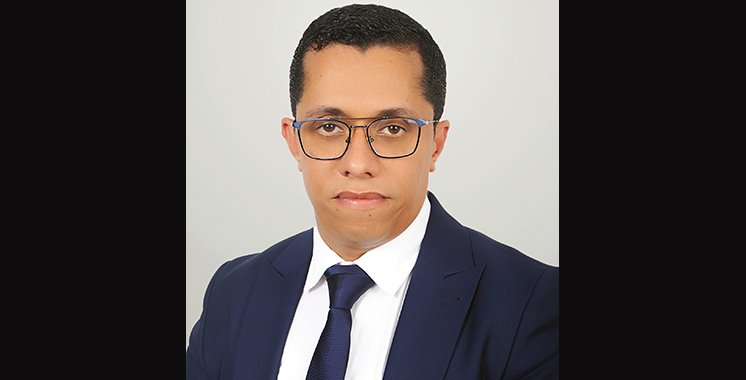
About Talal Eddaouahiri
Founder & Financial Writer at MoneyAbroadGuide.com. A Moroccan immigrant who settled in the United States in 2015, Talal opened bank accounts and built credit from zero in both the US and Canada. His background is in retail banking and customer relations, and he writes independent, source-based guides (FCAC, FINTRAC, OSFI, CRA, IRS, CDIC) to help newcomers navigate their first financial steps. Read his full profile →