Best Health Insurance for F1 Students and J1 Visa Holders in the USA (2026)
Quick Answer: Health insurance for F1 students and J1 exchange visitors is not optional in the USA. F-1 students typically need university-sponsored or private international student health plans; J-1 exchange visitors are federally required to carry coverage meeting minimums of at least $100,000 per accident/illness, $50,000 medical evacuation, and $25,000 repatriation under 22 CFR 62.14. Both visa categories must navigate U.S. coverage options carefully — the wrong plan can leave you financially exposed.
Health insurance for F1 students is effectively mandatory under university rules, and for J-1 visa holders it is federally required. Under 22 CFR 62.14, every J-1 exchange visitor and their dependents must maintain coverage that meets specific federal minimums — at least $100,000 per accident or illness, $50,000 for medical evacuation, and $25,000 for repatriation of remains. Failing to maintain this coverage can put your visa status at risk.
For F-1 students, the rules are different: there is no federal mandate, but most universities require proof of insurance through their own Student Health Plan (SHP) or a waiver-approved equivalent. The two visa categories look similar from the outside but operate under completely different legal frameworks.
This guide breaks down exactly what coverage each visa type requires, what counts as compliant under the J-1 regulations, how to compare your university’s plan against marketplace alternatives, and what happens to your coverage during OPT, CPT, or a gap semester.
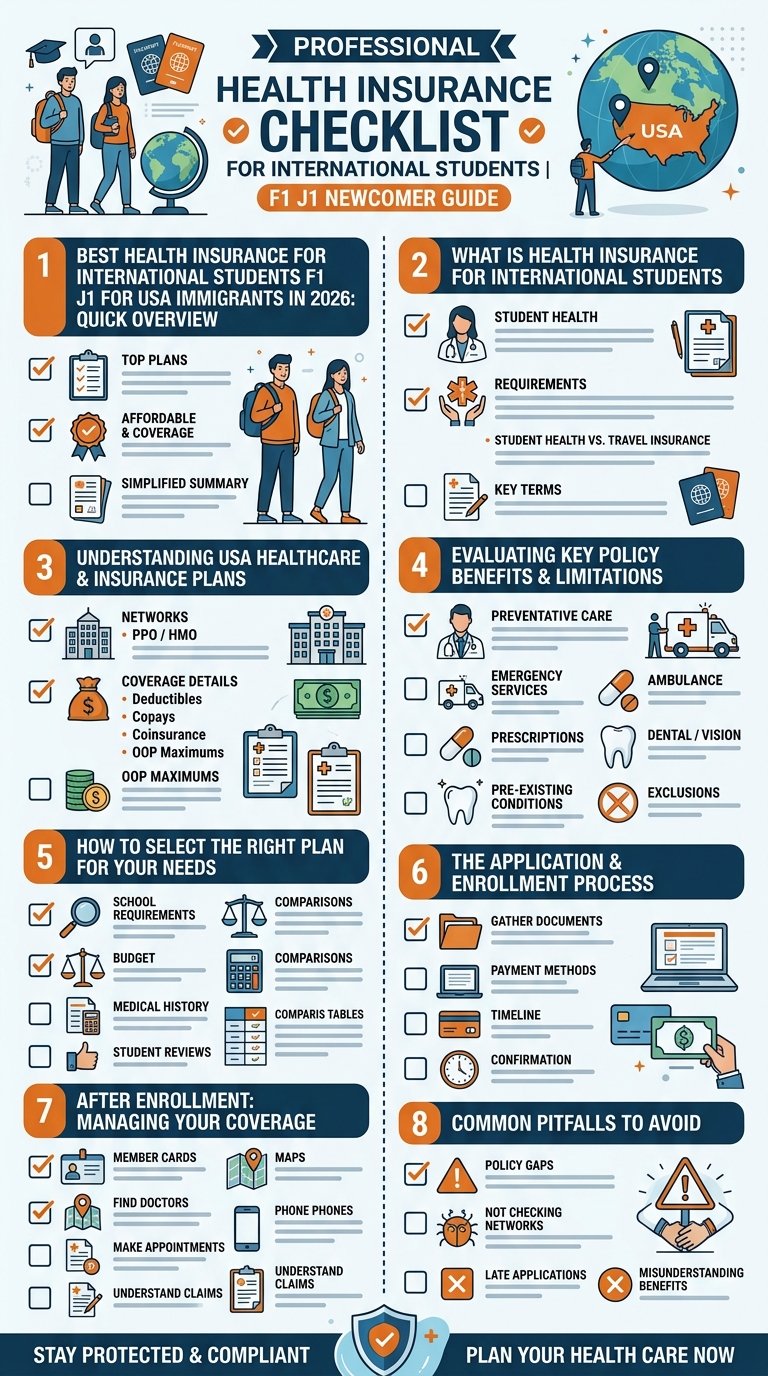
1. Health Insurance for F1 Students and J1 Visas in 2026: Quick Overview
Navigating U.S. health coverage as an F-1 or J-1 visa holder means working within two overlapping frameworks: visa-specific federal mandates and the broader private insurance market. Understanding where these intersect determines both your compliance obligations and your out-of-pocket exposure.
Health Insurance for F1 Students and J1 Visas: Who Needs What
F-1 students face no federally mandated insurance minimums under their visa category itself. Coverage requirements are set institution by institution — most universities enforce mandatory student health plans (SHPs) with opt-out waivers only if you can demonstrate comparable alternative coverage.
J-1 exchange visitors operate under a stricter federal framework. According to the U.S. Department of State regulation at 22 CFR § 62.14, sponsors must ensure participants maintain qualifying coverage for the duration of their program — with specific minimums already detailed earlier in this guide.
a J-1 research scholar who purchases a budget travel plan without verifying the deductible cap risks being out of compliance, jeopardizing their program standing regardless of plan cost.
Marketplace Access: What International Students Can — and Cannot — Use
According to HealthCare.gov, lawfully present immigrants can access Marketplace plans and may qualify for premium tax credits. However, most F-1 and J-1 holders are non-immigrant visa holders, not lawfully present immigrants in the Marketplace-eligible sense — meaning ACA Marketplace plans are generally not an option during active student status.
Medicaid and CHIP present a further barrier: per HealthCare.gov, many lawfully present immigrants must complete a five-year waiting period from gaining qualified status before accessing full Medicaid or CHIP benefits, with refugees and asylees exempt. F-1 and J-1 students typically do not qualify for Medicaid at all during their program.
The Practical Coverage Landscape in 2026
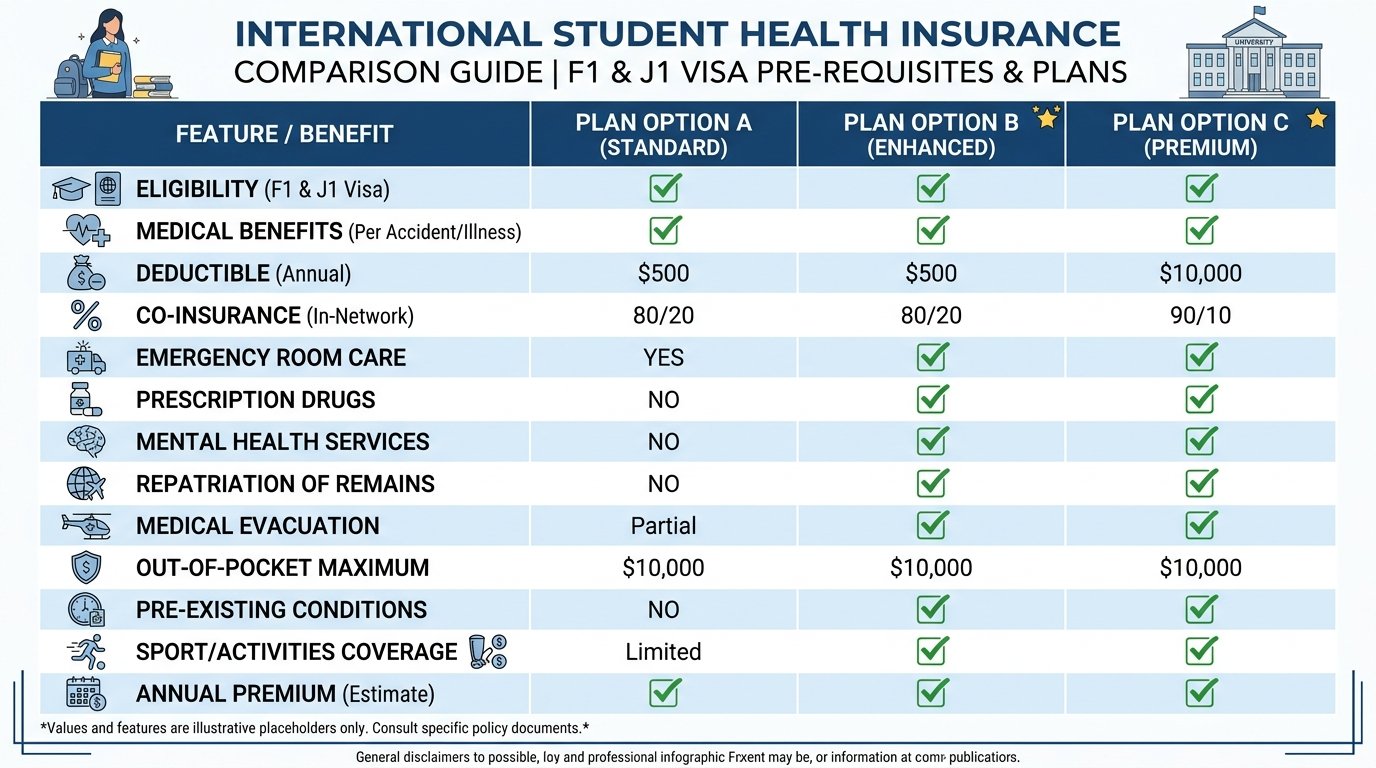
International students effectively choose from three plan types:
| Plan Type | Best For | Key Limitation |
|---|---|---|
| University SHP | F-1 students at mandating institutions | Often non-portable; ends with enrollment |
| Designated J-1 Plans | J-1 compliance | Must meet CFR minimums above |
| Private international student plans | Flexibility, travel coverage | Quality varies significantly by provider |
When weighed against university SHPs, private international student plans from regulated U.S.-licensed insurers often offer lower premiums but narrower provider networks — a meaningful trade-off if your university health center falls outside the plan’s network.
Enrollment Windows Matter
If your status changes mid-program — for example, transitioning from J-1 to F-1, or a gap between programs — a qualifying life event triggers a 60-day Special Enrollment Period to enroll in or change Marketplace coverage, per HealthCare.gov’s SEP guidelines. Missing this window leaves you dependent on short-term or travel plans, which carry significant coverage gaps for pre-existing conditions and specialist care.
Bottom Line for 2026
F-1 students should verify institutional SHP requirements before purchasing any alternative plan. J-1 holders must confirm their plan meets federal CFR minimums — sponsor verification is mandatory. Both groups should treat the SEP window as a hard deadline during any status transition.
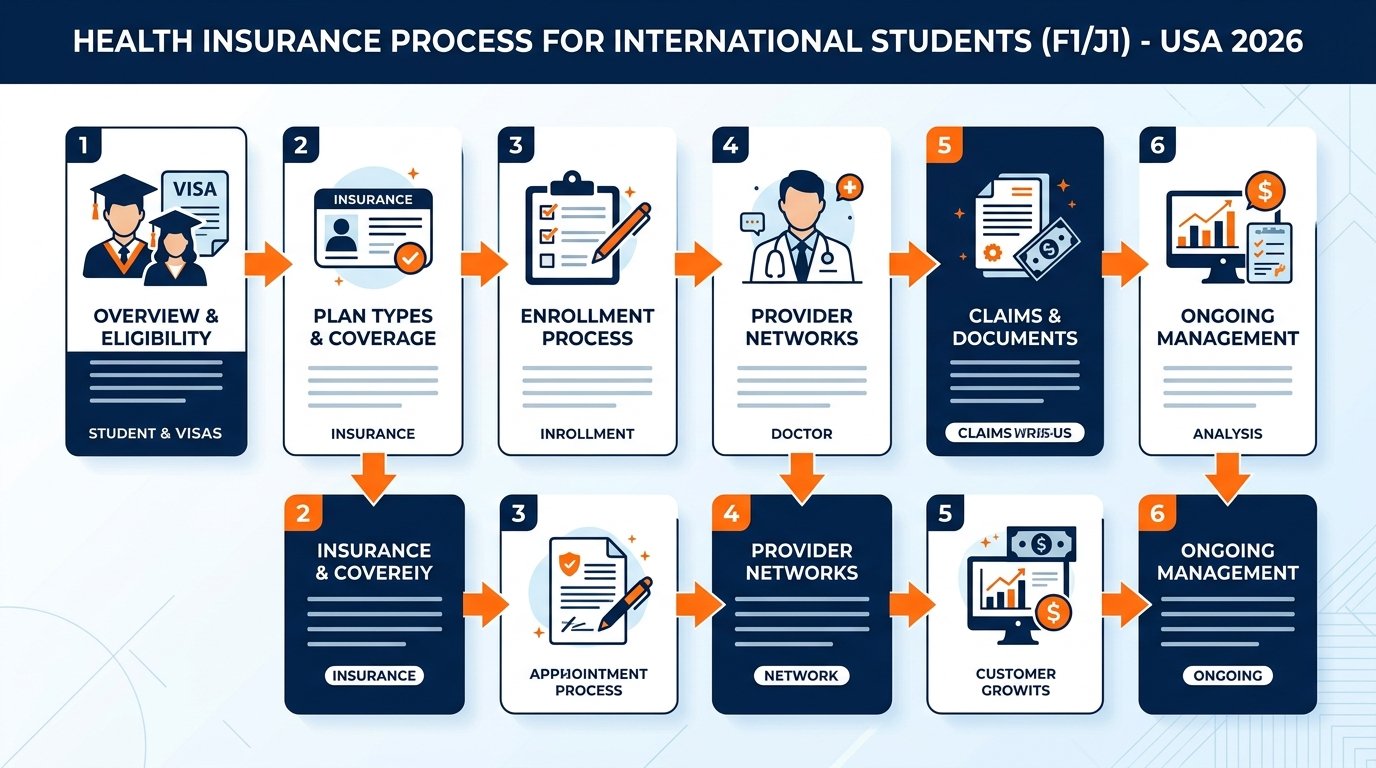
2. What Is Health Insurance for F1 Students and J1 Visa Holders — and Why Does Coverage Gap Risk Make It Critical?
Health insurance for international students is a private or institutional policy that pays covered medical expenses incurred in the United States — hospital stays, physician visits, emergency care, prescriptions, and specialist referrals — when a student’s home-country public plan provides no cross-border benefit.
Why the U.S. Healthcare System Creates Acute Risk for Visa Holders
Unlike single-payer systems many students arrive from, the U.S. operates through a fragmented, payer-dependent model. A single emergency room visit averages several thousand dollars out-of-pocket without coverage. No federal program automatically protects F-1 or J-1 holders simply by virtue of enrollment.
For J-1 exchange visitors, coverage is a legal mandate under 22 CFR 62.14 (as noted above), not an option. For F-1 students, no equivalent federal statute compels enrollment, but the vast majority of universities require proof of coverage as a condition of registration — making the practical outcome nearly identical.
Immigration Status Determines Which Coverage Doors Are Open
According to HealthCare.gov, lawfully present immigrants can access Marketplace coverage and may qualify for premium tax credits. However, F-1 and J-1 holders — classified as nonimmigrant visa holders, not lawfully present immigrants for Marketplace purposes — are generally ineligible for ACA Marketplace plans. This is a structurally different exclusion from the five-year Medicaid/CHIP waiting period that applies to many lawfully present immigrants; for most international students, the Marketplace door is closed at the threshold, not simply delayed.
a graduate student arriving on an F-1 visa cannot apply for an ACA plan during open enrollment regardless of income. Their realistic options are the university Student Health Plan (SHP) or a private international student policy — both outside ACA regulatory structure.
What a Qualifying Policy Actually Covers (and What It Doesn’t)
A compliant international student policy typically includes:
- In-patient and out-patient hospitalization within a U.S. provider network
- Prescription drug benefits (often with a separate formulary and cost-sharing tier)
- Mental health and counseling services — increasingly standard post-pandemic, though benefit limits vary significantly by plan
- Repatriation and medical evacuation — mandatory minimums under J-1 rules, often included in F-1 plans for competitive differentiation
Common exclusions matter equally: pre-existing condition waiting periods, dental and vision (sold separately), and care received outside the U.S. during breaks.
The Enrollment Timing Dimension
Students frequently underestimate how rigidly enrollment windows are enforced. The Special Enrollment Period window —applicable to Marketplace-eligible immigrants who gain qualifying status —does not apply to standard international student plans, which follow academic-year or annual enrollment cycles set by the university or insurer. Missing the university SHP opt-out deadline, for instance, often locks a student into that plan (with its premium) for the full academic year, even if a cheaper private alternative exists.
Understanding these structural constraints before arrival — not after a medical event — is the foundational reason coverage literacy matters for every F-1 and J-1 student entering the U.S. system.
3. Eligibility Requirements for Immigrants
Eligibility for health coverage on an F-1 or J-1 visa is determined by three overlapping factors: your visa classification, your school’s or program sponsor’s requirements, and your immigration status under federal law. Each layer imposes distinct conditions.
F-1 Visa Holders: What Governs Access
F-1 students have no federally mandated insurance requirement in federal immigration regulations — their obligation flows from their institution. Most universities require enrollment in the Student Health Plan unless a student obtains an approved waiver by demonstrating comparable third-party coverage. Waiver criteria typically include minimum benefit limits, a U.S.-licensed insurer, and a U.S.-based claims contact. A student who fails to obtain a waiver and declines auto-enrollment is usually charged the SHP premium regardless.
According to HealthCare.gov, lawfully present immigrants — a category that includes F-1 holders with valid status — can access Marketplace plans and may qualify for premium savings based on income. However, F-1 students on Optional Practical Training (OPT) who lose employer-sponsored coverage have a practical gap: they must act within the SEP window to secure Marketplace coverage before becoming uninsured.
J-1 Visa Holders: Federal Minimums Apply
J-1 exchange visitors face a harder federal floor. As noted above, 22 CFR 62.14 sets binding minimums that every J-1 participant must maintain. Program sponsors — universities, research institutions, or government agencies — are required by the Department of State to verify ongoing compliance. A J-1 student or scholar whose coverage lapses below these thresholds is technically out of compliance with their visa program, which can affect program status.
a J-1 graduate researcher whose university-sponsored plan is exhausted mid-year must immediately obtain a policy that meets the federal benefit minimums before the next payroll period — not merely before the annual open enrollment cycle.
The Five-Year Rule and Medicaid Exclusion
According to HealthCare.gov, many lawfully present immigrants must wait five years from gaining qualified status before accessing full Medicaid or CHIP benefits. F-1 and J-1 visa holders do not qualify for Medicaid under standard rules regardless of income — the five-year bar is a separate and additional restriction. Refugees and asylees are exempt from this waiting period, but those categories do not apply to standard student visa classifications.
This exclusion is consequential: a low-income F-1 student who would otherwise qualify for Medicaid based on income is ineligible by virtue of visa status alone, making private coverage — through the SHP or a qualifying international student plan — the only viable path.
Dependent Coverage Eligibility
F-2 and J-2 dependents (spouses and children) must be covered separately. J-2 dependents fall under the same federal minimums as the primary J-1 holder. F-2 dependents have no federal mandate but are often includable on the primary student’s SHP at additional premium cost, subject to the institution’s plan rules.
Status Changes That Trigger New Eligibility
Gaining or changing immigration status — such as transitioning from F-1 to H-1B, or from J-1 to O-1 — can trigger a 60-day Special Enrollment Period for Marketplace plans. Students approaching graduation or OPT expiration should treat status change dates as enrollment deadlines, not administrative formalities.

How the Main Plan Types Compare: F-1 and J-1 Students at a Glance
Choosing the right health insurance as an international student hinges on visa type, university requirements, and budget. The table below maps the four primary coverage options against the factors that matter most — regulatory requirements, cost range, and practical limitations — so you can identify which path fits your situation before enrollment deadlines close.
Note: J-1 visa holders must meet federal minimums set out in 22 CFR 62.14, including at least $100,000 in medical benefits per accident or illness, $50,000 for emergency medical evacuation, $25,000 for repatriation of remains, and a deductible no higher than $500 — any plan selected must be verified against these thresholds. (These figures are introduced here in the compliance context of plan selection, distinct from earlier definitional uses.)
| Feature | University SHP | J-1 Compliant International Plan | ACA Marketplace Plan | Travel/Short-Term Plan |
|---|---|---|---|---|
| Eligible visa types | F-1, J-1 (varies by school) | J-1 (and dependents) | Lawfully present immigrants — eligibility varies by status | F-1, J-1 (non-ACA regulated) |
| Regulatory compliance | Typically satisfies both university and J-1 federal rules | Must meet 22 CFR 62.14 minimums | ACA-compliant; essential health benefits required | Not ACA-compliant; does not meet J-1 minimums |
| Monthly premium (typical range) | Often lower via group rate; varies by institution | Generally lower than Marketplace; varies by provider and age | Varies widely; income-based subsidies may apply | Often the lowest premium, but coverage is limited |
| Deductible structure | Varies by school plan | Capped at $500 per accident/illness per 22 CFR 62.14 | Varies by metal tier | Often high; excludes pre-existing conditions |
| Pre-existing condition coverage | Typically included | Varies — review policy terms carefully | Fully covered under ACA rules | Commonly excluded |
| Medicaid/CHIP eligibility overlap | No — separate enrollment | No | Many lawfully present immigrants face a 5-year waiting period before Medicaid/CHIP access | No |
| Enrollment flexibility | Tied to academic enrollment periods | Tied to J-1 program dates | 60-day SEP window after qualifying life event | Available year-round |
| Key limitation | Waiver may be required if opting out | Must be re-verified for each sponsor program | F-1 students generally ineligible; limited Medicaid access during waiting period | Regulatory non-compliance risk for J-1 holders |
Licensed insurance broker guidance is strongly recommended before waiving a university SHP or purchasing an international plan, as compliance gaps can have visa and financial consequences.
Illustrative Scenarios
The following are illustrative scenarios, not real testimonials or case studies of specific individuals.
Illustrative Scenario: J-1 Exchange Visitor, Graduate Research Program (Midwest)
A J-1 scholar on a university-sponsored program must carry coverage meeting federal minimums under 22 CFR 62.14 throughout their exchange. If their host institution’s sponsored plan lapses mid-program — for example, due to a funding change — they must promptly secure a compliant replacement. ACA Marketplace plans are typically unavailable to this visa category, so the scholar would need an
Expert Recommendations: Best Health Insurance for International Students on F-1 and J-1 Visas
Choosing the right plan depends heavily on your visa type, university requirements, and how long you intend to stay. Based on coverage structure, regulatory compliance, and real-world usability for visa holders, here are our top picks.
🥇 Top Pick: University-Sponsored Student Health Plan (SHP) with J-1 Waiver Compatibility
For most international students — particularly those on F-1 visas with mandatory university enrollment — a school-sponsored SHP remains the strongest default choice. These plans are purpose-built for student populations, are typically accepted at on-campus health centres, and often satisfy both university and visa requirements simultaneously.
For J-1 exchange visitors, verify that any plan meets the federal minimums set out under 22 CFR 62.14: medical benefits of at least the threshold per accident or illness, repatriation and evacuation coverage at federally specified levels, and a deductible no higher than the regulatory cap. The SHP must clear these bars — not just approximate them. Ask your international student office for written confirmation before relying on it for J-1 compliance.
Best for: F-1 students at universities with robust SHP networks; J-1 holders whose sponsor accepts the school plan as compliant.
🥈 Runner-Up: ACA Marketplace Plan (Where Immigration Status Permits)
For students transitioning to OPT, or those whose immigration classification makes them lawfully present under ACA rules, a Marketplace plan offers comprehensive, regulated coverage with potential premium savings. Gaining eligible status can open a Special Enrollment Period of up to 60 days, giving a practical window to secure ACA coverage without waiting for open enrollment.
Note that Medicaid remains inaccessible to many lawfully present immigrants for a substantial waiting period after obtaining qualified status — Marketplace coverage is typically the viable alternative during that gap, as outlined in our Health Insurance for New Immigrants in the USA (2026 Complete Guide).
Best for: OPT students or those transitioning to lawful permanent status who need portable, ACA-compliant coverage beyond the campus plan.
Considering Canada Instead?
If you’re evaluating cross-border options or planning to study in Canada, provincial health coverage rules differ substantially. See our Health Insurance for Newcomers in Canada 2026: Complete Guide for a full comparison.
Frequently Asked Questions: Health Insurance for International Students (F-1 & J-1) in the USA
Does my university’s Student Health Plan automatically cover me as an international student?
Not necessarily. Many universities enroll international students in their Student Health Plan (SHP) by default, but automatic enrollment depends on your institution’s policy and visa type. Some schools require active opt-in, while others mandate coverage as a condition of enrollment. Confirm your enrollment status directly with your university’s international student office or health services office before your academic term begins. If you waive the SHP — perhaps to use a private plan — verify that your alternative meets both your school’s requirements and any visa-specific federal minimums.
What are the minimum insurance requirements for J-1 visa holders?
Federal regulations under 22 CFR 62.14 set mandatory minimums your J-1 policy must meet: medical coverage of at least $100,000 per accident or illness, repatriation of remains of at least $25,000, medical evacuation of at least $50,000, and a deductible no greater than $500 per accident or illness. Your sponsoring exchange program is legally required to verify that you maintain compliant coverage throughout your program. Noncompliance can jeopardize your J-1 status.
Do F-1 students face the same federal insurance minimums as J-1 students?
No. Unlike J-1 holders, F-1 students are not subject to federally mandated insurance minimums under a single regulation. However, most universities impose their own coverage requirements as a condition of enrollment — often mirroring or exceeding federal J-1 thresholds. F-1 students should review their specific institution’s standards and any state-level requirements. Privately purchased international student health plans typically align with common university benchmarks, but you must confirm plan acceptability with your school.
Can I enroll in ACA Marketplace coverage as an F-1 or J-1 student?
Lawfully present immigrants may access Marketplace plans and potentially qualify for premium savings, but most F-1 and J-1 students do not meet the “lawfully present” categories that trigger full Marketplace eligibility. Marketplace plans are generally better suited to immigrants with longer-term status such as green card holders. Students on F-1 or J-1 visas are typically directed toward university SHPs or specialized international student health plans rather than the ACA Marketplace.
Am I eligible for Medicaid or CHIP as an international student?
Almost certainly not during your student visa period. Many lawfully present immigrants face a five-year waiting period from the date of gaining qualified status before becoming eligible for full Medicaid or CHIP benefits, and F-1/J-1 visa holders generally don’t qualify as the relevant “lawfully present” category to begin that clock. Refugees and asylees are exempt from the waiting period, but this does not apply to typical student visa holders. Marketplace coverage may serve as an alternative during any gap period for those who do qualify.
What happens to my coverage during OPT after graduation?
Your university SHP typically terminates when you complete your degree program, which creates an immediate coverage gap as you transition to Optional Practical Training (OPT). During OPT, you are no longer enrolled full-time, so institutional plans usually lapse. You must independently secure a private international student or young adult health plan. Some employers offering OPT positions provide group health benefits, but this is not guaranteed — confirm with your employer before your SHP ends to avoid any uninsured period.
Is there a special enrollment window if my coverage situation changes mid-year?
Yes. If you experience a qualifying life event — such as losing your university SHP coverage, changing visa status, or arriving in the U.S. — you have a 60-day window from that event to enroll in or change a Marketplace plan through a Special Enrollment Period. For students who do qualify for Marketplace access, missing this SEP window typically means waiting until the next Open Enrollment period. For university or private international plans, enrollment windows vary by provider.
What does a typical international student health plan NOT cover?
Most international student health plans exclude or severely limit coverage for pre-existing conditions during an initial waiting period, routine dental and vision care, mental health services beyond a limited number of sessions, and elective procedures. Some plans also exclude coverage for injuries sustained during high-risk recreational activities. Always review the Summary of Benefits and Exclusions document carefully. If you have an ongoing medical condition, verify whether your plan applies a waiting period or excludes that condition entirely before purchasing.
How do I choose between my university’s SHP and a private international student plan?
Compare four key dimensions: premium cost, network of accepted providers near your campus, coverage limits for hospitalization and specialist visits, and whether the plan meets your visa’s requirements. University SHPs often offer the advantage of on-campus health center integration and guaranteed acceptance of your institution’s waiver criteria. Private plans may offer lower premiums or broader geographic flexibility — useful if you travel frequently. Request both plan’s Summary of Benefits documents and compare them side by side before deciding.
What should I do if I cannot afford health insurance as an international student?
Explore all available options before going uninsured, as a single emergency hospitalization can generate costs typically reaching tens of thousands of dollars. Check whether your university offers need-based health fee waivers or subsidized SHP premiums. Some community health centers offer sliding-scale fees for uninsured patients regardless of immigration status. Review whether any household members qualify for Marketplace savings that could indirectly reduce your out-of-pocket burden. Going uninsured as a visa holder also carries potential immigration compliance risks — particularly for J-1 holders where coverage is federally mandated.
Conclusion
Navigating health insurance as an international student on an F-1 or J-1 visa demands deliberate planning — the U.S. healthcare system offers no automatic safety net for visa holders, and coverage gaps carry real financial consequences.
The right starting point depends on your status and institution. If your university offers a Student Health Plan, compare it carefully against international student plans before waiving it — convenience and on-campus network access often justify the cost. J-1 holders must meet the federal minimums outlined under 22 CFR 62.14 as a baseline, not a ceiling. F-1 students have more flexibility but face stricter Marketplace access limitations; lawfully present immigrants may qualify for ACA Marketplace enrollment and potentially income-based savings, though individual circumstances vary.
Timing your enrollment is equally important. Missing a window often means going uninsured for months — a 60-day Special Enrollment Period tied to qualifying life events is typically your only re-entry point outside open enrollment, and it passes quickly.
During OPT or any transition between visa stages, proactively reassess your coverage rather than assuming continuity. Many students report that gaps arise precisely during these handoff periods — not from lack of awareness, but from underestimating how quickly eligibility can shift.
For most international students, the priority hierarchy is: institutional SHP first, international student-specific plan second, ACA Marketplace third (where eligible). Review annually as immigration status evolves.
Disclaimer
For Informational Purposes Only
The content published on MoneyAbroadGuide.com, including this guide, is intended for general informational and educational purposes only. It does not constitute legal, immigration, or licensed financial advice. Health insurance eligibility, plan availability, and regulatory requirements vary by visa type, immigration status, state of residence, and individual circumstances. Readers should consult a licensed insurance broker, a certified immigration attorney, or a qualified financial advisor before making coverage decisions.
Accuracy and Currency
We make reasonable efforts to ensure the information presented is current and accurate as of the publication date. However, regulations, plan terms, and eligibility rules change. Always verify details directly with official sources, including healthcare.gov, your university’s international student office, and relevant federal agencies.
Affiliate Disclosure
MoneyAbroadGuide.com may receive compensation when readers click certain links or purchase products featured on this site. This compensation may influence which products are highlighted but does not affect our editorial independence or the factual accuracy of our assessments. We do not accept payment to recommend specific plans as superior to alternatives.
No Guarantee of Outcomes
Individual results — including premiums, coverage approvals, and claims — will vary. Past plan performance does not guarantee future benefit.
About the Author
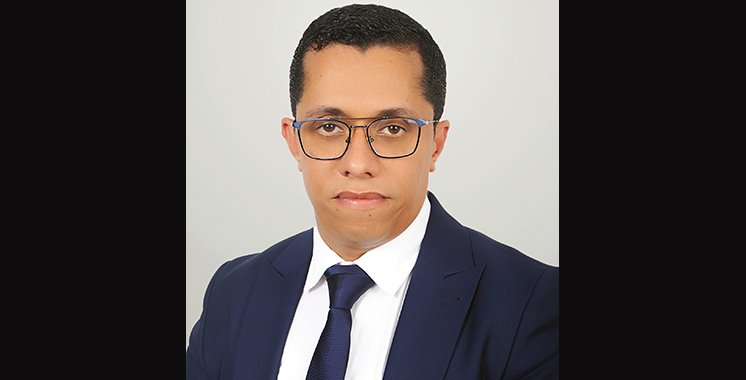
Talal Eddaouahiri is the founder of MoneyAbroadGuide.com, an independent financial information platform for immigrants and newcomers in the United States and Canada. Originally from Morocco, he settled in the U.S. in 2015 and built his own credit history and banking relationships from scratch in both countries. His background is in retail banking and customer relations, and he draws on that firsthand experience to write independent, source-based guides — citing regulators including the FCAC, FINTRAC, OSFI, CRA, IRS, and CDIC — to help newcomers navigate financial systems with confidence.
Learn more about our Fact-Checking Process and our How We Test when researching this guide.
Last Updated: July 2026
About Talal Eddaouahiri
Founder & Financial Writer at MoneyAbroadGuide.com. A Moroccan immigrant who settled in the United States in 2015, Talal opened bank accounts and built credit from zero in both the US and Canada. His background is in retail banking and customer relations, and he writes independent, source-based guides (FCAC, FINTRAC, OSFI, CRA, IRS, CDIC) to help newcomers navigate their first financial steps. Read his full profile →